

 3 days ago
3
3 days ago
3
ARTICLE AD BOX
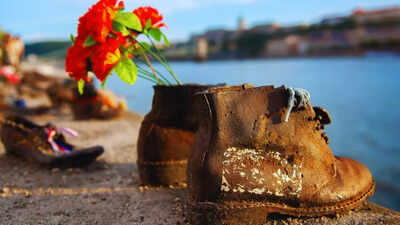
Along a quiet section of the Danube River, in the heart of Budapest, rows of old-fashioned iron shoes are lined up along the water’s edge. Some are small and delicate, like those worn by children.
Others resemble sturdy work boots or elegant women’s heels. They are all from the 1940s. They appear scattered and abandoned, as though their owners simply stepped out of them and walked away.They are not, however, old shoes forgotten and left behind. They are instead part of one of Europe’s most haunting memorials, remembering a sad time in history.The installation, known as Shoes on the Danube Bank, commemorates the thousands of people who were murdered along this riverbank during the final months of the Second World War.
The victims were mostly Jews from Budapest but also included other civilians who were persecuted during Hungary’s fascist regime.
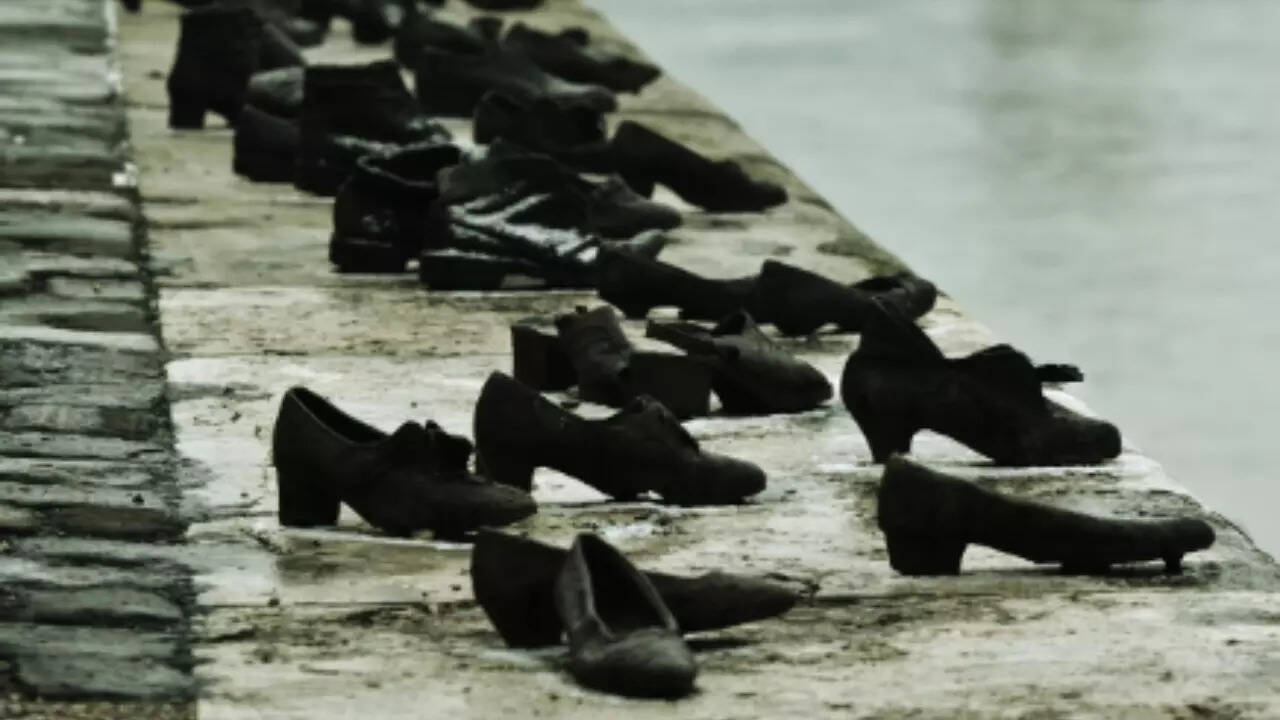
Shoes on Danube Bank. Photo Credit - Wikimedia Commons CC 3.0 Nikodem Nijaki
The rows of silent metal shoes are now a powerful symbol of lost lives.
What was it like back then? A dark history
In 1944, as the Second World War was nearing its end, Hungary fell under the control of the fascist Arrow Cross Party. The regime was viciously antisemitic and immediately set out to target the country’s Jewish population.
Budapest at this time had one of the largest Jewish populations in Europe. For centuries, many of Budapest’s Jewish families had been there, contributing to the city’s rich cultural heritage. But under the Arrow Cross regime, things took a turn for the worse very quickly.Budapest’s Jews were forced to live in ghettos, losing all their rights and suffering all manner of brutality. In the last months of the war, as the Soviets were advancing on Budapest, there was a spate of mass executions.Thousands of people were taken from their homes and brought to the banks of the Danube. Here, along the river’s cold stone embankment, the victims were forced to remove their shoes before being executed. Why, you ask? Shoes were considered valuable during wartime. They could be reused, traded or sold. Soldiers and militia members collected them before carrying out the killings.After removing their footwear, the victims were lined up at the river’s edge.They were then shot.Their bodies fell into the freezing waters of the Danube, which carried them away downstream. For many families, there were no graves to mourn, only the river that flowed silently through the city.
A powerful memorial
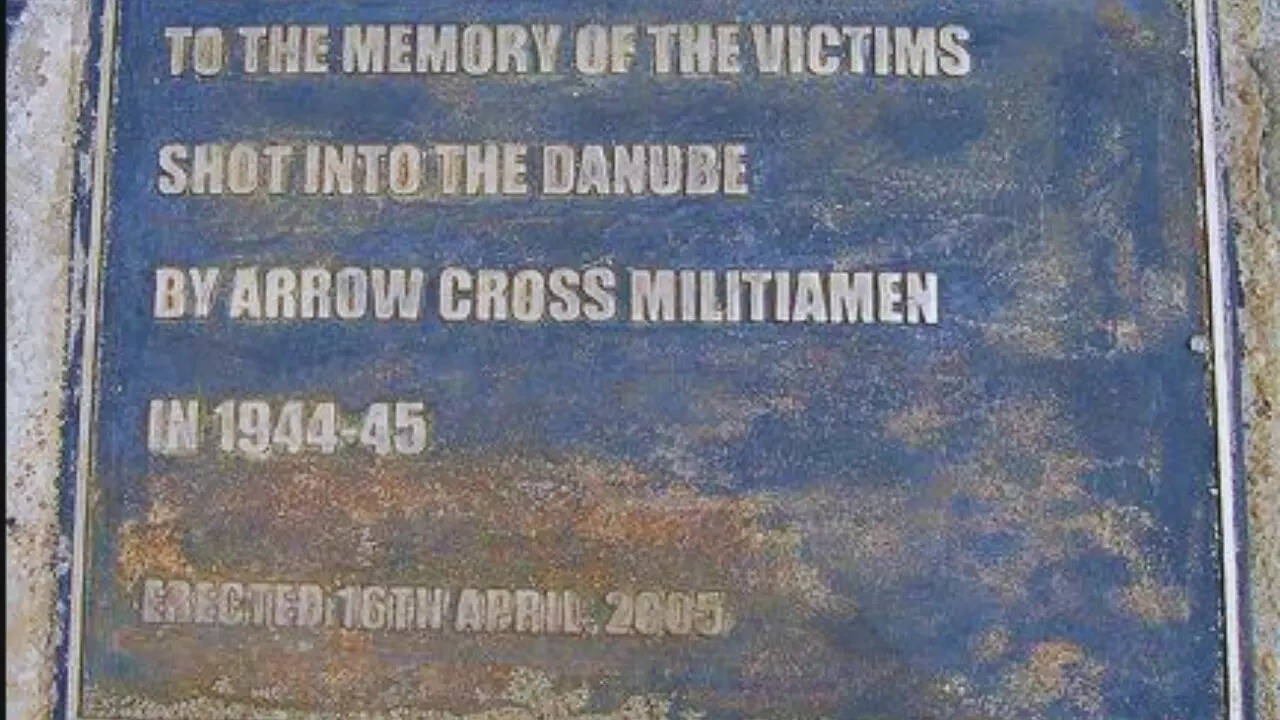
Commemorative plaque. Photo Credit - Wikimedia Commons CC 3.0 Tamas Szabo
Decades after the war, Hungarian film director Can Togay began thinking about how to honour the victims of these riverbank executions. Instead of building a grand monument, he envisioned something more intimate, something that would reflect the ordinary lives that had been lost.Working with sculptor Gyula Pauer, Togay developed the idea of recreating the shoes left behind by the victims. In 2005, the memorial was installed along the riverbank.Sixty pairs of cast-iron shoes were carefully placed along the edge of the Danube, each designed to resemble footwear from the 1940s. The shoes vary in size and style: children’s sandals, lace-up men’s shoes, women’s heels and worn work boots.The arrangement feels natural and almost unsettlingly real, as if people had just stepped out of their shoes moments earlier.The simplicity of the installation is what makes it so powerful.There are no towering statues or dramatic sculptures. Instead, the memorial captures the last moment before tragedy. This is a place of remembrance. Today, the memorial is one of the most visited historical sites in Budapest.Tourists strolling along the river stop and look at the peculiar row of iron shoes. At first sight, they think it is some sort of modern art or sculpture.However, after they learn about the story behind it, the atmosphere is different.Some tourists leave flowers, candles, or even stones near the iron shoes. These acts of commemoration have turned the memorial into a contemplative space.Looking at the river and contemplating the story behind the iron shoes, it is hard not to think about the life behind each pair of empty shoes.There are no photographs or long lists of names on the memorial.
It is left to the imagination to think about the life behind each pair of shoes.As the river flows through the memorial, the row of iron shoes reminds everyone about the results of hatred and intolerance. These iron shoes make sure that the people who lost their lives there are not forgotten. In the silence of these iron shoes, there is a story that cannot be told through words.







 English (US) ·