

 49 minutes ago
5
49 minutes ago
5
ARTICLE AD BOX
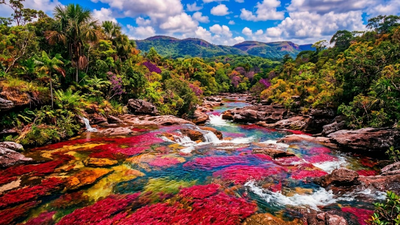
For a few extraordinary months each year, a remote river in central Colombia appears to transform into a flowing rainbow. Brilliant shades of crimson, pink, yellow, green, blue and black ripple across the riverbed, creating one of the world's most remarkable natural spectacles.
Known as Caño Cristales, this breathtaking waterway is often called the "River of Five Colours" or the "Liquid Rainbow". Yet its vivid appearance has nothing to do with minerals, pollution or optical illusions. Instead, it is the result of an exceptionally delicate ecological balance involving sunlight, crystal-clear water and a rare aquatic plant found almost nowhere else on Earth. Scientists regard this seasonal phenomenon as one of nature's finest examples of how biodiversity and environmental conditions combine to create an unforgettable landscape.
The rare plant that transforms Colombia's Caño Cristales into the world's famous rainbow river
As reported by the BBC, the remarkable colours of Caño Cristales come primarily from Rhyncholacis clavigera (formerly known as Macarenia clavigera), an aquatic flowering plant belonging to the Podostemaceae family. Unlike algae or moss, this specialised river plant grows tightly attached to ancient quartzite rocks on the riverbed.During the ideal season, the plant responds to changing environmental conditions by producing vivid pigments that range from bright green to deep crimson.
Combined with yellow sand, black rocks, blue reflections from the sky and exceptionally transparent water, these colours create the river's famous rainbow effect.Researchers from the Royal Botanic Garden Kew describe Rhyncholacis clavigera as a "structuring species", meaning it plays a vital ecological role by supporting aquatic biodiversity throughout the river ecosystem.
How sunlight, water levels and ancient geology create the river's spectacular colours
The colours only appear when several natural factors align perfectly.
If water levels are too high during the rainy season, sunlight cannot penetrate deeply enough for the aquatic plants to flourish. During the dry season, the plants become exposed and begin to dry out. The spectacular display therefore occurs during the transition between these seasons, typically from late June or July until November.The river itself is equally important. Caño Cristales flows across some of the oldest exposed rocks on Earth within the Guiana Shield, geological formations dating back more than one billion years.
These nutrient-poor rocks keep the water exceptionally clear, allowing sunlight to reach the riverbed while preventing excessive algae growth that would otherwise obscure the plants.According to ecological studies conducted in the region, even small changes in sediment, water flow or surrounding vegetation could threaten the delicate habitat required by Rhyncholacis clavigera.
Why Caño Cristales is one of the world's most unique rivers and how it is being protected
Caño Cristales lies within Serranía de la Macarena, one of Colombia's most biologically significant protected landscapes, where the Amazon rainforest, the Andes and the Llanos savannah converge.To protect the rare Macarenia clavigera plant that gives Caño Cristales its famous colours, park authorities have introduced strict conservation measures. Visitors are prohibited from bringing chemical products that could contaminate the river, including sunscreen, insect repellent, deodorant, skin creams and make-up. Raúl Moreno, a local school teacher who educates tourists about the culture and natural heritage of La Macarena, told the BBC that these measures are safeguarding not only the fragile ecosystem but also Colombia's international reputation.
"Colombia is full of nature that you can now visit," he said. "Hopefully, the world will begin to look at Colombia with different eyes."This unique meeting point creates extraordinary biodiversity. Scientists have documented hundreds of bird species, reptiles, amphibians, mammals and freshwater organisms that depend upon the region's interconnected ecosystems.Because the river's colours rely on such precise environmental conditions, conservation measures are tightly controlled.
Visitor numbers are limited during the tourism season, while activities that could damage water quality or the fragile aquatic plants are carefully regulated.Researchers from the Alexander von Humboldt Institute have warned that deforestation, increased sedimentation and habitat degradation could directly threaten Rhyncholacis clavigera, whose survival is inseparable from the river's world-famous colours. Protecting the surrounding forests, therefore, protects one of Earth's rarest natural phenomena.









 English (US) ·