

 1 hour ago
4
1 hour ago
4
ARTICLE AD BOX
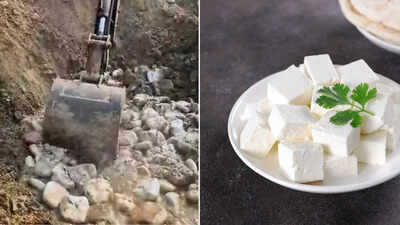
Authorities in Ghaziabad seized and destroyed 900 kg of adulterated paneer found unfit for consumption due to unsanitary storage and contamination. The fake paneer, reportedly made with milk powder, lime juice, and palm oil, was being transported for distribution across Delhi and NCR. Home tests can help identify such adulteration.
Paneer is a rich source of protein and other nutrients. Unfortunately, this nutritious food often makes news due to ongoing market adulteration. In a major crackdown in Ghaziabad, the Uttar Pradesh Food Safety and Drug Administration recently seized and destroyed 900 kg of paneer found unsafe for consumption.
Scroll down to read the details. According to FSSAI's official Instagram page, the paneer did not meet standards and was stored in extremely unsanitary conditions. The liquid containing the milk product was also contaminated, making it clear that it was not edible and could be harmful to health. As per reports, the Food Safety Department took samples of the paneer and sent them to a laboratory for testing. Following this, the decision was made to destroy the entire consignment.
A JCB machine was used to dig a pit and bury the paneer so it could not reach the market. It is reported that the fake paneer was being transported from the Kosi region of Mathura and was intended for supply across Ghaziabad, Delhi, and the NCR.As per reports, fake paneer is often made by mixing milk powder and water, which is further curdled with lime juice and acetic acid. Palm oil is then added to make it appear creamy and glossy.
But the question of concern here is how to recognize fake paneer at home.
How to check paneer purity at home
While the Food Safety and Standards Authority of India (FSSAI) has issued many tests and measures to check adulteration in milk and milk products, there are certain ways you can check the quality of store-bought paneer at home as well. Take a look at the following tips and tricks:.Try the hand test: Take a small amount of paneer and mash it using clean hands. Pure, unadulterated paneer will hold its texture, while adulterated paneer—often made from skimmed milk—will crumble or break apart under slight pressure.Use iodine tincture: To test whether the paneer is natural or artificial, one can use iodine tincture. Add water to a pan, place the paneer in it, and bring it to a boil. Let it cool down, then add a few drops of iodine tincture and see if the color changes to blue, which means the paneer is artificial.Use arhar dal: For this test, boil paneer in some water, and after it cools down, add some tur dal powder and let it rest for 10 minutes.
If the color of the paneer changes to light red, it is a sign that the paneer is made with detergent or urea.Use soybean powder: Boil some paneer in water, let it cool down, and then add some soybean powder to it. If the color of the paneer changes to light red, it is a sign that the paneer is made with detergent or urea.Taste test: Always take a small bite of paneer before you buy it, especially open counter ones. If it is chewy, it is artificial, and if it tastes very sour, there are chances that paneer is adulterated with detergent or any other substandard product.
Healthy paneer alternatives with similar protein
Tofu: With 15 gms of protein per 100 gms, tofu is a versatile soy-based food. It is also low in calories, rich in iron, and ideal for vegan diets.Tempeh: It offers 19 gms of protein per 100 gms and is a gut-friendly food that helps promote digestive health.Seitan: Seitan packs almost 25 gms of protein per 100 gms and gives a meat-like texture and taste.Lentils: Cooked lentils offer almost 26 g of protein per 100 gms. They are rich in fiber, which aid digestion and weight management while offering a sustained energy release.Soy beans: It offers 36 g protein per 100 gms, making it a smart protein source. It is also rich in amino acids and antioxidants.Chickpeas: Chickpeas offer almost 19 gms of protein per 100 gms, which helps promote muscle strength, bone health and better digestion.









 English (US) ·