

 45 minutes ago
7
45 minutes ago
7
ARTICLE AD BOX
Your balloon looks perfect. There is no hole, no tear and the knot is still tight. So why does it slowly shrink anyway? The answer lies in invisible gaps, moving air molecules and a simple law of physics that quietly works every single second inside every balloon.
Image credit :
Indiatimes | Balloon going flat? Here's the hidden Science behind it
You've probably seen it happen many times. You inflate a balloon for a birthday party, tie it carefully and leave it in a room. The next morning, it already looks a little smaller. A few days later, it is hanging sadly from the wall. The first thought is usually that someone must have poked a tiny hole in it. But surprisingly, that is often not true at all.
According to Physics Stack Exchange, balloons are not completely air-tight. Even when they look perfectly sealed, air molecules can slowly pass through the balloon's surface or escape through the tied knot. This happens because the air pressure inside the balloon is higher than the pressure outside, creating a slow but constant movement of air towards the outside. It is a process that takes time, but it never really stops.
The balloon is not as solid as it looks
A balloon may look like one smooth sheet of rubber, but under a microscope it tells a different story. Latex is made up of tiny strands packed together. Between these strands are microscopic gaps that are far too small for our eyes to see.

Image credit :
PxHere | Balloons are not completely air-tight
These tiny spaces do not look like holes in the usual sense. Instead, they act like narrow pathways through which gas molecules can slowly move. Scientists call this process permeation. It is not a leak caused by damage. It is simply the natural way gases move through certain materials over time.
Think of it like the smell of perfume spreading through a room. Nobody opens a window for the smell to travel. The tiny perfume molecules simply spread through the air until they fill the space. Air molecules inside a balloon behave in a similar way, although much more slowly.
Why does the air move out instead of staying inside?
If air can move both ways, then why does the balloon lose air instead of keeping the same amount?
The answer is pressure. When you blow up a balloon, you stretch its rubber walls. The stretched balloon tries to shrink back to its original size. That squeezing force pushes against the air trapped inside.
As a result, the air inside the balloon is under higher pressure than the air outside. Since gases naturally move from areas of higher pressure to lower pressure, more air molecules leave the balloon than enter it. The movement is slow, but every hour a few more molecules escape.
This is why a balloon gradually becomes softer instead of suddenly collapsing. It is losing tiny amounts of air every moment.
Why helium balloons seem to disappear so quickly
If you've ever bought helium balloons, you may have noticed something interesting. They often start shrinking within a day, while balloons filled with normal air stay inflated much longer.
Again, the reason comes down to science.
According to Physics Stack Exchange, helium exists as single atoms instead of larger molecules like the oxygen and nitrogen that make up most of the air we breathe. Because helium atoms are much smaller, they can slip through the tiny spaces in latex much more easily.
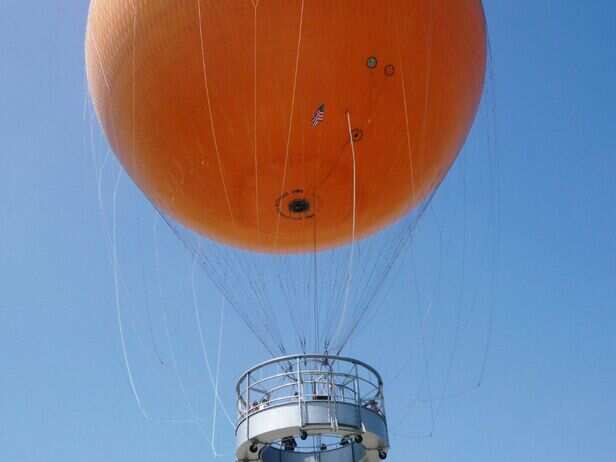
Image credit :
Wikimedia Commons | A balloon may look like one smooth sheet of rubber, but under a microscope it tells a different story
Imagine trying to stop both sand and marbles with the same net. The marbles stay trapped, but the sand finds its way through the gaps. Helium behaves much like the sand, escaping far more quickly than ordinary air.
That is why helium balloons often lose their floating power long before air-filled balloons lose their shape.
Temperature also plays a big role
Sometimes a balloon seems to shrink overnight, only to look fuller again later in the day. This is often caused by changes in temperature rather than a sudden air leak.
According to Castle Balloons, warm air expands while cold air contracts. When the air inside the balloon becomes colder, it takes up less space, making the balloon appear smaller. As temperatures rise again, the air expands and the balloon may regain some of its size.
However, frequent heating and cooling can also weaken the balloon material over time. Heat, especially direct sunlight, slowly damages latex, making it less flexible and increasing the chances of tiny leaks developing.
This is why balloons left outdoors on hot afternoons often do not last as long as balloons kept indoors.
Storage matters more than you think
Not every balloon starts out in perfect condition. If latex balloons are stored for a long time in bright sunlight, humid places or open air, the material itself can begin to change.
Some balloon experts recommend storing unused balloons in sealed containers in a cool, dark and dry place. This helps prevent the latex from becoming porous before the balloon is even inflated.
Sometimes only one or two balloons in a bunch lose air quickly while the others stay full. In such cases, the balloon may simply have had a small manufacturing flaw that made it weaker than the rest.
Not all balloons behave the same way
Latex balloons are the most common, but they are not the only type available. Clear Bobo balloons and foil balloons behave differently because they are made from different materials.
Bobo balloons are made from a stretchy plastic that is much less porous than latex. In theory, this means air or helium cannot easily pass through the balloon wall.
If a Bobo balloon loses air quickly, the problem is usually not the balloon itself. Instead, air often escapes through the neck if it has not been twisted and tied securely. Since these balloons do not have self-sealing valves, tying them properly becomes much more important.
Can you make balloons last longer?
While no balloon stays inflated forever, there are ways to slow down the process.
Using high-quality balloons can reduce unwanted air loss. Keeping balloons away from direct sunlight and extreme heat also helps protect the material. Storing unused balloons properly before inflation can improve their performance as well.

Image credit :
Public Domain Pictures | The air inside the balloon is under higher pressure than the air outside
If helium balloons are being used for decorations, special sealant products are also available that reduce the speed at which helium escapes from latex balloons.
None of these methods can stop permeation completely, but they can make balloons stay fuller for a longer time.
The mystery is simpler than it looks
A balloon does not need a visible hole to lose air. The air inside is constantly moving, the pressure inside is always slightly higher than outside and the balloon material itself contains microscopic pathways that allow gas molecules to slowly escape.
That is why even a perfectly tied balloon gradually becomes smaller. It is not broken. It is simply following the basic rules of physics.
The next time a party balloon starts looking tired after a few days, you can blame invisible air molecules, tiny gaps inside the material and the quiet science of permeation instead of searching for an imaginary hole.









 English (US) ·