

 1 hour ago
4
1 hour ago
4
ARTICLE AD BOX
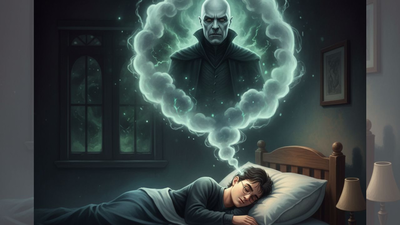
“For in dreams we enter a world that is entirely our own. Let them swim in the deepest ocean or glide over the highest cloud,” Albus Dumbledore tells Harry Potter in Prisoner of Azkaban, reminding him that dreams can take us far beyond the limits of reality.Every night, when the body sleeps, the brain stays busy. It creates stories, faces, places, fears, and memories. Sometimes dreams feel real. Sometimes they feel strange or impossible.For centuries, people believed dreams had hidden meanings or supernatural origins. Today, science has a different answer. Researchers say dreaming is closely linked to how the brain processes memories, emotions, and information.But one truth remains- scientists still do not fully understand why we dream. Here is what research tells us so far.
-
What is a dream?
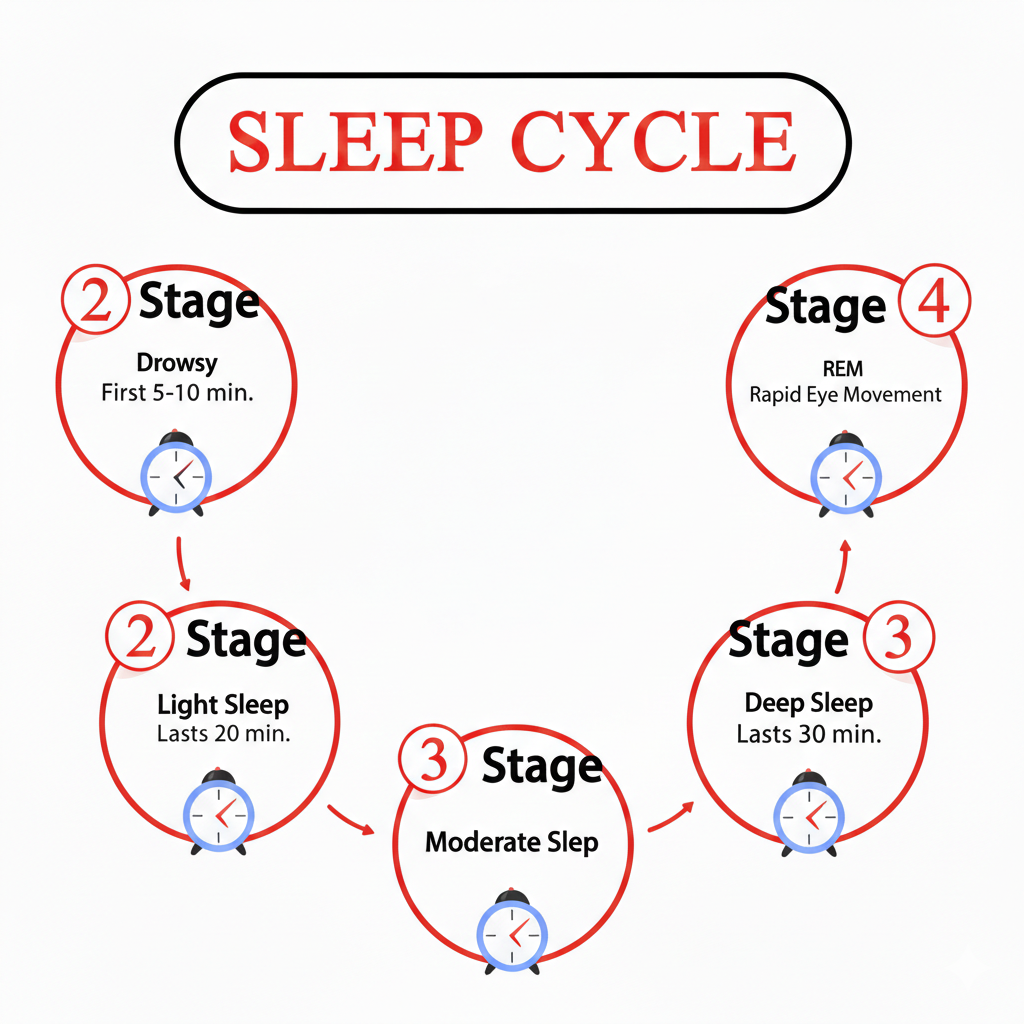
A dream is a mental experience that happens during sleep. It can include images, sounds, emotions, and sensations.According to the Sleep Foundation, dreams mostly occur during a sleep stage called REM (Rapid Eye Movement), when brain activity becomes similar to when a person is awake.During REM sleep, the brain is highly active, eyes move rapidly, and muscles become temporarily paralysed.
The body stays still, but the brain creates vivid experiences. Scientists believe this stage is important for brain health.Sleep happens in cycles. Each cycle lasts about 90 minutes and includes different stages. REM sleep usually begins about 90 minutes after falling asleep and repeats several times through the night. Dreams in REM sleep are often more emotional, vivid, and story-like.However, research shows dreams can also happen in non-REM sleep, but these dreams are usually simpler and less vivid.
This means dreaming is not limited to just one stage of sleep.
-
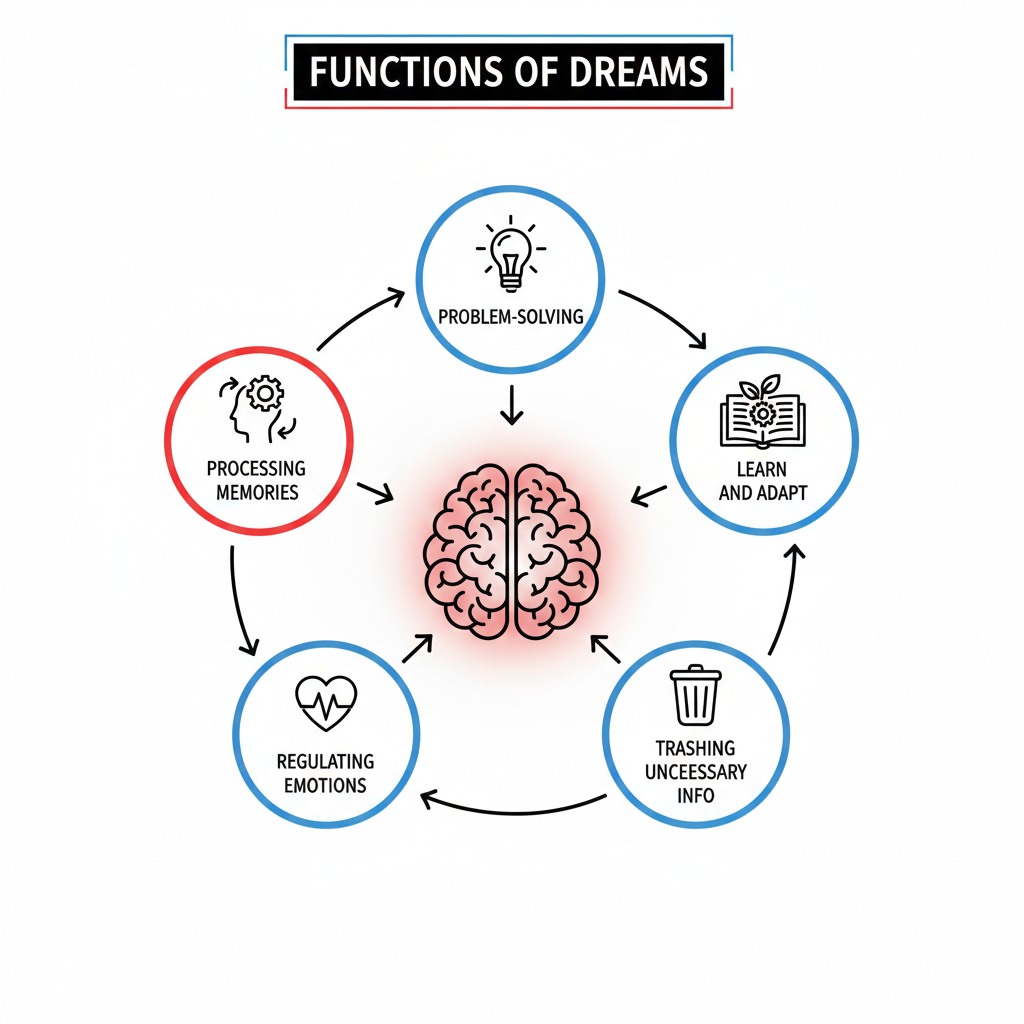
Processing memories
One of the strongest scientific theories is that dreams help the brain organise memories. Harvard Medical School says sleep plays a key role in memory consolidation , the process where short-term memories become long-term memories.When we sleep, the brain reviews information from the day. Important memories are stored and unimportant details may be removed.Dreaming may be part of this process. Researchers believe dreaming helps the brain sort and strengthen useful information. This explains why students often dream about exams or people dream about events from their daily life.
Regulating emotions
Another major role of dreams may be emotional processing. Researches published by the National Library of Medicine shows dreams help people process emotional experiences, especially stressful or upsetting ones.This may explain why people often dream about emotional events such as fear, loss, or happiness. One of the most influential early explanations of dreams came from Austrian neurologist Sigmund Freud in 1899. In his book The Interpretation of Dreams, Freud argued that dreams reveal hidden thoughts and desires from the unconscious mind.
Learn and adapt
Some scientists believe dreaming helps the brain prepare for real-life situations.
A theory called the “threat simulation theory” suggests dreams allow the brain to practise dealing with danger. This idea was proposed by Finnish neuroscientist Antti Revonsuo. According to his research, dreaming may help humans rehearse survival situations in a safe environment.For example, dreaming about being chased or falling may help the brain prepare for real threats. This may have helped early humans survive.
Creativity, problem-solving
Dreams can sometimes help people find solutions to problems. Scientists say dreaming allows the brain to connect ideas in new ways.Research published in PNAS shows sleep helps creative thinking and problem solving. This happens because the brain makes new connections, logical restrictions are reduced and ideas combine freely.Some famous discoveries were linked to dreams. For example, scientist Dmitri Mendeleev reportedly saw the structure of the periodic table in a dream.
Trashing unnecessary info
Dreaming may also help the brain clean itself. During sleep, the brain removes waste products and unnecessary information.Research from the National Institutes of Health shows sleep helps maintain brain health by clearing toxins and strengthening useful neural connections. This process helps protect brain function, improve memory and maintain mental health.
Why it feels real
Dreams can feel extremely real. This happens because the same brain areas used for real experiences are active during dreaming.According to Scientific American, the brain’s sensory regions become active during dreams, making the experience feel real.But the rational thinking part of the brain is less active. This makes it harder to realise you are dreaming.
Why do we forget dreams?
Most people forget dreams quickly after waking up. Scientists say this happens because memory systems behave differently during sleep.Research shows the brain chemical norepinephrine, which helps memory formation, is lower during REM sleep.
This makes it harder to store dreams as permanent memories. As a result, dreams disappear quickly.
Everyone dreams
Research shows all healthy people dream. According to sleep studies, people dream for about two hours every night across multiple REM cycles.People who say they never dream usually just forget their dreams. Dreaming is a normal brain function.Infact, dreaming is not limited to humans. Studies show animals also experience REM sleep.
Research from MIT found rats replay experiences in their brains while sleeping, suggesting they dream about their day. Dogs may dream about running or playing.
-
The brain is active
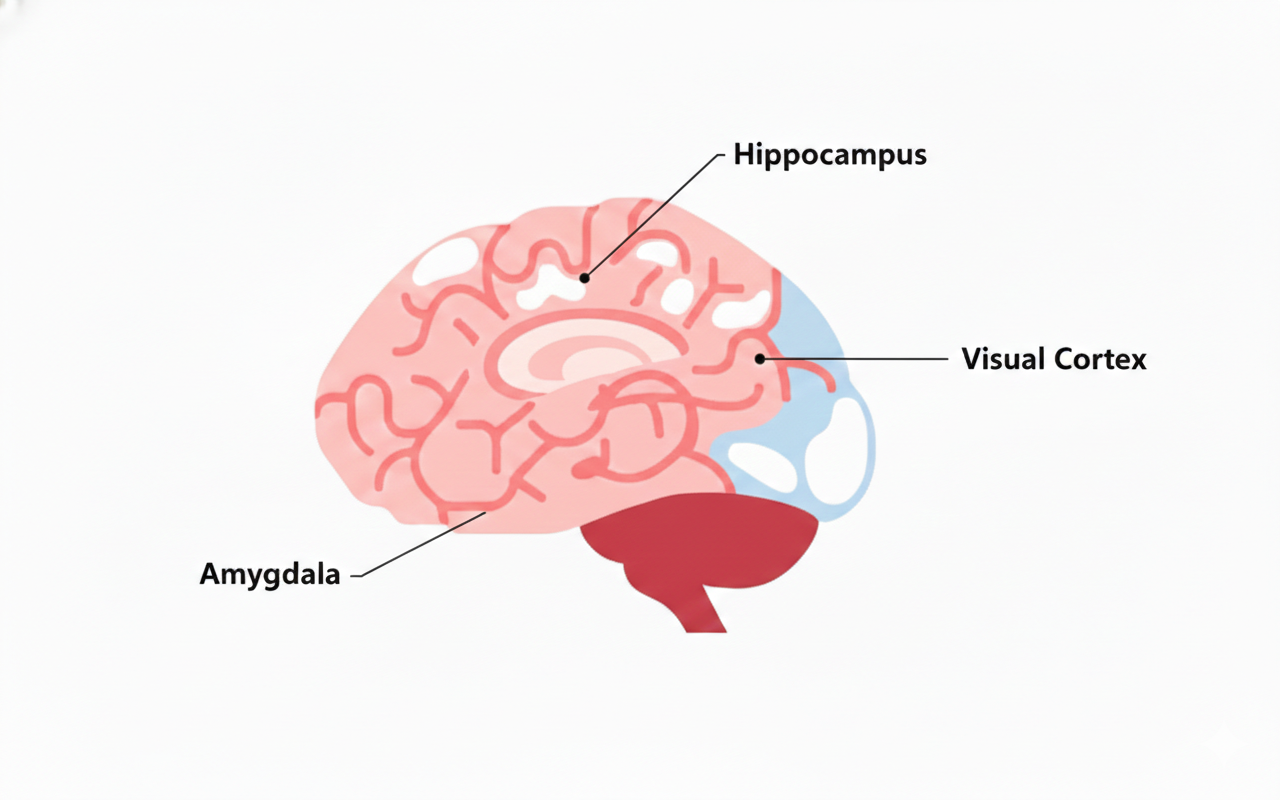
Many people think the brain rests during sleep. But this is not true. Brain scans show some brain regions become more active during dreaming. According to a research published on Frontiers in Psychology, areas linked to emotions, memory, and visual processing are highly active during REM sleep.These include: Amygdala (emotion centre), Hippocampus (memory centre) and Visual cortex (visual images)This explains why dreams often feel emotional and visual.At the same time, the logical thinking part of the brain becomes less active. This is why dreams may feel strange or unrealistic.
Dreaming is important
Dream patterns can reflect mental health. Frequent nightmares are linked to stress, anxiety, and trauma. According to the American Academy of Sleep Medicine, nightmares are more common in people with PTSD and stress disorders.
This shows dreams are connected to emotional health.Studies show lack of REM sleep affects mental and emotional health. People deprived of REM sleep may experience poor concentration, mood problems, and memory issues. Research shows REM sleep is essential for brain function. This suggests dreaming plays an important role.Dreaming is, therefore, not useless or random. But science is still learning. Dreaming remains one of the brain’s biggest mysteries despite decades of research.









 English (US) ·