

 1 week ago
16
1 week ago
16
ARTICLE AD BOX
- News
- Sports
- Badminton
- Why does Delhi monopolise major sporting events even as pollution and player welfare are always genuine concerns?
High AQI, bird droppings and dog bites are issues that directly affect athletes testing their endurance and explosiveness, and don't do India's chances of hosting an Olympics any favours.
Written by Shivani Naik January 18, 2026 09:14 AM IST
 6 min read
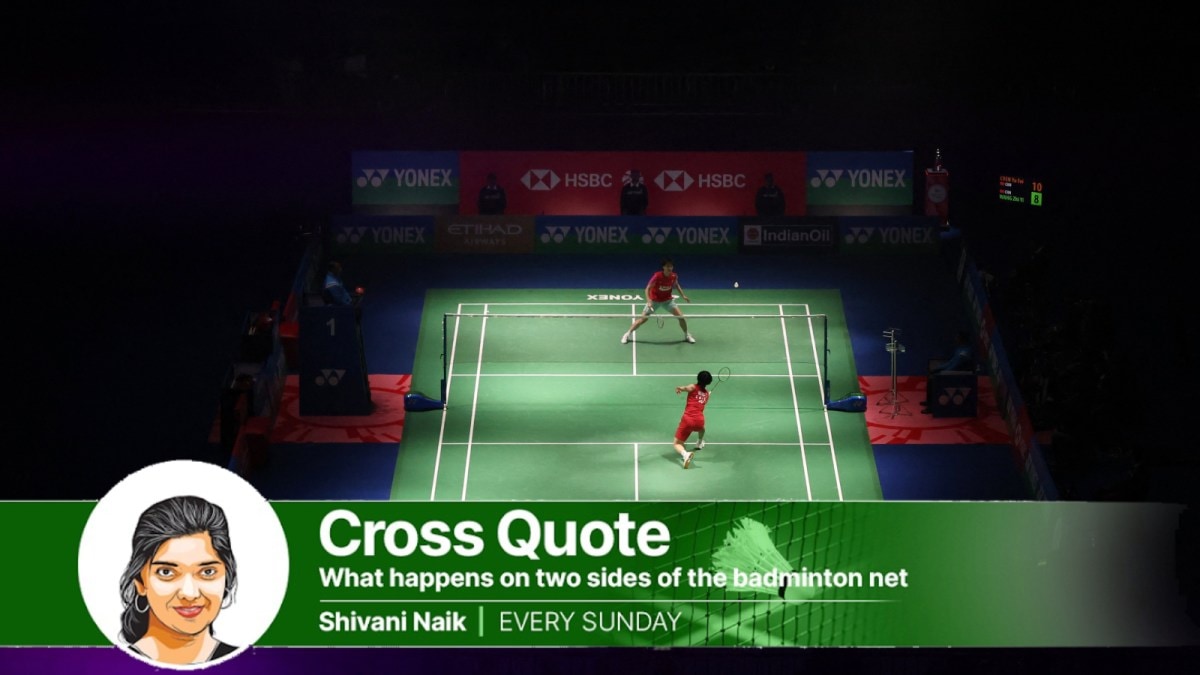 This week doesn't ask the question if Delhi 'can' host top badminton (Yes, it can), but if it 'should'? (Reuters Photo)
There were a bunch of conclusions to draw from the horror week at India Open badminton where Delhi’s hosting cred ended up shredded. Whether Delhi ought to host the World Championships in August and subsequent editions of the Super 750 event (it’s the second tier below the topmost Super 1000s) is one of the many intractable questions.
Story continues below this ad
India has delivered successful sporting events in the past, including the 2009 Badminton World Championships in Hyderabad and the Commonwealth Games in 2010, where the Siri Fort finale helped the Indian contingent leapfrog England to second place in the medal tally on the back of golds for Saina Nehwal and Jwala Gutta-Ashwini Ponappa, and cross the 100 mark.
 Even the 2009 Worlds went off smoothly after early jitters about a terror scare. The recent Junior Worlds in Guwahati faced a torrid first day when streaming lags gave the hosts a terrible first look. Bird droppings at the Syed Modi tournament in Lucknow two years back, and foreign players pointing out poor condition of tap water at hotels in Guwahati in earlier editions of a Super 100, showed that Indian efficiency is far from seamless, and sub-par even.
Story continues below this ad
The leaking roof and blobs of water on the court in Malaysia last year, and Paris Olympics were particularly vexing for shuttlers, after the dining halls ran out of food for athletes, and badminton coaches and support staff – including a foreign Danish one of the Indian doubles pair – were lodged in cramped quarters. Hosting errors are persistent and universal and will get highlighted if athletes are placed in discomfort, but Delhi presents a more dire scenario.
ALSO READ | Not bird poop but ‘nest materials’ halt another game at India Open Super 750 event
Story continues below this ad
The capital’s pollution crisis raises a question deeper than whether India’s blithering organisational framework which always follows the reactive ‘migraine-inducing mitigations at Indian marriages’ way of doing things post a mess, can hold a successful World Championships in seven months. This week doesn’t ask the question if Delhi ‘can’ host top badminton (Yes, it can), but if it ‘should’?
Sport, more than entertainment for those watching, was originally about health for those playing it. And Delhi’s AQI – that often stubbornly stays around 400, does not make a case for anyone to think of serious sport, let alone international athletes who voluntarily put their lungs on test, and need to operate at high-intensity, to seriously compete.
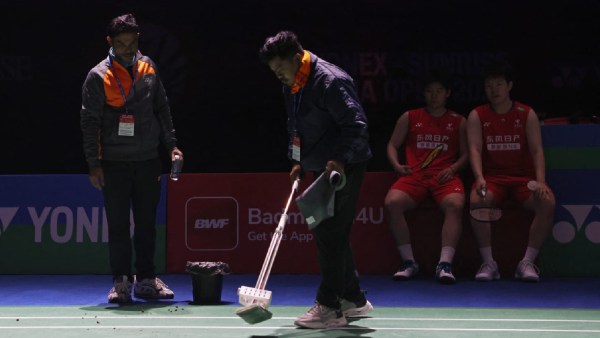 Ground staff clean the court after something fell off the roof of the stadium during the womens doubles semi final match between Chinas Liu Sheng Shu and Tan Ning and South Koreas Baek Ha Na and Lee So Hee (Reuters/ Bhawika Chhabra)
It is darkly, particularly tragi-comic when Singaporean Loh Kean Yew – with no intention of malice – jokes about how every competitor’s level drops two levels when playing the India Open.
Story continues below this ad
Genuine concern
Danes Mia Blichfeldt and Anders Antonsen may come across as continuously carping, but you ignore a shuttler’s desperate plea for cleaner air to breathe at your own respiratory peril. Athletes – and shuttlers especially – are willingly walking into nothing less than a hazard each time they take to the court, given how their endurance and explosiveness get summoned at the same time, and their hearts are pumping blood at eye-popping rates. Any reasonable assessment would worry about their health more than a country’s superficial reputation. The Danes were outspoken, but the spurt of pre-event withdrawals that went unnoticed tell a worrying story, as do some early exits.
A constant criticism of Delhi as a venue, even before the air quality plunged startlingly, has also been due to how it denies other legitimate contenders, the real badminton hubs Hyderabad and Bengaluru, a chance to host big events. As a capital city, it can monopolise top events, but the game’s hard-core fanbase is in the South. It’s been 17 years, but Hyderabad did bring in full houses at the 2009 Worlds for even early morning sessions, and these were ticket-buying folks. Bengaluru has more active amateurs playing on courts even at 3 am after their MNC shifts, and a genuinely badminton-loving crowd. Even Odisha boasts of good infrastructure, as does Chennai, even if one wants to look past the Hyderabad-Bangalore-Mumbai centres.
The obdurate reasons to cling on to Delhi to host every time, even as the city gets lashed by criticisms year after year, are inexplicable, though no stone will be left unturned to make the August Worlds a success. Even if less than in the winter, Delhi’s pollution markers in deep summer too have been worrying for the health of an average resident, and the larger issue of busting your lungs like crazy while purifiers work overtime, needs a relook. Pigeon droppings are scientifically proven respiratory hazards too.
Story continues below this ad
Monkeys in stadia might bring some mirth, but dogs biting Japanese sportspersons at the Athletics Para Worlds last year and bird droppings at the India Open point to bigger issues needing dealing with, as health is directly compromised. These headlines do no favours to India’s chances of bidding for the Olympics. If nothing else, the complaining international shuttlers might’ve provided the pin-prick needed to get Delhi’s caretakers to tackle pollution, and that might be the best thing sport does for the health of all its residents. Winning medals while struggling to breathe in between rallies, just won’t add up, whichever way one slices it.

Shivani Naik is a senior sports journalist and Assistant Editor at The Indian Express. She is widely considered one of the leading voices in Indian Olympic sports journalism, particularly known for her deep expertise in badminton, wrestling, and basketball. Professional Profile Role: Assistant Editor and Columnist at The Indian Express. Specialization: While she covers a variety of sports, she is the primary authority on badminton for the publication. She also writes extensively about tennis, track and field, wrestling, and gymnastics. Writing Style: Her work is characterized by "technical storytelling"—breaking down the biomechanics, tactics, and psychological grit of athletes. She often provides "long reads" that explore the personal journeys of athletes beyond the podium. Key Topics & Recent Coverage (Late 2025) Shivani Naik’s recent articles (as of December 2025) focus on the evolving landscape of Indian sports as athletes prepare for the 2026 Asian Games and beyond: Indian Badminton's "Hulks": She has recently written about a new generation of Indian shuttlers characterized by power and physicality, such as Ayush Shetty and Sathish Karunakaran, marking a shift from the traditionally finesse-based Indian style. PV Sindhu’s Resurgence: A significant portion of her late-2025 work tracks PV Sindhu’s tactical shifts under new coaching, focusing on her "sparkle" and technical tweaks to break out of career slumps. The "Group of Death": In December 2025, she provided detailed tactical previews for Satwiksairaj Rankireddy and Chirag Shetty’s campaign in the BWF World Tour Finals. Tactical Deep Dives: She frequently explores technical trends, such as the rise of "backhand deception" in modern badminton and the importance of court drift management in international arenas. Legacy and History: She often revisits the careers of legends like Saina Nehwal and Syed Modi, providing historical context to current Indian successes. Notable Recent Articles BWF World Tour Finals: Satwik-Chirag have it all to do to get through proverbial Group of Death. (Dec 2025) The age of Hulks in Indian badminton is here. (Dec 2025) Treadmill, Yoganidra and building endurance: The themes that defined the resurgence of Gayatri and Treesa. (Dec 2025) Ayush Shetty beats Kodai Naraoka: Will 20-year-old be the headline act in 2026? (Nov 2025) Modern Cinderella tale – featuring An Se-young and a shoe that fits snugly. (Nov 2025) Other Sports Interests Beyond the court, Shivani is a passionate follower of South African cricket, sometimes writing emotional columns about her irrational support for the Proteas, which started because of love for Graeme Smith's dour and doughty Test playing style despite being a left-hander, and sustained over curiosity over their heartbreaking habit of losing ICC knockouts. You can follow her detailed analysis and columns on her official Indian Express profile page. ... Read More
© IE Online Media Services Pvt Ltd


 English (US) ·