

 5 days ago
14
5 days ago
14
ARTICLE AD BOX
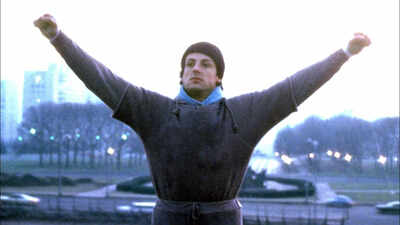
Rocky has survived changing generations, changing politics and changing ideas of masculinity
It was not conceivable to America in the 1970s. It was not conceivable to the whole world. How can the hero of a movie lose a boxing match in the end? Why did he make people cry in every cinema hall around the world? Why does every generation that came after fall in love with Rocky Balboa, and it starts with that loss in Rocky, released in 1976? Legendary actor Sylvester Stallone, who wrote the film in three days—and fought an uphill battle to star in it as the lead—turned 80 this week. He chose not to reflect on fame, box-office records or the cultural phenomenon that this Oscar-winning film eventually became. Instead, he said: “When I wrote Rocky, I wasn’t just writing about one fighter. I was writing about anyone who’s ever been counted out but kept moving forward.”That sentence explains why Rocky Balboa has survived changing generations, changing politics, changing ideas of masculinity and even changing cinema itself. Half a century after the first film released in 1976, Rocky is no longer merely a boxer or a movie character. He has become shorthand for a deeply human instinct: the refusal to surrender when life seems determined to knock you down.But if there’s one generation that needs Rocky's message more urgently than any before it, it is Gen Z, and the emerging, Gen Alpha.
These are two generations that have no reference point to having a normal life. They are growing up in an age defined by relentless comparison and algorithmic validation. Social media has made their lives permanently visible, and every success and every failure are publicly archived. There’s nothing new in either succeeding or facing defeat.
Previous generations faced all those hardships. But they experienced setbacks in relative privacy.
Today's young people navigate academic pressure, an uncertain job market, climate anxiety, economic volatility and rapidly changing technology while simultaneously measuring themselves against carefully curated lives on social media. Research across countries consistently shows rising levels of anxiety, loneliness and fear of failure among young people. In such an environment, resilience is no longer a desirable personality trait; it has become a fundamental life skill.
Why Stallone’s film would resonate especially with Gen Z is that Rocky’s enduring appeal lies in rejecting the fantasy of effortless success. The character reminds us that character is built not in moments of triumph but in the long, unglamorous stretches of disappointment, rejection and persistence.Perhaps the most radical lesson Rocky offers today is that winning is not always about standing on the podium. We have become too comfortable in the last decade celebrating outcomes – be it grades, salaries, followers or viral moments.
And we have completely forgotten paying attention to the discipline of simply staying in the fight. Rocky Balboa rewrote that definition 50 years ago. “It ain’t about how hard you hit.
It's about how hard you can get hit and keep moving forward,” he famously says in a later film, distilling the philosophy that had always defined the character.
To keep going in the age of instant gratification
In an era obsessed with instant gratification, Rocky argues for something slower but infinitely more durable: grit.
For Gen Z and Gen Alpha, who will inherit a world marked by disruption rather than certainty, that may be the most valuable lesson of all: That life will not become easier. But they can become stronger to face whatever life throws at them.That’s the most remarkable thing about Rocky. He never promised victory. He definitely wanted it. But unlike most sports films, his greatest triumph was going the distance. The ending of the original Rocky remains one of cinema's boldest acts of storytelling because the hero loses the fight.
Apollo Creed retains the heavyweight title. Rocky doesn't become world champion. Instead, he discovers something far more valuable—his own self-worth. "All I wanna do is go the distance," he tells Adrian before the fight. "Nobody's ever gone the distance with Creed, and if I can go that distance, you see... then I'll know I'm not just another bum from the neighbourhood.
"
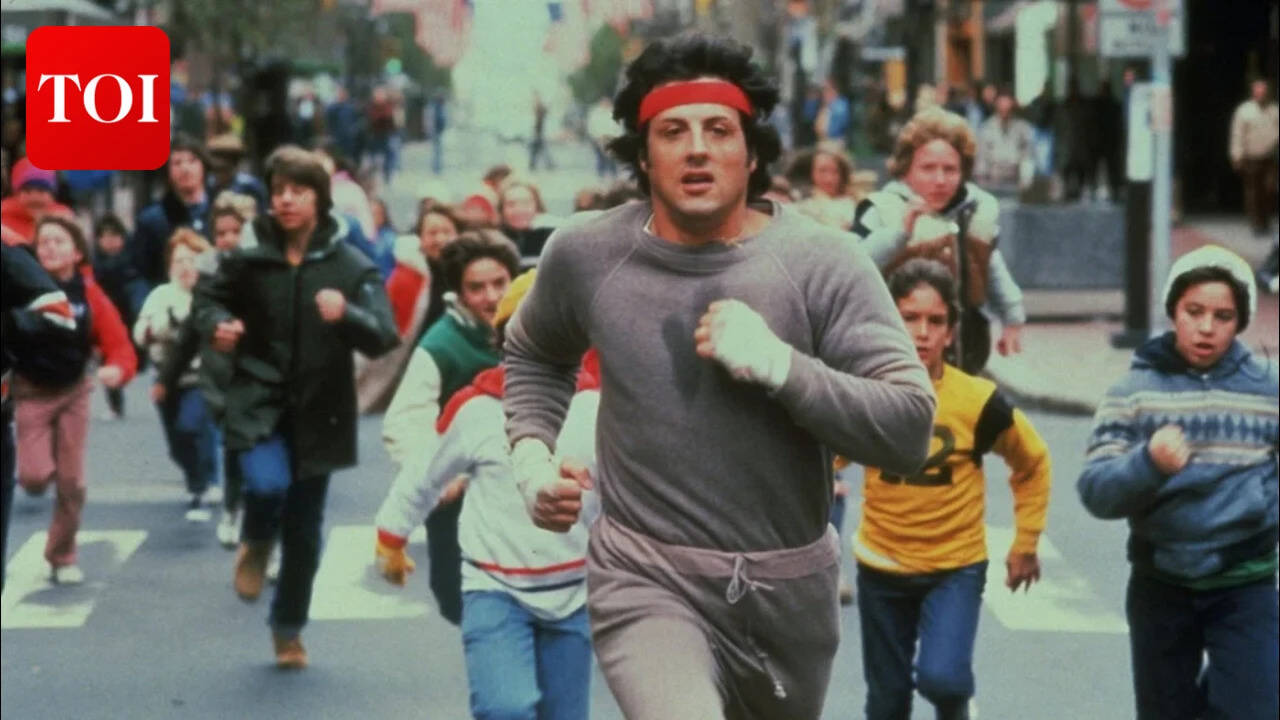
In an era obsessed with instant gratification, Rocky argues for something slower but infinitely more durable: grit.
That is one of the most unforgettable lines written in Hollywood.
And it’s one of those lessons that always stays with us. Sport has always understood this long before psychologists gave it a name. Every athlete learns that failure is not an exception but an inevitability. Tennis players lose more points than they win. Cricketers fail more often than they score centuries. Olympic champions speak as much about heartbreak as they do about medals.
Football players shake the hands of their opponents with tears flowing after a defeat.
Sport teaches people to live with disappointment because disappointment is built into its structure. You lose matches, get injured, make mistakes, sit on the bench, return to training and begin again. Sports psychologists often describe this as “stress inoculation” – the repeated exposure to manageable setbacks gradually builds the emotional capacity to deal with larger ones later in life. That’s the lesson for Gen Z and Gen Alpha here.Rocky's famous training montage is remembered for Bill Conti's soaring music and the triumphant run up the Philadelphia Museum steps. But what the sequence really celebrates is repetition. It says to every generation there are no shortcuts. There’s no secret technique and miraculous transformations. There is only the quiet accumulation of discipline. Rocky does not become stronger because fate chooses him. He becomes stronger because he accepts that resilience is built one ordinary day at a time.That idea feels radical today. But what’s more radical, in our times, is Rocky’s ask that we don’t become superheroes but remain human. In the movie, and its sequels, Rocky’s resilience has room for fear, grief, doubt and vulnerability. He is frightened before fights. He questions himself. He cries. He leans on his coach. He fails repeatedly. Yet none of these emotions diminish his strength.This is why Rocky has aged far better than many action heroes of his era.
Today’s society confuses strength with aggression. Public discourse rewards outrage. Social media encourages us to fight every argument, defend every opinion and treat disagreement as warfare. Rocky offers another model altogether. Boxing, after all, is violence constrained by rules. There is a referee, a bell and an understanding that combat ends when the contest does.
Rocky never carries the fight outside the ring. He understands that the greatest battles are internal.
Pride, despair, insecurity and fear are the opponents that accompany him long after the cheering stops. Perhaps this is why every generation continues to find its own Rocky.Both the character and the movie still reminds us that resilience is measured by who we become while trying. Rocky dismantles illusions that this generation is comfortable believing even if deep down they know it’s not true. Rocky is not exceptionally gifted, wealthy or destined for greatness.
He is a debt collector, who lives alone, boxes in small clubs and wonders whether his life has amounted to anything. Just like we all do.
What makes him extraordinary is his endurance. He keeps showing up. He keeps training. He keeps believing that effort has meaning even when success appears unlikely.Perhaps that is why one line from Rocky Balboa has escaped the confines of cinema to become almost a universal philosophy of resilience. "It ain't about how hard you hit. It's about how hard you can get hit and keep moving forward. How much you can take and keep moving forward. That's how winning is done." It has been quoted by athletes, military commanders, therapists, entrepreneurs and motivational speakers because it captures something that psychology now repeatedly confirms.
Resilience is not the absence of adversity. It is the ability to recover from it without allowing it to define who we are.






 English (US) ·