

 1 hour ago
4
1 hour ago
4
ARTICLE AD BOX
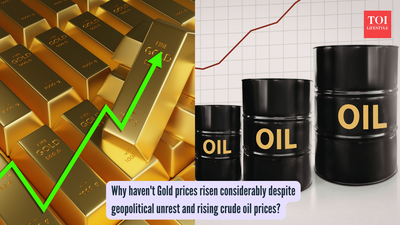
Despite geopolitical turmoil and rising inflation, gold prices have recently dipped, puzzling many buyers. This is attributed to the US Federal Reserve's high interest rate policy, which pressures non-yielding assets. However, historical data reveals gold's resilience, with significant rebounds following previous price drops, presenting opportune buying moments for patient investors.
Gold's recent dips amid the current geopolitical upheavals have buyers scratching their heads. Wars rage, oil prices rise, and inflation lingers, which are some of the classic triggers for the shiny safe-haven metal.The precious metal has been a revered and safe commodity for generations from ancient currency to a modern portfolio staple. Gold has been a crucial part of economic storms, central bank moves, and passed down as heritage from generation to generation in the form of a family heirloom.But the question remains: amid such fluctuations in stock market and petroleum prices, why have gold prices not risen and, in fact, dipped?
Representative Image
Why?
The US' central banking system, or the Federal Reserve's plan to keep interest rates high, is pressuring assets like Gold and stocks that don't pay interest.
Algorithmic trading makes these dips even sharper, but history shows that Gold often bounces back strongly.Since October 2025, there have been three clear "buy the dip" opportunities. Gold reached ₹3,62,000 per 10 grams on October 20, dropped 8.5% to ₹3,31,000 within a week, then rose to ₹4,20,000. On January 29, 2026, it fell 13% from ₹4,46,000 to ₹3,88,000 over three days before recovering to ₹4,44,000. Most recently, on March 2, it slid 15% from ₹4,44,000 to ₹3,76,000 by last Friday—the third buying opportunity in five months.
The Wall Street Journal called Thursday's drop the "worst daily declines on record" for Gold and silver, "Sell-off in Precious Metals Accelerates," but that's not true historically.
Watch
Big Fuel Tax Cut By Centre, But No Price Relief: Why Petrol And Diesel Still Cost The Same In India
Gold buyers need patience
Gold acts as a strong hedge despite volatility, outperforming currencies, and complements stock indexes . People often mislead with cherry-picked charts, where stock fans start at Gold's 1980 peak ($850/oz) or 2011 high ($1,900), while Gold fans pick 2000 lows.According to Investing.com and World Gold Council reports, from 1998's average of $294 per ounce (around ₹12,000 for 10 grams back then), Gold has surged 1,430% to about $4,500 (roughly ₹3,77,000 for 10 grams today), far outpacing the S&P 500's 480% gain. In investing, comparing Gold vs. the S&P 500 shows how precious metals stack up against stock market returns over time.Against currencies, Gold has crushed them all since the 1960s, up nearly 120-140 times versus the USD since 1971.









 English (US) ·