

 3 days ago
8
3 days ago
8
ARTICLE AD BOX
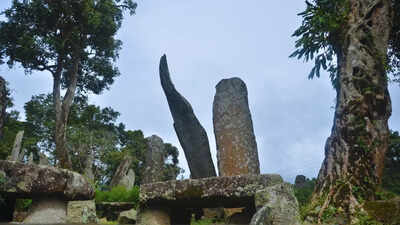
Hidden in the rolling uplands of the East Khasi Hills district of Meghalaya, the Mawphlang Sacred Grove is one of India’s most extraordinary examples of living conservation. Located around 25 kilometres from Shillong, this ancient forest has survived centuries of social change, colonial intervention and modern development, not through fencing or forest laws, but through belief systems passed down across generations.
As mentioned in the official website of Meghalaya Tourism, visitors can take absolutely nothing out of the forest. Not even a twig or a pebble or leaves. You go back as you came in. Add screenshot
A sacred forest maintained by tradition
The Mawphlang Sacred Grove is subject to the customary laws of the Khasis. The forest is considered to be guarded by a deity related to nature, and hence particular norms have been set with respect to how an individual should function in the forest.
It is considered important that visitors leave the forest as they found it, never taking a leaf, stone, wood, or any other object found in nature. Even twigs are considered to be a part of nature.
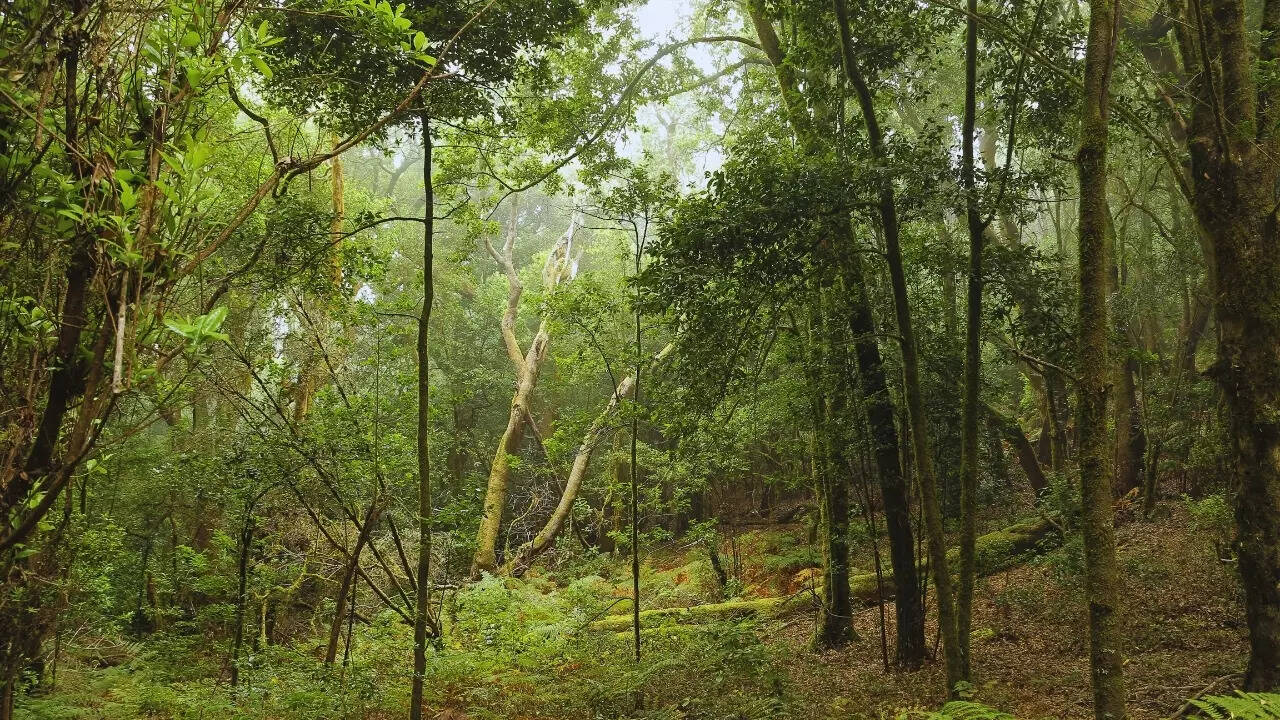
Densely forested area
Unlike other areas of the forest that have undergone changes due to colonial activities of logging or developmental changes after independence, Mawphlang remained untouched since breaking the taboos was said to cause not only misfortune to the person who committed the taboo, but also to the entire community.
Ecologically, Mawphlang Sacred Grove functions as a natural archive of Meghalaya’s original forest cover. Spread across approximately 80 hectares, the grove contains some of the oldest surviving trees in the Khasi Hills, including massive oak species, subtropical broadleaf trees, rhododendrons, laurels and chestnuts. The forest has never been cleared or commercially exploited.Wildlife in Mawphlang is subtle rather than spectacular. While large mammals are rare, the grove supports a healthy population of birds, amphibians, reptiles, insects and small mammals, all of which depend on intact forest systems for survival.
Land of monoliths and cultural memory
As one approaches the forest, one comes across ancient stone monuments, some upright, while others are partially buried in earth and moss. These are at the heart of Khasi traditions, having served as landmarks for ritual congregations, clan memorials, and community meetings. The presence of these monuments helps emphasize that Mawphlang forest has never been just a forest.
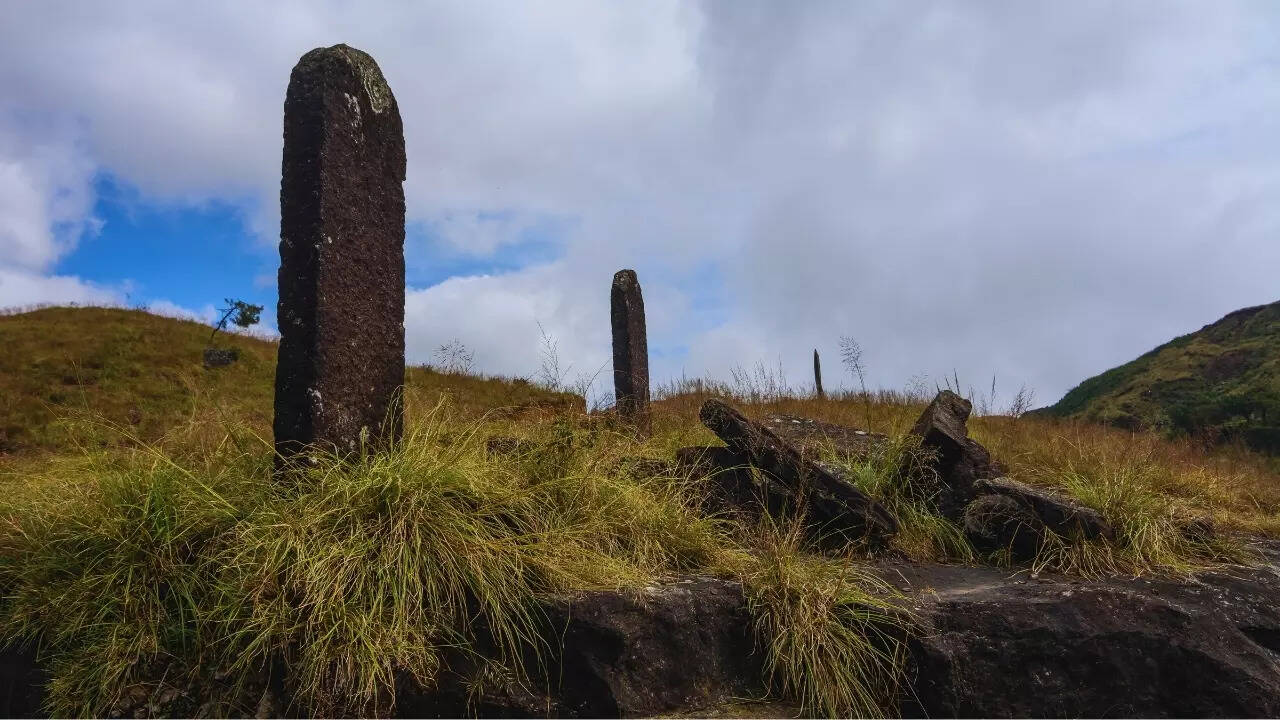
Monoliths in Meghalaya
The near vicinity has been used in the past for ceremonies associated with agriculture, seasonal transition, and community well-being.
Although large-scale rituals are no longer as common, the grove still has a high degree of symbolic importance, particularly during major festivals. As a consequence, Mawphlang is a living site as opposed to a relic, as it is still used in a continuous manner.
The Khasi conservation ethics
Similar sacred groves exist throughout the state, but their size has been reduced in some cases. Mawphlang’s survival is often cited by conservation scholars as evidence that community-enforced protection can be as effective as formal legislation, especially when backed by customs and traditions.
Visit Mawphlang with respect
Tourism at Mawphlang is carefully managed to avoid disrupting its fragile balance. According to the Meghalaya Tourism Department, visitors are encouraged to explore the grove with local guides who interpret both its ecological features and cultural significance. These guided walks help ensure that travellers understand why certain behaviours, such as loud noise, littering or touching vegetation, are discouraged.The grove can be visited throughout the year, but the most favourable period is between October and April, when rainfall is lower and forest trails are more accessible. During the monsoon months, the grove becomes even more lush, though paths can be slippery. So tread carefully.As per the Meghalaya Tourism, Mawphlang also serves as a starting point for the historic David Scott Trail, a 19th-century route that once linked the Khasi Hills to the plains of Assam. Is that something an adventure traveller would find fancy? Most definitely.









 English (US) ·