

 1 hour ago
4
1 hour ago
4
ARTICLE AD BOX
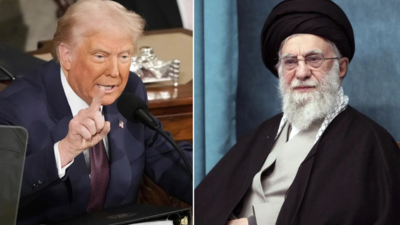
President Trump's decision to eliminate Iran's Supreme Leader Ayatollah Ali Khamenei has dramatically altered the Middle East. While a tactical victory, the move has triggered regional missile exchanges and rising oil prices. Analysts warn that removing Khamenei, who controlled escalation, may lead to a more unpredictable and volatile Iran, posing significant challenges for global stability and US policy.
President Donald Trump’s decision to kill Iran’s supreme leader Ayatollah Ali Khamenei in a joint US–Israeli strike has reshaped the Middle East geopolitical landscape overnight.Trump framed the killing in sweeping historical terms. Calling Khamenei “one of the most evil people in history,” he urged Iranians to “take over your government,” declaring that “the hour of your freedom is at hand”.But as the dust settles, the strategic implications of Operation Epic Fury appear far more complicated than the triumphal rhetoric suggests.The elimination of Iran’s most entrenched adversary of the United States has delivered Trump a striking tactical victory. Yet early developments - from missile exchanges and attacks across the Middle East to rising oil prices and domestic political unease - suggest that removing Khamenei may ultimately create problems that the aging cleric, for all his hostility, helped contain.
The central question now confronting Washington is not whether Trump scored a dramatic blow against Iran. It is whether the consequences of that blow prove more destabilizing than the decades-long standoff that preceded it.Why it mattersKhamenei was not merely a political leader; he was the central pillar of the Islamic Republic’s ideological and strategic architecture.For nearly four decades he served as the final arbiter of Iran’s military strategy, nuclear ambitions and regional proxy networks.
His rule oversaw the expansion of Iranian influence across Iraq, Syria, Lebanon and Yemen, helping transform the country into what analysts often describe as a formidable regional power.Yet that authority also created a paradox.The same figure who orchestrated Iran’s resistance to the United States and Israel was also the one capable of controlling escalation. Khamenei presided over a system that thrived on confrontation but carefully calibrated its risks.His removal eliminates the individual who held the ultimate authority to balance those competing pressures.Analysts caution that killing a supreme leader does not automatically dismantle the political structure that produced him.The Council on Foreign Relations noted that “taking out Iranian Supreme Leader Ayatollah Ali Khamenei is not the same as regime change. The Islamic Revolutionary Guard Corps is the regime”.Foreign Policy put the same dilemma more starkly: Khamenei’s death “will have profound consequences for the regime and the Iranian people,” but “Khamenei’s death does not mean an automatic collapse of the regime and the emergence of a new order that is amenable to regional countries and the global community.” It adds that the regime’s “survival skills, the lack of clear alternatives, and the Iranian opposition’s disunity will make US President Donald Trump’s war against the regime much more complicated than he may have imagined.
”
- The result is a strategic paradox: The United States has removed its most prominent enemy in Tehran but may now face a more unpredictable and volatile adversary.
Zoom in: A region already on edgeThe immediate aftermath of Khamenei’s death has underscored how quickly the crisis could spiral.Iranian forces have launched waves of missile and drone attacks across the region, targeting Israeli cities, Gulf infrastructure and US bases. The Islamic Revolutionary Guard Corps claims dozens of American military facilities have come under attack.President Masoud Pezeshkian vowed that the killing of Khamenei “will not go unanswered,” declaring that “the pure blood of this respected leader will rise like a flowing spring and will root out American-Zionist oppression and crime,” according to NBC.Behind the scenes, the retaliation appears to follow a strategy devised long before the strike itself.A regime insider told the Financial Times that Khamenei and his commanders developed a “detailed” escalation plan months earlier after Israel’s war with Iran last year.“We had no choice but to escalate and start a big fire so everyone would see,” the insider told the FT. “When our red lines were crossed in violation of all international laws, we could no longer adhere to the rules of the game.”Iran’s interim leadership has framed the unfolding attacks as the continuation of Khamenei’s own vision. Ayatollah Alireza Arafi said the war was proceeding “gracefully with [Khamenei’s] designing,” according to the FT.The pattern of strikes - targeting airports, hotels, ports and energy facilities across the Gulf - suggests that Tehran intends to widen the conflict beyond Israel and the United States.Between the linesIn life, Khamenei represented a constant but predictable adversary.For nearly four decades he presided over a regime defined by “resistance and resilience.” During that time Iran built a network of allies and proxies that allowed it to challenge US influence across the Middle East without directly provoking an all-out war.Yet by the time of his death, the Islamic Republic was also under enormous pressure.Years of economic sanctions had weakened its economy. Nationwide protests had shaken the regime, prompting a brutal crackdown that killed thousands.
International isolation had deepened as Iran’s nuclear program advanced and its regional alliances hardened.In that sense, the United States faced a weakened but still cohesive adversary - one whose behavior Washington understood after decades of confrontation.Khamenei’s death introduces a new level of uncertainty into that equation.Power inside Iran now appears dispersed among clerical authorities, Revolutionary Guard commanders and political factions competing to define the next phase of the Islamic Republic.In such an environment, escalation may become a tool for domestic legitimacy.Competing leaders may feel pressure to demonstrate strength against the United States and Israel, increasing the risk of unpredictable military actions.The economic cost: The price at the pump is a referendum in disguiseEarly estimates suggest that the opening phase of “Operation Epic Fury” alone may have cost more than $5 billion. The figure includes the cost of the military build-up before the strike, the use of expensive precision munitions, and the loss of key assets such as three F-15E Strike Eagle fighter jets in a friendly-fire incident in Kuwait.
Several defence and market analysts warn that if the conflict continues for two months, the broader economic impact could reach roughly $210 billion.
That projection includes about $65 billion in direct military spending and another $115 billion from disruptions to trade and financial markets. The German Marshall Fund notes that about 20% of globally traded oil and a significant share of liquefied natural gas transit through the Strait of Hormuz; a sustained closure “would likely trigger short-term supply shortages and a sharp spike in oil prices,” with LNG prices “hitting Europe and Asia hardest” and spillover effects including “renewed global inflation and severe strain on energy-importing developing economies.
” Within days of the strikes, Brent crude prices have jumped between 10% and 13%, climbing into the $80–$82 per barrel range. Analysts at Goldman Sachs estimate that markets are now pricing in a “risk premium” of roughly $14 per barrel as traders fear a prolonged disruption. If tensions escalate and shipping through the strait is seriously constrained, oil prices could rise above $100 per barrel, potentially pushing US gasoline prices toward $3.50 per gallon- a level that has historically been politically damaging for US presidents.Trump, for his part, has conceded the war may push oil prices up for Americans, even as he predicted the spike would be temporary-an acknowledgment that the economic front is not a footnote but a political theater of its own. This is where a living Khamenei looks, in retrospect, perversely “cheaper.” The old equilibrium-sanctions, proxy skirmishes, periodic maritime tension-still allowed markets to habituate.
A dead Khamenei, attached to a widening war and a threatened chokepoint, injects volatility into the one metric that reaches voters every week.And volatility is the enemy of campaign slogans.The big pictureA prolonged conflict also threatens to strain Trump’s political coalition.The America First movement that propelled him back to the White House was built partly on skepticism of long Middle Eastern wars.Politico reports that some Trump allies worry the conflict could undermine that promise if it expands.“A significant, if not majority of the base, will be with him no matter what he does,” GOP strategist Matthew Bartlett told the outlet. But he warned that questions will grow if the war drags on or casualties mount.Vanessa Santos, a conservative PR executive representing MAGA media voices, told Politico: “MAGA is not anti-force; It is anti-forever war.”What they are sayingEven as the conflict unfolds, the Trump administration has struggled to articulate a single consistent rationale for the war.Officials have cited several overlapping objectives: Preventing Iran from developing nuclear weapons, stopping missile attacks on Israel, retaliating for American casualties and supporting Iranian protesters seeking political change.Critics say the shifting explanations risk undermining the administration’s credibility.Democratic congressman Jake Auchincloss told the Financial Times that Trump had offered “four different rationales for the war in the last 72 hours.”“With strategic clarity, US forces could ruthlessly execute their mission,” Auchincloss said. “Who could take that kind of commander-in-chief seriously?”Even some figures within Trump’s broader political orbit have raised concerns.Prominent conservative commentators and MAGA influencers have questioned whether the operation aligns with Trump’s long-standing promise to avoid costly foreign entanglements.What’s next As per Israeli media reports, Ayatollah Ali Khamenei’s son, Mojtaba Khamenei(56), has been chosen as the successor to his father and will assume the role of Supreme Leader. The report added that Mojtaba had played a major role in managing his late father’s office and maintains close ties with the top ranks of the IRGC and the Quds Force.The Israeli media described him as having a more hard-line stance than his father and being behind violent crackdowns on protesters in Iran.Iran’s Revolutionary Guard, which commands vast military and economic power, is expected to play a decisive role in shaping that transition.The bottom lineThe killing of Ayatollah Ali Khamenei represents one of the most consequential moments in modern Middle Eastern politics.For President Trump, it is both a victory and a gamble. A living Khamenei represented a stable adversary who could calibrate confrontation. A dead Khamenei may prove far harder to manage.(With inputs from agencies)





 English (US) ·