

 1 hour ago
6
1 hour ago
6
ARTICLE AD BOX
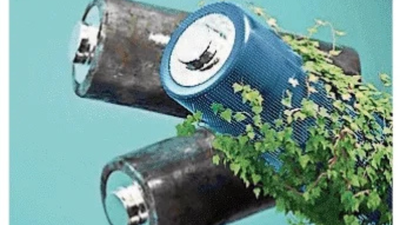
Because we can’t consume the earth to save itLithium came into existence minutes after the Big Bang. Stars still produce lithium. How it accumulates on earth, given that it’s an unstable element always bound to another element, is not known.
Mined for almost a century, lithium has been central to the promise of reducing fossil fuel consumption. For 70 years, two future techs, nuclear fusion and batteries, and promises of endless, cheap and clean energy have shaped its laws and policies.It is through lithium’s story, of exhaustive mining, that Javiera Barandiarán in Living Minerals: Nature, Trade, And Power In The Race for Lithium pushes for a move from the zero-sum “critical minerals” framework towards a Rights of Nature approach, for true sustainability.EVs would be far better for climate if designed small and light. But EVs are designed large and heavy, requiring far more minerals, metals, and plastics than necessary for a functional car. In US, 80% of EV models are SUVs and large cars, in Europe and China, this is 60%. “Each large car carries minerals and metals that could have been left in the ground, foregoing the production of mining waste, use of water, and destruction of landscapes.
”Market-driven resource nationalism mines everywhere: “underneath tropical forests and glaciers, in deep sea, in the Arctic and Antarctic, even on the Moon.” Lithium is pivotal to resource nationalism. Because, first, it is hard to count, map and isolate. Second, this physical pliancy and promise of possibilities give it ‘ontological’ fluidity – the story shifts, but always is ‘if we have lithium, we can…’.

This makes lithium resonate with aspirations for growth and wellbeing – mining memories that are “ideas of the past mobilised for action today in search of better futures.”
Through this, investors profit from electrification’s promise of endless consumption and perpetual growth – not a formula for a livable planet. What is most scarce in “halls of power”, argues the book, is not any mineral but imagination.So, EVs are an improvement over diesel cars, but they remain too mineral-hungry, and too many are needed for the transition to qualify as truly sustainable. Smaller, lighter batteries could cut demand for lithium over a third.
Add public transit and robust recycling, and lithium demand could be 92% below predicted levels.Mining/extraction has divorced minerals from their ecosystems. Toxic harms of industrial mining are known. Yet there are still calls for “more science” to better understand mining’s impacts. Science, as a privileged source of information, thus authority, is deeply ingrained in governance. Yet, the book argues, science itself is ruled by a “mechanistic view of the natural world where each element is treated as distinct and amenable to control and isolation”.
Research is by “industry-sponsored scientists to facilitate business as usual”.Moreover, Francis Bacon and Robert Boyle’s writings (16th/ 17th centuries) also created a “new image of nature as a female to be controlled and dissected”. As a result, nature stands stripped of its complexity, rendering it “productive and ready for parceling”.Barandiarán concludes that depleting a mineral is as grave as causing the extinction of a species. If the “logic” remains “infinite growth on a finite planet”, then changing the mineral (from carbon to lithium) only moves “sacrifice zones” from oil fields to salt flats. True transition isn’t just about changing the fuel, but changing the logic of growth that demands we consume the earth to save it.







 English (US) ·