

 1 week ago
7
1 week ago
7
ARTICLE AD BOX
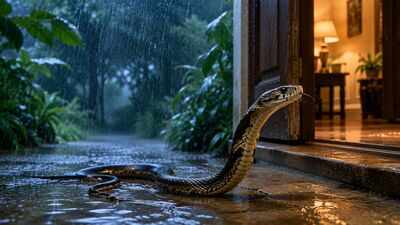
Rain often changes what people notice in the natural world, and snakes are one of those creatures that suddenly seem more visible when the weather shifts. It can feel as though they appear out of nowhere after a downpour, sliding across paths, resting near damp stone, or even turning up in gardens where they were not seen the day before.
The assumption is usually that rain “brings them out”, as if they are reacting directly to falling water. The reality is less straightforward. Snakes are already there, moving through their own routines, but rain alters the ground conditions, the behaviour of their prey, and the places they can safely shelter. In that reshuffling of activity, encounters with people become more likely, especially in rural edges, scrubland, or anywhere soil drains poorly and small animals are forced to shift position.
Why snakes are often seen after heavy rain
After heavy rain, the Earth itself changes character. Burrows can flood or soften, forcing rodents, frogs and insects to move above ground or into more exposed cover. Snakes, which often follow food availability closely, do not respond to rain as a signal in itself, but to what the rain disrupts underneath it. A damp evening can mean easier hunting in some places, particularly where amphibians become active or small mammals are displaced.
Movement is also shaped by the simple difficulty of staying put. Waterlogged soil can make underground refuges less stable, especially in sandy or loose terrain. Some species that usually stay hidden will briefly travel across open ground to reach drier pockets. That short stretch of exposure is often when people notice them.There is also the matter of scent and vibration. Wet conditions carry smells differently, and the soft ground can transmit movement in a muted way.
A snake crossing a path after rain may not be doing anything unusual at all, but it becomes easier for a passer-by to spot against darkened soil or washed-out vegetation.
How sunshine after rain brings snakes into view
Once the rain passes, the first break in cloud cover tends to draw reptiles back into view. Snakes regulate their body temperature externally, so even brief sunlight becomes important after cooler, wet periods. A stone wall, a flat rock or a patch of open track can turn into a temporary basking point.This is where misunderstandings often build. People assume snakes prefer rain or emerge because of it, but what is often seen is the aftermath: individuals warming up after being less active during the wet spell. They may stay still for longer than expected, which increases the chance of being noticed on footpaths or garden edges.Not every sighting comes from basking, though. In some places, rain simply clears dust and leaf litter, making movement easier for both snakes and observers.
A trail that was visually cluttered a day earlier can suddenly offer a clearer line of sight.
Why snake sightings increase during spring and early summer
Across spring and early summer, snake activity tends to spread out. This has less to do with rain alone and more to do with temperature changes and breeding cycles. As conditions warm after colder months, many species leave more stable overwintering sites and begin moving across wider areas.That movement is not perfectly timed. Some individuals emerge earlier than others, depending on local microclimates, which means snakes can appear in unexpected places for a few weeks at a time.
Roads, walking tracks and garden edges often intersect with these dispersal routes.Rainfall during this period can add another layer of movement. Wet conditions may encourage prey to shift position, which in turn draws predators along the same routes. It is less a coordinated surge and more a chain reaction of small adjustments in behaviour.
How rainfall reshapes snake habitats
Snakes are often associated with dry heat, but water edges play a steady role in their ecology.
After rainfall, temporary streams, seepage lines or saturated soil patches can form short-lived corridors through otherwise dry terrain. These routes attract frogs and small mammals, and snakes may follow along the same lines.In drier regions, even a minor spring or irrigation runoff can create a concentration point. People walking near these areas tend to report more sightings, though it is often the concentration of life, not the water itself, that matters.The connection is subtle. A snake is not drawn to rain in isolation, but to the reshaping of habitat that follows it. The effect is indirect and layered, and usually temporary.
Why encounters feel more frequent after rain
There is also a human side to the pattern. Rain changes how and where people move. Paths that were avoided during dry heat become more usable, gardens are checked more often, and outdoor activity resumes after a pause. That overlap increases the chances of crossing paths with wildlife already present in the area.Visibility plays a role too. Wet surfaces darken colour contrast, making a moving animal stand out more sharply against pale stone or fresh greenery. Even still snakes are easier to notice when light is flat and surroundings are newly washed. What feels like an increase in numbers is often an increase in exposure. The animals have not suddenly arrived; they have simply become harder to miss for a short period.









 English (US) ·