

 1 hour ago
8
1 hour ago
8
ARTICLE AD BOX

Dr Prateek SharmaFor years, patients have walked into my clinic with a “gut feeling” — butterflies in their stomach before an important meeting, nausea before an exam, or abdominal discomfort during stressful times.
What fascinates me is that “gut feeling” is not just a figure of speech. It is firmly rooted in biology.As a gastroenterologist, one of the most important lessons I have learned is that the gut is far more than a digestive tube. In many ways, it behaves like a second brain. Not because it thinks or reasons the way our brain does, but because it constantly communicates with the brain through a system of nerves, hormones, immune signals and trillions of micro-organisms that live inside our intestines.
The more we study this gut-brain connection, the more we realise that digestion, mood, stress, sleep, cravings and overall wellbeing are deeply intertwined.
Bugs that connect mind and body
The gut microbiome (bacteria, viruses and fungi) helps us digest food, produce beneficial compounds, train our immune system, and communicate with the nervous system. When we are anxious or nervous, the brain sends signals that can alter gut function. Some get cramps, bloating or nausea.
Others experience constipation or diarrhoea. The stomach may feel unsettled even though there is no infection or structural disease.The conversation works both ways. Researchers are exploring how gut microbiome disturbances may contribute to mood disorders, anxiety and even cognitive function. Nearly 95% of the body’s serotonin (happy hormone) comes from the gut, leading many to ask whether happiness is simply a matter of feeding gut microbes.
The answer is both yes and no. While a healthy gut does not guarantee happiness, an inflamed gut can certainly make it harder to feel your best.
Poor digestion, bloating and disrupted sleep can affect mood and energy levels. The gut is not the entire story, but it’s an important chapter.A healthy gut has three key qualities: diversity, stability and resilience. Diversity means having a wide range of microbes living together.
Stability means the ecosystem remains relatively balanced over time. Resilience means it can recover after illness, antibiotics, travel or dietary changes. A healthy community is not built around one individual; it thrives because many people contribute to its success.
The same principle applies to the gut.
Cravings are a team thing
Another area of intense scientific interest is food cravings. Patients frequently ask whether their gut bacteria are secretly controlling their desire for burgers, sugary drinks or midnight desserts.
I think of cravings as a team effort. The brain, hormones, habits, emotions, stress levels and microbiome all participate. If you repeatedly consume certain foods, your taste preferences adapt, your brain becomes accustomed to them and your gut environment may gradually shift in that direction.
The microbiome may influence cravings, but it is not acting alone.So, is clean eating the only way to restore gut health? Not quite.
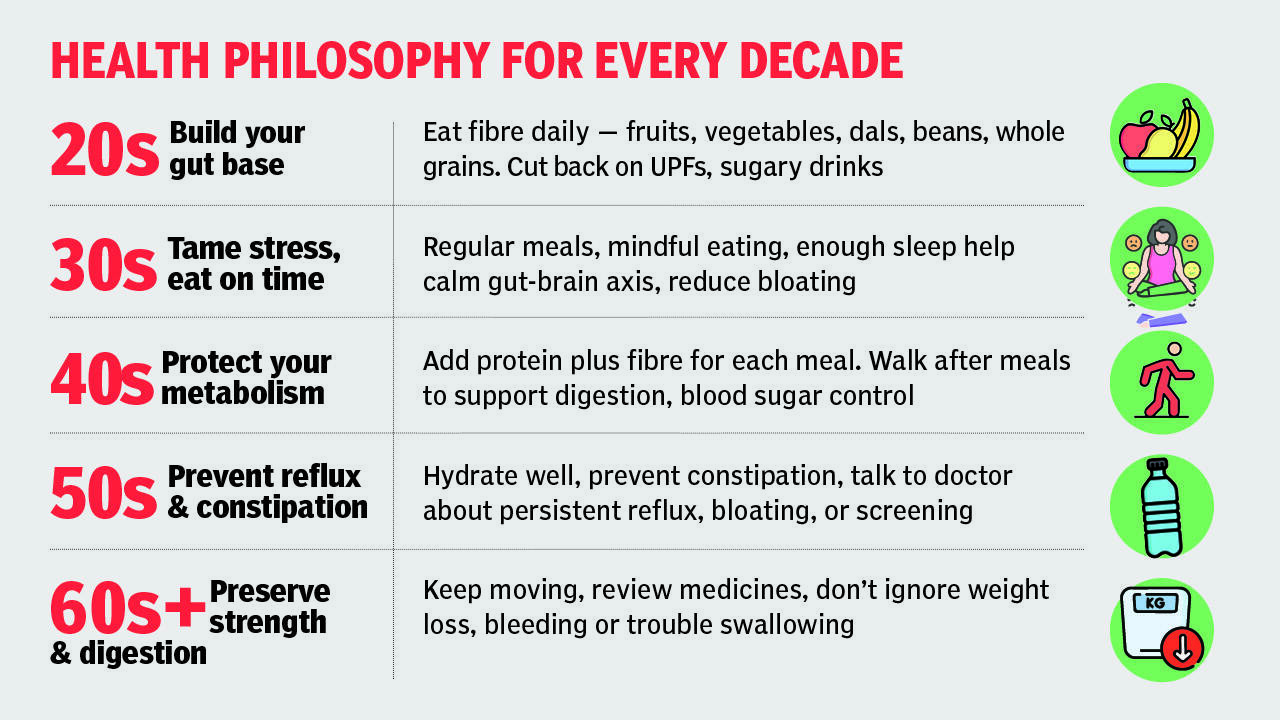
The gut responds to much more than food. I have seen patients who eat excellent diets struggling with digestive symptoms because they sleep poorly, live under chronic stress or rush through every meal. The gut loves rhythm. It thrives on regular meal timings, adequate sleep, hydration, physical activity and periods of calm. Eating a healthy salad in five rushed minutes between meetings is not the same as eating it slowly and mindfully.
The digestive system functions best when the rest of the body is also doing so.Stress sits at the heart of the gut-brain relationship. One frequent question is whether stress causes gut problems or whether gut problems create stress. The truth is that both can happen. Stress can trigger bloating, reflux, abdominal pain and irritable bowel syndrome symptoms. At the same time, persistent digestive symptoms can generate anxiety, disrupt sleep and create further stress.
It becomes a vicious cycle.
Think of the gut and brain as teammates sharing the same locker room. When one is struggling, the other usually notices.
Fibre a friend, but only when you hydrate
One thing that consistently supports gut health is fibre. It feeds beneficial microbes, thereby helping with regular bowel movements and overall digestive wellbeing. Yet, even here, moderation matters. Drastically increasing fibre intake overnight without adequate hydration can worsen bloating and discomfort.
Fibre is the gut’s friend but should be introduced thoughtfully, and as part of a balanced diet.Same goes for probiotics. In India, we are fortunate to have a rich tradition of fermented foods — from kanji and panta bhaat to dhokla, idli and dosa. These naturally contain beneficial microbes and have nourished generations long before probiotic capsules became fashionable. For most, a diet rich in fermented foods, fibre and minimally processed ingredients is more valuable than packaged supplements.However, ultra-processed foods present a growing challenge. The occasional burger, packet of chips or birthday cake is not the problem. The problem is when occasional indulgences become daily habits. At first, you may notice mild gas, heaviness after meals or irregular bowels. Over time, as these foods become routine, the consequences can extend beyond digestion, contributing to weight gain, poor metabolic health and chronic inflammation.The good news is that maintaining gut health does not require perfection but consistency. Eat at regular times. Choose simple, nourishing foods. Sleep adequately. Manage stress as best as you can. Stay active. Carry healthy snacks when life gets busy. And remember, the gut responds to patterns, not isolated events.
Gut loves a good stroll
One non-food habit that benefits the gut would be simple: walk after meals. Many of us remember our parents or grandparents taking a short stroll after dinner.
Modern science supports that wisdom. Even a brief walk can aid digestion, reduce bloating and support healthy gut movement.The gut, our remarkable second brain, does not ask for expensive supplements, complicated detoxes or miracle solutions. It asks for consistency, balance and care. And when we listen to it, it often rewards us with better digestion, better resilience and perhaps even a better state of mind.Dr Sharma is professor at University of Kansas, USA. He has recently been awarded the Padma Shri









 English (US) ·