

 4 days ago
11
4 days ago
11
ARTICLE AD BOX
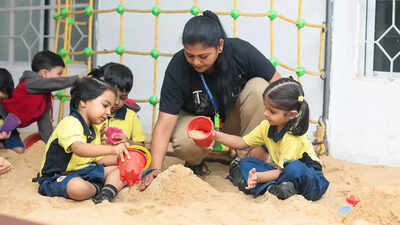
Open communication between parents and siblings encourages cooperation, empathy and problem-solving, helping children carry these skills from home into school and everyday life. Arguments between siblings, disagreements over routines and everyday family negotiations are nothing new. As households become busier and expectations more complex, parents are increasingly relying on dialogue, rather than directive authority, to manage routines, relationships and conflict. Child development research suggests this change is more than a cultural preference1. Open communication between parents and children has been linked to stronger emotional regulation, better conflict resolution and improved cooperation within families. Additionally, sibling relationships often reveal the impact most clearly. In communicative households, disagreements are more likely to be talked through than left to escalate. Studies on family dynamics indicate that when children are encouraged to express perspectives and participate in problem-solving, cooperation between siblings becomes an everyday practice rather than an occasional intervention2.Why communication has become a core family skillStudies link open family communication to the development of executive function skills such as emotional regulation, perspective-taking, and self-control3. These abilities help children pause, listen and respond thoughtfully during conflict, rather than react impulsively. When these skills are reinforced early, cooperation becomes more intuitive, a dynamic increasingly mirrored in collaborative learning settings like Orchids The International School.Cooperation starts hereCooperation at home isn’t learned from rulebooks as much as it is picked up from everyday life. Children notice how parents work together, who steps in when something needs doing, how disagreements are handled and whether decisions are made through conversation rather than command. When parents talk things through calmly and share responsibility, they quietly show what teamwork looks like.Over time, this shapes how children respond. For them, cooperation feels natural, not something enforced by authority, but simply how people who care about each other get things done. Building on this understanding, Orchids The International School, integrates collaborative projects and peer discussions into daily learning, helping students translate home-based habits into broader social competence.Sibling relationships as the first collaborative spaceSiblings are often the first partners children practice cooperation with outside parent-child interactions. In households that prioritise open dialogue, children learn to negotiate, take turns and resolve disputes without constant adult intervention. Developmental research indicates that these early experiences strengthen empathy, perspective-taking and problem-solving skills, forming a foundation for healthy peer relationships and effective teamwork later in life4. Moreover, children who engage in constructive sibling interactions tend to develop better conflict-resolution strategies, adapt more readily to group dynamics and carry these collaborative habits into academic and social settings, demonstrating that the family environment is a critical first classroom for cooperation.Reinforcing communication and cooperation beyond the home The skills children practise at home - like listening, negotiating and working together - often shape how they relate to others at school. Kids who are used to open conversations and solving problems together at home tend to feel more confident in group activities, handle disagreements calmly and lend a hand to classmates during teamwork.To build on these habits, Orchids The International School creates plenty of opportunities for group work, discussions and collaborative learning.
By reflecting the cooperative behaviours children see at home, these classrooms help students grow their social skills, boost confidence and turn family-learned habits into positive, real-world interactions with peers. As communication and cooperation become central to modern family life, children benefit not only at home but also in how they relate to peers, solve problems and navigate group learning. By reinforcing these habits in both family and school environments, children are better equipped to grow into empathetic, collaborative individuals, a philosophy reflected in learning spaces at Orchids The International School, where teamwork and dialogue are part of everyday education.To know more about our curriculum, branches and admission process, visit Orchids The International School.References:
Disclaimer: This article has been produced on behalf of Orchids The International School by Times Internet’s Spotlight team.









 English (US) ·