

 2 hours ago
4
2 hours ago
4
ARTICLE AD BOX
Last Updated:April 03, 2026, 13:11 IST
The row surrounds Trump’s unilateral demolition of the historic White House East Wing and construction of a privately funded $400 million ballroom without congressional nod


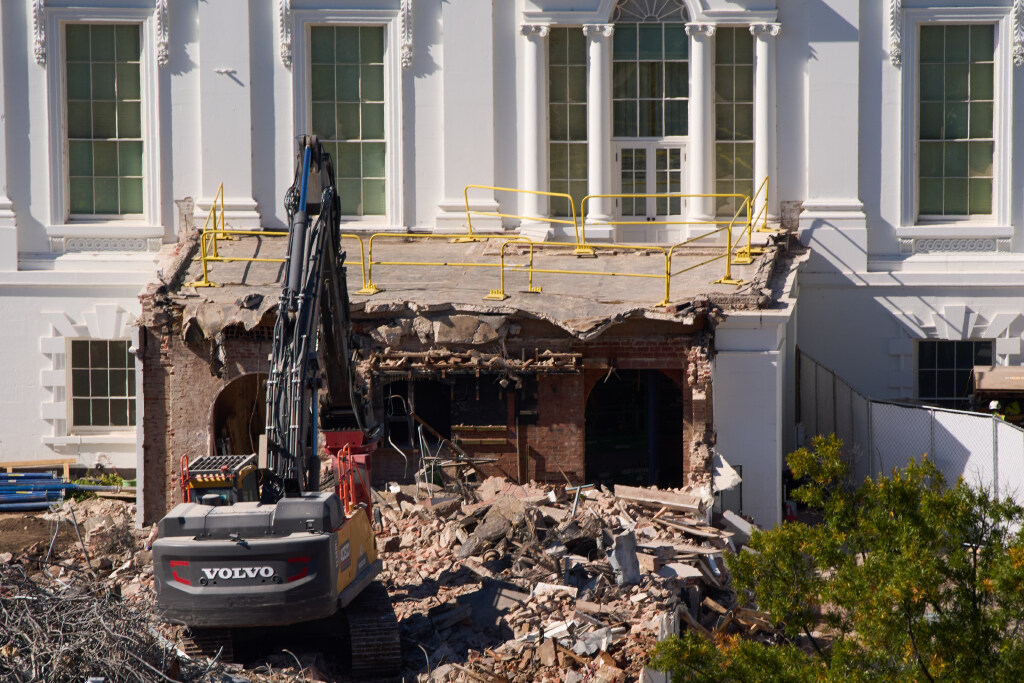
The part of the East Wing (right) demolished after US President Donald Trump’s orders. (AP)
US President Donald Trump’s White House ballroom won final approval from a key agency on Thursday, despite a federal judge recently ordering a halt to construction unless Congress allows what would be the biggest structural change to the American landmark in more than 70 years.
Why it goes beyond a construction nod, News18 explains.
The controversy in a nutshell
The primary controversy surrounds President Trump’s unilateral demolition of the historic White House East Wing and the construction of a massive, privately funded $400 million ballroom without congressional approval.
On April 1, a federal judge temporarily halted the project, ruling that the President is the “steward" of the White House, not its “owner," and cannot modify the national landmark without explicit authorization from Congress, according to BBC. The administration appealed the ruling, and on April 3, the National Capital Planning Commission (NCPC) granted a final design approval, though construction remains paused pending the court battle.
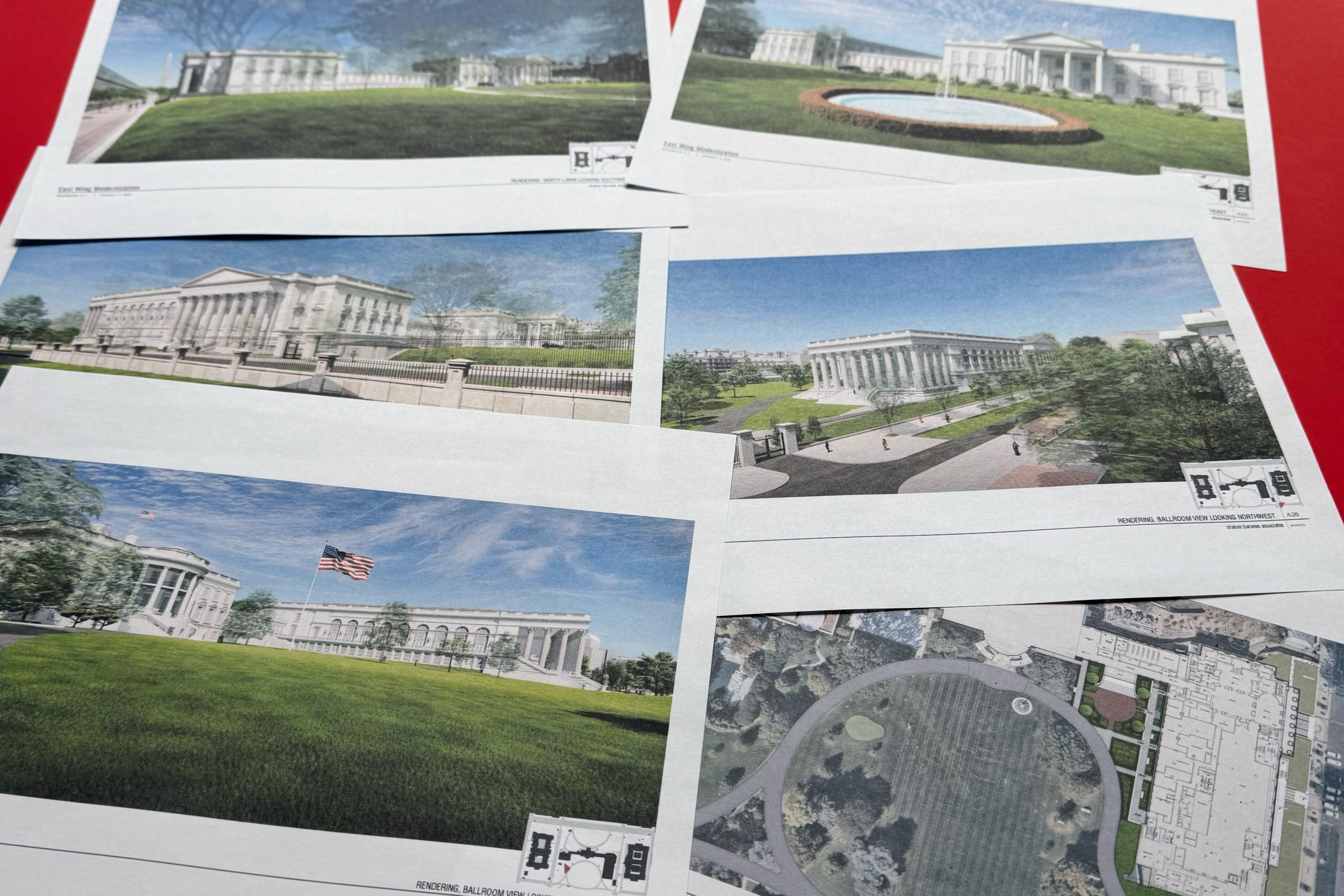
Now the details: Who gave the approval for Trump’s ballroom plan?
The 12-member National Capital Planning Commission, the agency tasked with approving construction on federal property in the Washington region, went ahead with the vote because US District Judge Richard Leon’s ruling — which came two days earlier — affects construction activities but not the planning process, said the commission’s Trump-appointed chair, Will Scharf.
A vote of 8-1, with two commissioners voting present and one absent, allowed the plan to move forward.
Trump’s lasting imprint and the criticism
Despite the agency’s approval, however, the judge’s ruling and a legal fight over the ballroom could stall progress on a legacy project that Trump is racing to see completed before the end of his term in early 2029. It’s among a series of changes the Republican president is planning for the nation’s capital to leave his lasting imprint while he’s still in office.
Before the vote, Scharf, a top White House aide, noted that Leon’s order has been stayed for two weeks as the administration seeks an appeal. He said, as he understood the decision, it “really does not impact our action here today." Scharf suggested that Trump’s proposed ballroom will similarly come to be viewed as a wise addition — despite drawing contemporary opposition from some members of the public and government officials. “I believe that, in time, this ballroom will be considered every bit of a national treasure as the other key components of the White House," Scharf said.
The lone “no" vote was cast by Phil Mendelson, a Democrat who chairs the Council of the District of Columbia. Linda Argo and Arrington Dixon, the two commissioners appointed by Mayor Muriel Bowser, a Democrat, voted present.
Criticism also came from Public Citizen, a nonprofit consumer advocacy organisation. One of its attorneys, Jon Golinger, said the commission had discounted opposition from city officials and thousands of people who commented against the project, and ignored the judge’s ruling. Several commissioners, including Scharf, had said they took the public feedback seriously. “This approval is illegitimate and this vote is a joke," Golinger said.
What did Trump say after the nod? What are his plans?
Trump, in a statement Thursday following the vote, thanked the commissioners for the approval and said he was honoured. “When completed, it will be the Greatest and Most Beautiful Ballroom of its kind anywhere in the World, and a fabulous complement to our Beautiful and Storied White House!" the president said.
Before voting, the commission considered some design changes to the 90,000-square-foot ballroom addition that the president announced aboard Air Force One on Sunday, as he flew back to Washington from a weekend at his Florida home.
He removed a large staircase on the south side of the building and added an uncovered porch to the west side. Architects and other critics of the project had panned the staircase as too large and basically useless since there was no way to enter the ballroom at the top.
A White House official said the president had considered comments from the National Capital Planning Commission and another oversight entity, the US Commission of Fine Arts, which approved the project earlier this year, as well as members of the public. The official, who was not authorised to publicly discuss the ballroom design and spoke on the condition of anonymity, said that additional “refinements" had been made to the building’s exterior.
The ballroom, now estimated to cost USD million, has expanded in scope and price tag since Trump first announced the project last summer, citing a need for space other than a tent on the lawn to host important guests. Trump demolished the East Wing in October with little warning, and site preparation and underground work have been underway since then.
Two other Trump-appointed commissioners, Stuart Levenbach and James Blair, voted for the project. Levenbach, who serves as vice chairman and is the federal government’s chief statistician, said the White House is currently “not suited" to accommodate large numbers of guests and that the addition will improve the “utility" of the compound.
He said tunnels and other structures underground at the White House made it impossible to place many features of the ballroom there, too, as some have suggested might be possible. Levenbach said the addition is a “multipurpose facility," noting that, in addition to a ballroom, it will also have offices for the first lady, kitchen space and a theatre. “This is not an expansion for its own sake," Levenbach said.
Blair, a deputy to White House chief of staff Susie Wiles, said visitors and guests of the president deserve a “better experience." Scharf and Blair also said Trump will get “very limited use" of the ballroom before his term ends.
The National Trust for Historic Preservation, a private nonprofit organisation, sued after Trump demolished the East Wing last fall to build the ballroom addition — a space nearly twice as big as the mansion itself.
Trump says it will be paid for with donations from wealthy people and corporations, including him, though public dollars are paying for underground bunkers and security upgrades.
The trust sought a temporary halt to construction until Trump presented the project to both commissions and Congress for approval. Leon agreed but said that his order would take effect in two weeks and that construction related to security would be allowed.
Trump’s ballroom plans: The cause for concern
Destruction of Heritage: In October 2025, the administration demolished the East Wing—originally built in 1902—surprising the nation and bypasssing standard reviews. The wing contained the First Lady’s offices and a bunker from the FDR era.
Legal & Constitutional Authority: The National Trust for Historic Preservation sued, arguing the project violates federal law and the Anti-Deficiency Act, which prevents the executive branch from accepting private gifts for official government functions without congressional sign-off.
“Pay-to-Play" Ethics: Funding comes from private donors, including Google (via a $22m legal settlement), Amazon, and Meta. Critics worry these donations grant wealthy corporations improper access and influence.
“Secret" Military Complex: President Trump recently revealed that the ballroom is a “shed" for a massive underground military complex featuring bulletproof glass and drone-proof protection. While the judge’s order halts the ballroom, it allows work on these “safety and security" underground elements to continue.
Aesthetic & Scale: At 90,000 square feet, the new ballroom is nearly twice the size of the entire White House mansion. Architects have flagged design flaws, such as a staircase that leads nowhere and a side-placed entrance that disrupts the building’s historic symmetry, reported BBC.
The “Trump-demolished-and-rebuilt" facilities have become a symbol for the broader political divide. To supporters, it fulfills a “mandate" to be a transformational president who updates stagnant institutions. For opponents, the demolition of the East Wing is a metaphor for what they describe as a “nightmare" that will eventually require a national “rebuilding" effort.
KEY FAQs
Why is a White House ballroom significant?
A new ballroom would change how major state events are hosted. Instead of relying on temporary tents or smaller rooms, it signals a shift toward more permanent, large-scale hosting—impacting diplomacy, ceremonies, and global perception of US power and prestige.
Does it affect history and tradition?
Yes. The White House is both a working office and a historic symbol. Adding a ballroom raises debates about preserving tradition versus modernising the space — something past administrations have approached very cautiously.
Is this about politics beyond architecture?
Absolutely. Proposals like this often reflect a president’s personal style and priorities. In Trump’s case, it ties to his background in luxury real estate and branding, making the project as much about image and legacy as function.
With AP, PTI inputs
First Published:
April 03, 2026, 13:10 IST
News explainers Why Trump’s ‘Greatest Ballroom’ For White House Has Become Political Stage Even Before Being Built
Disclaimer: Comments reflect users’ views, not News18’s. Please keep discussions respectful and constructive. Abusive, defamatory, or illegal comments will be removed. News18 may disable any comment at its discretion. By posting, you agree to our Terms of Use and Privacy Policy.
Read More







 English (US) ·