

 3 hours ago
5
3 hours ago
5
ARTICLE AD BOX

Stillness, not just sitting, is emerging as a major health risk. Even regular gym-goers can face metabolic issues if they remain inactive for long hours. The body needs continuous movement to regulate blood sugar, metabolism, and circulation. Small, frequent actions like walking, stretching, and standing can reduce long-term health risks.
For years, “sitting is the new smoking” has been used as a warning. It sounded dramatic, but it pushed people to move more. Now, doctors are refining that idea. The real problem is not just sitting.
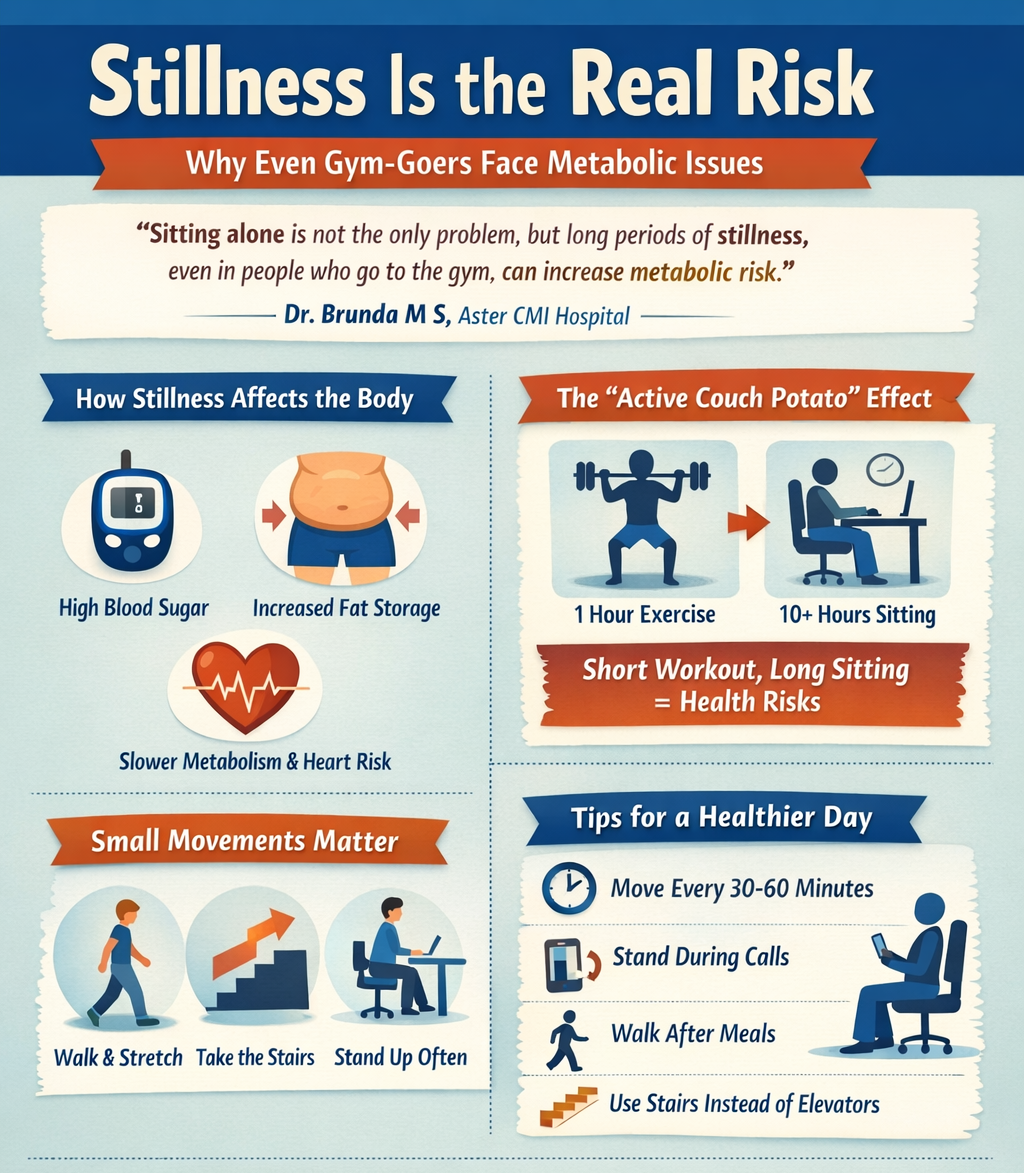
It is stillness.Dr Brunda M S, Senior Consultant in Internal Medicine at Aster CMI Hospital, Bangalore, explains it in a simple way, “Sitting alone is not the only problem, but long periods of stillness, even in people who go to the gym, can increase metabolic risk.”This changes how health is viewed. A person may work out daily and still face hidden risks if the rest of the day is inactive. The body, it turns out, does not care about one good hour if the remaining 10 hours are spent barely moving.
What ‘stillness’ really does to the body
Stillness is not just about sitting on a chair. It includes long hours of minimal movement. Think desk jobs, long drives, binge-watching, or even lying down for extended periods.Dr Brunda explains, “The human body is designed to move regularly, and when muscles stay inactive for long periods, they use less glucose and fat for energy.”This one shift has a ripple effect. Muscles act like engines that burn fuel. When they slow down, the body struggles to process sugar and fat efficiently.
Over time, blood sugar rises, fat storage increases, and metabolism begins to slow. The body enters a low-energy mode, even if it does not feel like it on the surface.

Stillness does not cause immediate harm. That is what makes it dangerous. It works quietly.
Why gym workouts alone are not enough
There is a quiet misconception among fitness-conscious people. One hour at the gym feels like a strong shield against disease. But science is showing a gap in that thinking.Dr Brunda puts it clearly, “Even if a person exercises for one hour, the remaining many hours of inactivity can affect the body in a harmful way.”This creates a pattern that experts now call “active couch potato.” A person works out, but then sits for most of the day. The metabolism does not stay elevated long enough to balance out those inactive hours.A 2020 report by the World Health Organization on physical activity guidelines stresses reducing sedentary time alongside exercise.The message is simple but uncomfortable: movement needs to be spread across the day, not packed into one slot.
The slow rise of metabolic risk
Stillness does not cause immediate harm. That is what makes it dangerous. It works quietly.
- Over time, the body begins to show signs
- Blood sugar levels stay higher than normal
- Fat accumulates more easily
- Circulation slows down
Dr Brunda notes, “This can lead to higher blood sugar levels, increased fat storage, and a slower metabolism.”Eventually, this increases the risk of conditions like obesity, type 2 diabetes, and heart disease.Research from the Centers for Disease Control and Prevention also highlights how prolonged sedentary time is linked with metabolic disorders.The body does not break down suddenly.
It drifts into imbalance.
Movement, not intensity, is the missing piece
There is a surprising twist in all this. The solution is not always harder workouts. It is frequent movement.Dr Brunda explains, “Research shows that frequent small movements, like standing, stretching, or walking, help the body regulate blood sugar and improve metabolism.”These small actions keep muscles active and blood flowing. They act like gentle reminders to the body that it needs to stay engaged.Even circulation benefits. Sitting too long reduces blood flow, leading to stiffness and fatigue. A short walk or stretch can reverse that almost instantly.This idea echoes across studies. The National Institutes of Health has also backed the role of light activity in improving metabolic health.Movement does not always need to be intense. It just needs to be consistent.
Stillness does not cause immediate harm. That is what makes it dangerous. It works quietly.
Small habits that quietly change everything
The most effective changes are often the simplest. They do not require a major lifestyle shift, just a gentle redesign of the day.Dr Brunda suggests, “Simple habits like taking short walking breaks, using stairs, standing while working or stretching every 30-60 minutes can make a big difference.”Here is what that looks like in real life:
- Standing up during phone calls
- Walking for five minutes after meals
- Choosing stairs over lifts when possible
- Setting reminders to move every hour
These are not dramatic actions. But over weeks and months, they reshape metabolism.
The shift in how health should be seen
Health is no longer just about workouts. It is about rhythm. The body needs movement woven through the day.Dr Brunda sums it up best, “In simple terms, it is not just about going to the gym, but about staying active throughout the entire day.”This idea may feel subtle, but it is powerful. It shifts focus from intensity to consistency. From effort to awareness. So the real question becomes simple. Is the body moving often enough?The answer, more than anything else, may shape long-term health.Medical experts consultedThis article includes expert inputs shared with TOI Health by:Dr Brunda M S, Sr. Consultant - Internal Medicine, Aster CMI Hospital, Bangalore.Inputs were used to explain how sitting all the time has become a new unhealthy thing that people should avoid, what are some steps that people can take to include physical activity in their lives.









 English (US) ·