

 1 hour ago
6
1 hour ago
6
ARTICLE AD BOX
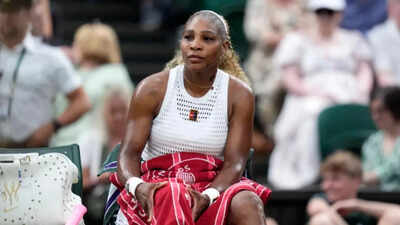
Serena Williams stepping onto Wimbledon’s grass in 2026 was meant to be another big comeback — one more incredible chapter for a living legend!Instead, it ended in pain and a lot of frustration.After hurting her right knee during her first singles match, Serena had to pull out of the women’s doubles with her sister, Venus. She posted photos afterward of syringes full of fluid that doctors had drawn from her swollen knee, highlighting a condition called knee effusion.
What happened to Serena Williams?
In an emotional Instagram post, Serena shared that she is sitting out the match due to her ongoing right knee injury. She wrote, “I’m heartbroken to have to withdraw from doubles,” adding, “Coming back to compete again has been a gift, and the opportunity to play alongside Venus once more meant the world to me.
I did everything I could to be ready, but unfortunately my knee just isn’t ready to compete.”“I’m especially grateful to tournament director, Jamie Baker, and the entire tournament team for giving me every opportunity to play here,” she continued. “Thank you to the fans for your incredible support and for making this comeback so meaningful…All I can say is stay tuned to a city near you.”Serena shared a video of herself struggling to walk and some photos as well, including “The photo of the syringes shows the fluid they drained from my knee after my singles match…yikes.”
While all the details about Serena’s injury aren’t public yet, that swollen joint points straight to knee effusion, or what most people call “water on the knee.” And as it turns out, this problem isn’t just for elite athletes; anyone, especially older adults or anyone with arthritis, might face it.
ID@undefined Caption not available.ID@undefined Caption not available.ID@undefined Caption not available.
What is knee effusion?
It’s when too much fluid collects inside or around the knee joint.
Normally, your knee holds just a tiny amount of synovial fluid — it keeps things gliding as you walk and move. But if you injure your knee or there’s inflammation, the body reacts by churning out extra fluid. That leads to swelling, pain, stiffness, and more. And when that happens, bending or straightening your leg gets a lot harder.In athletes, knee effusion isn’t really a “disease” on its own. However, it’s a sign that something’s gone wrong.
Maybe you twisted your knee making a sharp turn or landed badly and bruised the joint. Even a hard knock or less dramatic injury can do the trick. The result: fluid builds up and your knee balloons.That’s pretty much what happened with Serena. She fought through her opening match, but it was clear on the court that her knee was bothering her. Eventually, doctors had to drain extra fluid before she decided she just couldn’t play doubles.What’s notable is that athletes aren’t alone in dealing with swollen knees. For older folks, osteoarthritis is a big culprit. As the cushiony cartilage wears down, the knee gets irritated and puffy. There’s also rheumatoid arthritis, gout, infections, even tumors or bleeding problems that can fill up the joint with fluid.
What are the signs and risk factors?
No matter the cause, the symptoms look similar. One knee suddenly seems bigger than the other.
The area feels tight, stiff, tender, maybe a little warm. You might struggle to walk, climb stairs, or even just stand for a while. Sports really amplify the problems: tennis, especially on slick grass courts like Wimbledon, pushes knees to the limit with all its stops, turns, and lunges.Sometimes, like in Serena’s case, doctors go for arthrocentesis, or joint aspiration. They use a sterile needle to pull fluid out of the knee.
That quickly relieves pressure and pain, but it’s only part of the solution. The fluid can also be checked for infection or traces of blood, which point to deeper issues the doctor needs to address.Treatment depends on what’s actually wrong inside the knee. With a mild injury, rest, ice, compression, a little elevation, maybe anti-inflammatories, and some physical therapy are the mainstays. If scans show broken cartilage, a torn ligament, or a meniscus tear, sometimes surgery is the answer.
Arthritis might call for medications, weight control, and regular exercise. If a joint infection is the cause, you need antibiotics and maybe even surgical drainage, right away.
How long does recovery take?
That timeline is all over the map. A simple knee strain could clear up in a week or two, while more serious ligament injuries might keep you off the court for six weeks or more. Meniscus or cartilage surgery stretches the healing out for months.
Coming back from an ACL reconstruction can take most of a year before you’re ready to go full throttle.For top athletes, getting back isn’t just about feeling better. Doctors want all the swelling gone, the full range of motion back, and the surrounding muscles rebuilt to cushion and protect the joint. Rushing back too soon almost always leads to more problems down the line.As for Serena, she revealed in the post, “The good news is my knee shouldn’t swell or collect that much fluid again. The bad news is that, as hard as I tried, I just wasn’t able to get it ready for doubles.”







 English (US) ·