

 1 hour ago
4
1 hour ago
4
ARTICLE AD BOX
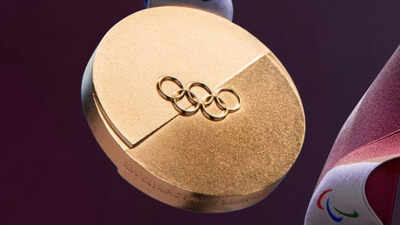
When athletes step onto the podium at the 2026 Winter Olympics in Milan, the medal placed around their neck may be worth more than those awarded at many previous Games, but not for the reason most people assume.Despite the name, Olympic gold medals have not been made of solid gold for more than a century. The last time winners received a medal composed entirely of gold was at the 1912 Summer Olympics in Stockholm. Since then, costs, practicality, and tradition have reshaped how Olympic medals are made.Today’s standards are set by the International Olympic Committee. Under IOC guidelines, gold medals must contain at least 92.5% silver.
Modern Olympic gold medals are made from roughly 500 grams of silver and finished with a thin outer layer of gold, about six grams of pure gold. Silver medals contain the same amount of silver without the gold plating, while bronze medals are made entirely of bronze.Bobby Eaton, an Olympics memorabilia expert at Boston-based RR Auction, told CBS News that the intrinsic value of these medals, based strictly on their metal content, is known as the “melt value.”
With precious metal prices soaring, that number has climbed sharply.As of Tuesday, gold was trading at $5,054 per ounce. Six grams of gold equals roughly 0.2 ounces, giving the gold portion of an Olympic medal a value of about $1,011. Silver, priced around $83 per ounce, adds another $1,463 for the 500 grams used in the medal. Combined, the raw material value of an Olympic gold medal comes to approximately $2,474, just under $2,500.That figure reflects broader market trends. Gold prices surged past $5,000 per ounce last month for the first time on record, driven by investor demand amid geopolitical instability and rising global debt. Just ten years ago, gold traded in the $1,200 to $1,300 range.Still, the real financial value of an Olympic medal almost never lies in its metal.“There is a discrepancy between the melt value and actual collectible value,” Eaton told CBS News.
Medals tied to historic performances, iconic athletes, or pivotal moments in sports history can command sums that far exceed their material worth.That gap is evident in auction records. In 2013, one of the four gold medals won by Jesse Owens at the 1936 Berlin Olympics sold for $1.47 million, setting a record for an Olympic medal, according to SCP Auctions. Owens’ victories, achieved in Nazi Germany, carry immense historical weight, which dramatically amplified the medal’s value.More recently, legendary American diver Greg Louganis sold several of his Olympic medals. His gold medal from the 1988 Seoul Games in the 10-meter platform event fetched over $200,000 in 2025, according to RR Auction. His 1984 Los Angeles gold medal for 3-meter springboard diving sold for just under $200,000, while his 1976 Montreal silver medal brought in more than $30,000.The sales weren’t about profit alone. Eaton told CBS News that the proceeds allowed Louganis to move to Panama and rebuild his life.
“He said the money he got from selling his medals let him start his life back up again so he could do what he wanted to do,” Eaton said.Other athletes have chosen to part with their medals for different reasons. In 2022, swimming star Ryan Lochte auctioned six of his Olympic medals, three silver and three bronze, to raise money for a children’s charity. Across four Olympic Games, Lochte won 12 medals in total, including six gold.“I’m not one to be all sentimental about medals,” Lochte told The Associated Press at the time. “My medals are just sitting in my closet collecting dust. The memories that I have is what means the most.”









 English (US) ·