

 8 hours ago
4
8 hours ago
4
ARTICLE AD BOX
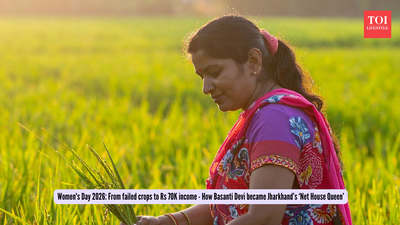
Basanti Devi, a farmer in Jharkhand, transformed her livelihood by adopting a Kheyti Rakshak Net House. This innovative technology shielded her crops from harsh weather and pests, enabling her to grow coriander off-season and achieve consistent, year-round income. Her success now inspires other women farmers in her village.
Women today are excelling in almost all aspects of life, be it holding leadership roles in the boardroom, being hands on homemakers or excelling at farms, and there is nothing holding them back.There are some stories about women that stand as shining examples of true resilience and grit, and prove how grit and smart tools can rewrite destinies.Jharkhand's fields, once at climate's mercy, now bloom with innovation by many, and one inspiration behind it is Basanti Devi, who proved tech tailored for the soil can lift an entire village.
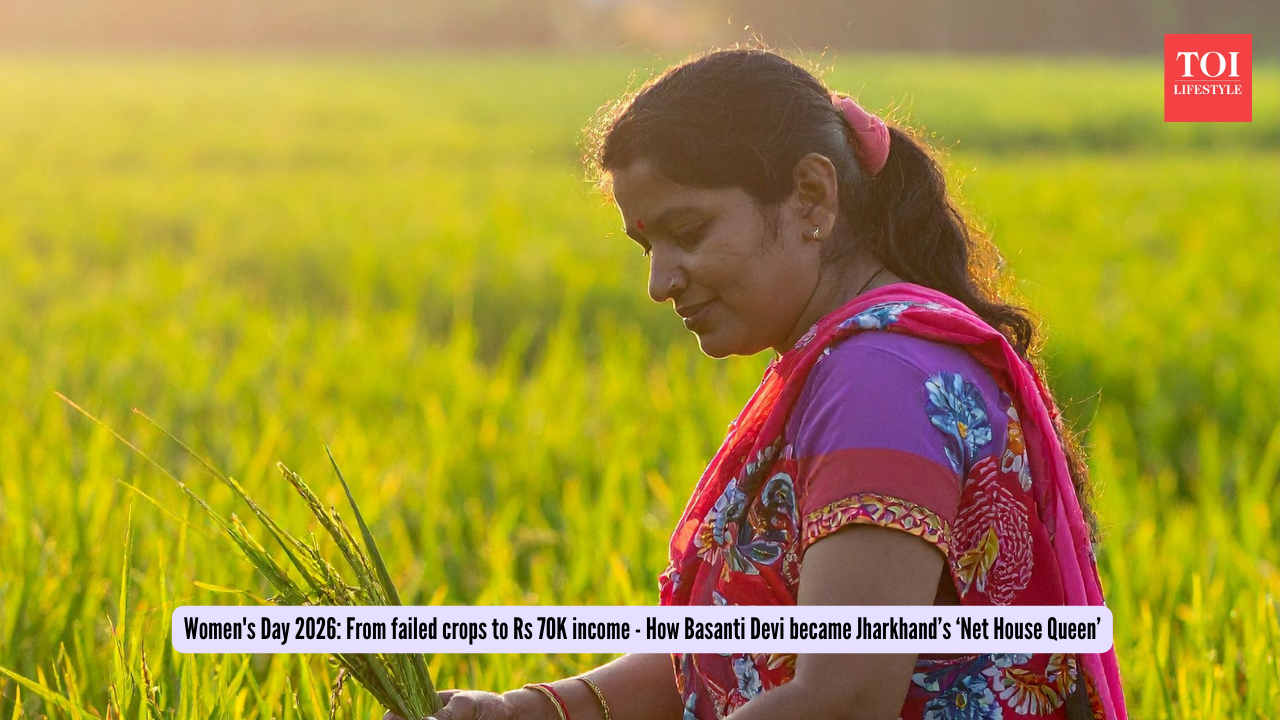
Women's Day 2026: From failed crops to Rs 70K income - how Basanti Devi became Jharkhand’s ‘Net House Queen’ (Representative Image)
Meet Basanti Devi
Basanti Devi is a 33-year-old farmer from Hesapora Tola in Shishatand-Gola village, Ramgarh district, Jharkhand.
Last year, she upgraded to a ‘pakka makan’ (solid home) from mud, and her eldest son started his BA degree program. According to The Better India, these changes stem from her success in growing coriander off-season using a Kheyti Rakshak Net House.She was always a hardworking farmer but past monsoon attempts failed, “The heavy rains would damage the crop and wash it away, and all the money we spent on seeds would go to waste,” she told Better India.
But in 2023, with TRI (Transform Rural India) support and Kheyti guidance, the ‘net house’ changed everything.See post here
She had exceptional outcomes
On October 16, 2025, Basanti planted 3 kg high-quality coriander seeds worth Rs 900. She harvested 85 kg over eight cuts, selling at Rs 150/kg for Rs 12,750 that season alone. Now netting Rs 70,000 yearly, she draws curious women farmers to her 1.2-acre plot.“The more I started seeing the results of growing these crops, the more I wanted to learn about the technology,” she shares with the Better India, even switching to a battery sprayer for efficiency.
What unique technique did she use
Previously, water shortages or insects hit peas, beans, tomatoes, and potatoes: “Either the availability of water used to be a problem for us, or the crops would get affected by insects. But even when the factors were in our favour, we were unable to earn throughout the year,” Basanti noted.Bapi Gorai from TRI explained to Better India, “The Kheyti Rakshak Net House... protects crops from harsh sunlight and reduces the temperature within the net house by three to five degrees Celsius.
It protects crops from high-speed winds of up to 100 kmph, unpredictable rains, and reduces pest infestations by up to 90 percent.” It enables 3-4 crops yearly, with free year-long agri-advisory.From March-June, shade nets cool for tomatoes and chillies; monsoons shield beans and spinach; winters suit cabbage and strawberries.Basanti is one such woman whose story proves simple tech can turn climate threats into steady prosperity.






 English (US) ·