

 1 hour ago
6
1 hour ago
6
ARTICLE AD BOX
Raghu Rai, redefined Indian visual journalism by treating images as "windows" into events rather than mere accompaniments to text. His legacy spans decades of capturing the country's political upheavals, cultural life, and human stories through a lens that prioritised depth, emotion, and narrative.
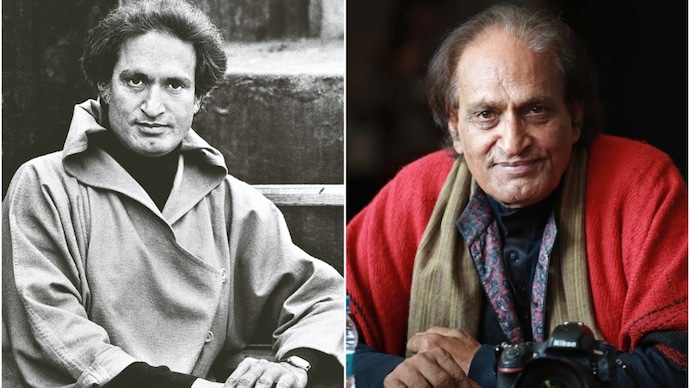
Raghu Rai, whose photographs chronicled India's public life and upheaval, died on Sunday at 83. (Photos: India Today Group)
“For me, written words are like brickwork,” Raghu Rai once said, arguing that pages should be opened up to let images become “large, powerful windows” into events. It was a belief he did not just articulate but practise for decades, shaping not just how India was seen through the lens, but also teaching a nation how to see itself.
Rai, who died on Sunday at 83 after battling cancer and age-related complications, leaves behind a body of work that did more than document India. It changed the way Indian journalism looked, read and, crucially, felt.
At India Today, where he joined during its formative years in the early 1980s, Rai became central to defining the magazine’s visual identity. Aroon Purie, founder-publisher and editor-in-chief of India Today, said during the magazine’s 50-year celebrations, “Raghu is a genius. He brought a lot of energy and a different point of view into India Today. He would often call saying -- eentein bahut hain, khidkiyan chahiye, har ghar mein khidki honi chahiye (there are too many bricks, there should be windows...every house must have a window)."
That idea translated into a constant push within the newsroom. Colleagues recall an ongoing struggle over space, with Rai insisting that photographs should not be squeezed into layouts dominated by text. Pages, he argued, had to be opened up, allowing images to lead rather than merely illustrate.
It was not just about design. It was about expanding the scope of journalism itself. At a time when political reporting dominated, Rai pushed for a broader canvas, one that included society, culture, sport and entertainment alongside hard news. The result was a magazine that reflected the many layers of Indian life, not just its power structures.
His work mirrored that vision. Rai could move seamlessly between the monumental and the intimate. One day, he would be documenting violence and political upheaval. The next, he would be capturing the quiet intensity of a musician at work. In one widely recalled series, he photographed maestros like Ustad Bismillah Khan and Pandit Bhimsen Joshi, drawn to the emotional force of their art. The images did not just record performances. They made viewers feel them.
Yet it was in moments of crisis that Rai’s lens acquired a different kind of power. When the Bhopal Gas Tragedy struck, Rai produced images that came to define the catastrophe. One photograph, of a child with haunting, wide-open eyes, distilled the scale of the disaster into a single frame. Those who worked with him recall how that image brought home the enormity of what had happened in a way words could not.
The same instinct guided his work during some of the country’s most turbulent years. The Nellie massacre, the rise of militancy in Punjab, and the aftermath of Operation Blue Star were not just events he covered but moments he helped define visually. When Indira Gandhi was assassinated in 1984, Rai’s images captured a nation at a point of rupture, marking what many saw as the passing of an era.
But to reduce Rai to a chronicler of tragedy would be to miss half the picture. He brought the same depth to cultural life, photographing film stars, families and everyday scenes with equal care. Whether it was a carefully arranged cover shoot of the Kapoor family or a fleeting street moment, his work resisted hierarchy. What mattered was the story within the frame.
This ability to move between the monumental and the intimate is perhaps what made his work so enduring. His photographs appeared in some of the world’s leading publications, from Time and Life to The New York Times and National Geographic. In 1992, he was named “Photographer of the Year” in the United States for his work on wildlife management in India. He was also honoured by the French government with the Officier des Arts et des Lettres.
And yet, beyond the awards and global recognition, Rai remained deeply connected to the idea of India as a living, changing entity. His images were not static records. They were conversations. They invited viewers to pause, to look closer, to ask questions.
In newsrooms, where the pressure is often to move quickly, Rai argued for something slower and more deliberate. A photograph, he believed, could hold complexity in a way that words sometimes could not. It could suggest, evoke, disturb. It could open a window.
That philosophy continues to resonate in an age saturated with images. Today, photographs are everywhere, consumed in seconds and forgotten just as quickly. Rai’s work stands apart because it resists that speed. It demands attention.
Rai is survived by his wife Gurmeet, son Nitin, and daughters Lagan, Avani and Purvai. His last rites will be held in Delhi, a city that appears time and again in his work.
Raghu Rai did not just leave behind photographs. He left behind a way of seeing: one that asked editors to open the page and readers to look beyond the text, into the window.
- Ends
Published By:
Priyanka Kumari
Published On:
Apr 26, 2026 16:08 IST



 English (US) ·