

 1 hour ago
7
1 hour ago
7
ARTICLE AD BOX
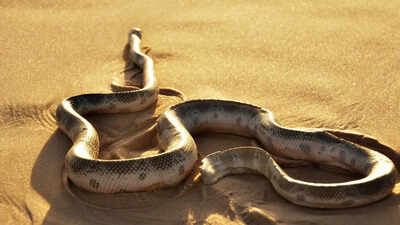
Snakes are often associated with dense rainforests, but little do we know that these creepy crawlers turn more dangerous when they inhabit the vast deserts of the earth. Here’s how lethal and venomous the deserts' reign in their territory is.
Read on as we share some of the most poisonous inhabitants of the deserts.All about the deserts crawlersDeserts often appear to be vast, empty voids of scorching sand and barren rock, but they are actually home to some of the most highly specialized and resilient wildlife on Earth. To survive the dual challenges of extreme heat and scarce water, desert animals have had to evolve incredible survival strategies—and for snakes, that strategy often includes highly potent venom.
While people frequently use the word "poisonous" to describe these reptiles, they are technically venomous, meaning they actively inject complex toxins through specialized fangs rather than causing harm when eaten or touched.
From the shifting dunes of North Africa to the sun-baked outback of Australia, these desert-dwelling snakes possess some of the most advanced hunting gear and survival adaptations on the planet.
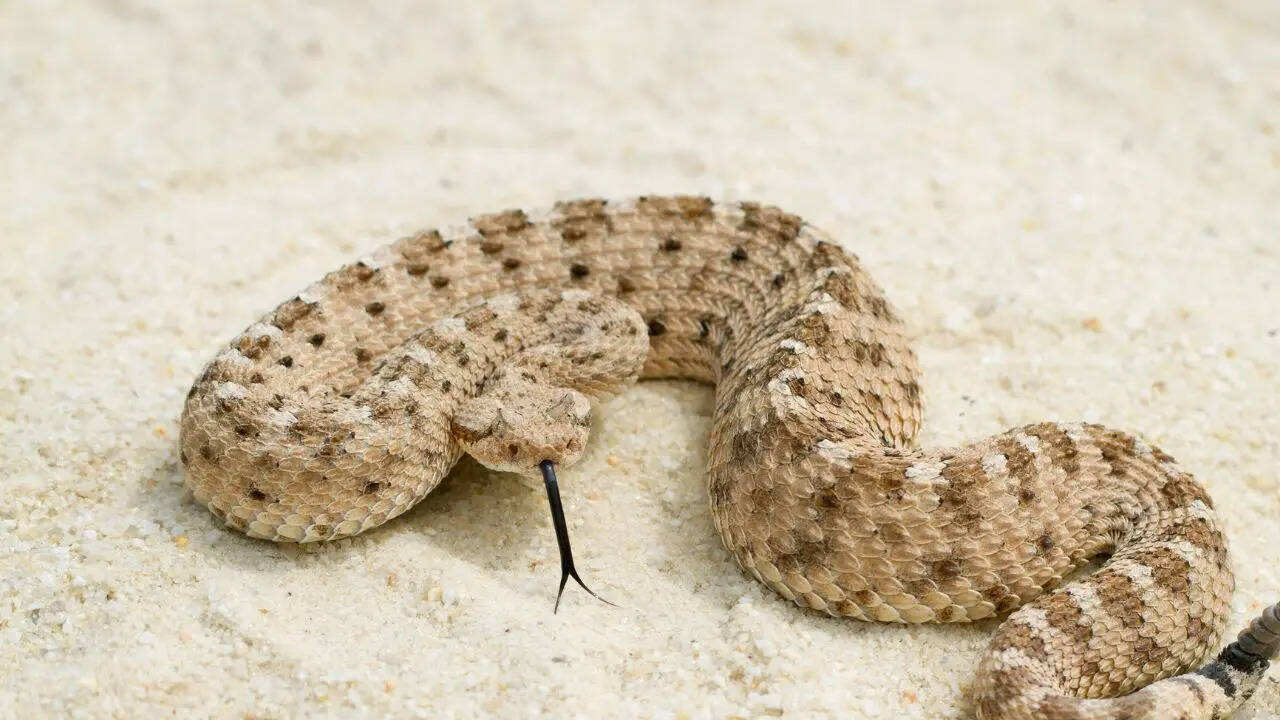
Inland TaipanThe Inland Taipan holds the undisputed title for the most toxic venom of any land snake on Earth. A single bite contains enough neurotoxins to take down an estimated 100 adult humans. Found in the deep clay crevices of the semi-arid deserts in central Australia, this snake has a fascinating ability to change color with the seasons. It sports a sleek, glossy black head and darker body in the winter to absorb precious sunlight, fading to a lighter golden-brown in the summer to reflect the intense desert heat.
Despite its terrifyingly potent venom, the Inland Taipan is incredibly shy and reclusive, preferring to flee from humans and hide deep inside cracked mud flats where it hunts desert rodents.Saharan Horned ViperThe Saharan Horned Viper is the classic desert snake often pictured in ancient lore, famously rumored to have caused the downfall of Cleopatra. Inhabiting the sandy deserts of North Africa and the Middle East, this snake features two distinct, pointed horns right above its eyes, which biologists believe protect its eyes from blowing sand and help camouflage its silhouette.
It moves across loose dunes using a unique technique called sidewinding, shuffling sideways so that only two points of its body touch the blistering hot sand at any given moment.
To hunt, it submerges its entire body beneath the loose sand, leaving only its eyes and horns exposed to surprise passing prey.
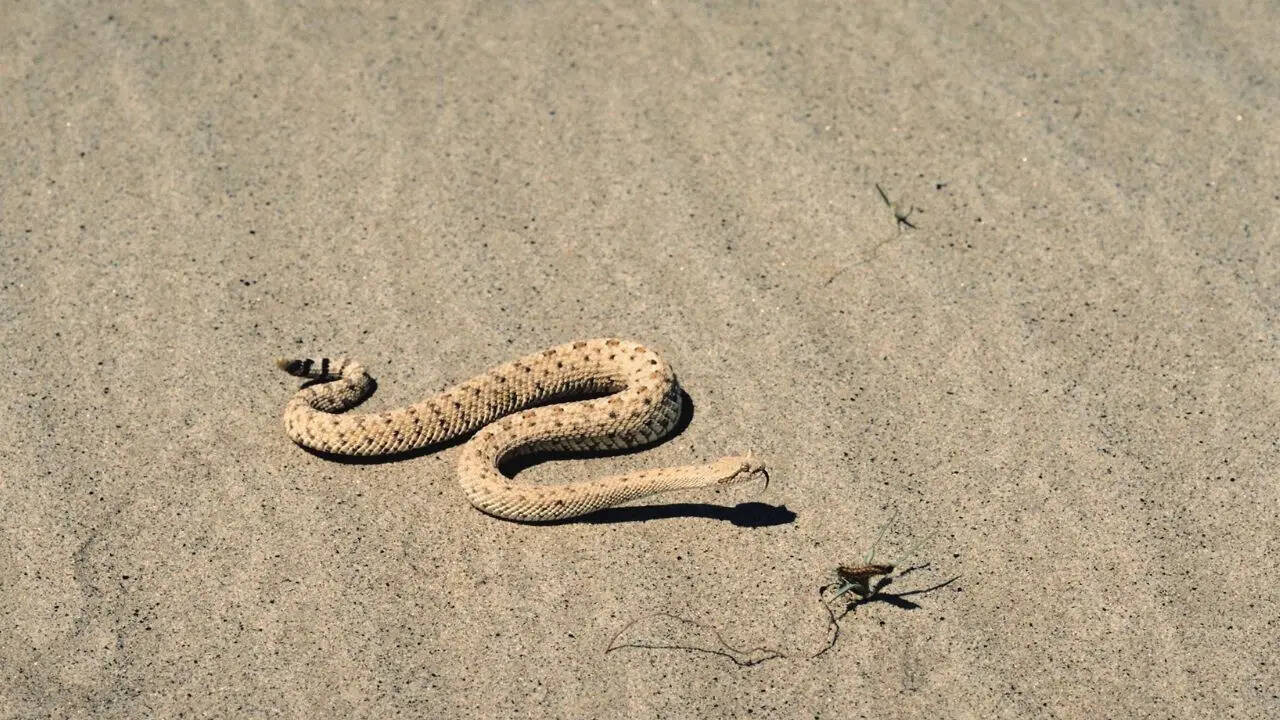
Sidewinder RattlesnakeThe sidewinder rattlesnake is North America's most iconic desert specialist, perfectly engineered for life in the American Southwest and northern Mexico.
Much like its Saharan counterpart, the Sidewinder has evolved raised scales over its eyes that look like tiny horns, alongside a specialized sideways locomotion that leaves distinct, J-shaped tracks across loose dunes. It utilizes specialized heat-sensing pits located on its face to hunt warm-blooded mice and lizards in pitch-black darkness.
The Saw-Scaled ViperThe saw-scaled viper is widely considered one of the most dangerous snakes in the world due to its aggressive nature and proximity to human habitats across the Middle East, Central Asia, and India.
What it lacks in size, rarely growing longer than two feet, it more than makes up for in sheer volatility. Instead of hissing with its throat when threatened, this snake rubs its rough, serrated scales together to create a loud, sizzling sound that sounds remarkably like water hitting a hot frying pan.
Because it blends perfectly into sandy environments and strikes with lightning speed at the slightest provocation, it is responsible for a vast number of human snakebite incidents.The Mojave RattlesnakeThe Mojave Rattlesnake is often confused with its cousin, the Western Diamondback, but it possesses a far more hazardous defensive tool known as the Mojave toxin. This snake thrives in the high-elevation desert scrublands throughout the southwestern United States and central Mexico. Its venom is a brutal, dual-action combination of neurotoxins that attack the nervous system to cause paralysis, and hemotoxins that destroy tissue and blood cells, making its bite significantly more dangerous than most other North American vipers.
It is highly defensive and will readily hold its ground, raising its body into a classic S-curve and rattling intensely if approached.The Mulga SnakeThe Mulga Snake, also known as the King Brown, is a massive, heavy-bodied predator built to rule the harshest environments across almost every arid zone and desert in Australia. Growing up to ten feet long, this snake relies on brute strength and sheer volume rather than having the absolute most toxic venom drop-for-drop.
Mulga snakes are opportunistic and aggressive hunters with an insatiable appetite, actively tracking down small mammals, frogs, lizards, and even other venomous snakes through rocks and abandoned burrows.The Black Desert CobraThe Black Desert Cobra breaks all the traditional rules of desert camouflage with its striking, glossy, pitch-black scales. Inhabiting the rocky deserts and scrublands throughout the Middle East, including Egypt, Israel, and Saudi Arabia, being entirely black makes daytime desert travel impossible due to the heat. Consequently, this cobra has evolved to be strictly nocturnal, spending its days hiding from the sun under heavy rocks and emerging only when the desert temperatures plummet at night.
Unlike typical cobras, the Black Desert Cobra rarely rears up or flattens a wide hood when disturbed, preferring to hiss loudly and strike low along the ground to catch its targets off guard.






 English (US) ·