

 8 hours ago
8
8 hours ago
8
ARTICLE AD BOX
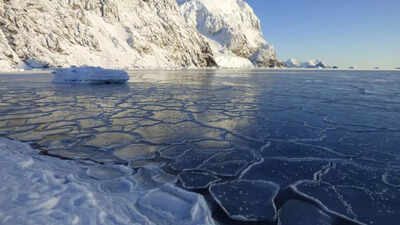
PC: World Meteorological Organization (WMO)
When most people hear the word "desert," they imagine dunes, scorching winds, and unbearable heat. Images of the Sahara or the Arabian Desert often come to mind. Travel advice usually includes sunscreen, sunglasses, and plenty of water.
Heatwaves and deserts almost seem like the same thing.But there is one desert that completely changes this idea. It has no dunes, no burning sun, and no risk of a heatwave. Instead, it is covered in ice and snow year-round. This is Antarctica, the largest desert on Earth.Yes, Antarctica is officially classified as a desert. Despite being the coldest place on the planet, it receives very little precipitation. Its extreme cold, high elevation, and unique atmospheric conditions make heatwaves virtually impossible.
Let us understand why the world’s biggest desert has zero chances of a heatwave and what makes it so different from all other deserts.
Antarctica is the world’s largest desert
According to the National Aeronautics and Space Administration (NASA), a desert is defined as a place that receives less than 250 millimetres of precipitation per year. Precipitation includes rain and snow.According to National Geographic, Antarctica receives, on average, 25 centimeters (10 inches) or less, making it drier than many hot deserts.
As a result, it is difficult for animals and plants to live there. It is also the largest desert in the world, covering about 14 million square kilometres, according to National Geographic. That makes it bigger than the Sahara Desert.
Why Antarctica does not get heatwaves
A heatwave happens when temperatures rise significantly above the normal average for a region over a period of days. In Antarctica, this is extremely unlikely for several scientific reasons. The simple science behind that has been said by NASA itself is that this continent is based on the south pole of the world, and this pole is always colder than the northern ones.
This continent is surrounded by water on all sides. Hence, the winds of those swirls don't get blocked by anything, and the wind becomes stronger.
- Extremely cold and dense air over the South Pole
The air over Antarctica is very cold and heavy. Cold air cannot hold as much moisture as warm air. Because of this, cloud formation is limited, and there is very little snowfall.According to the British Antarctic Survey, the continent is surrounded by strong circumpolar winds that isolate it from warmer air masses from other parts of the world.
This natural barrier prevents warm air from easily entering the continent. Since there is no steady supply of warm air, temperatures remain far below freezing for most of the year.
- Ice sheet reflects most of the Sun’s energy
Antarctica is covered by a massive ice sheet. Snow and ice reflect a large portion of incoming solar radiation. This is known as the albedo effect.According to NASA, Antarctica reflects up to 80 per cent of the Sun’s energy back into space.
This reflection prevents the land from absorbing heat. As a result, even during summer months when there is continuous daylight, temperatures remain extremely low.
- High elevation keeps temperatures low
Antarctica is not just flat ice. It is the highest continent on Earth, with an average elevation of about 2,500 metres above sea level, according to the National Geographic Society. Higher altitude means thinner air, and thinner air holds less heat. This makes the continent even colder.
The central plateau is especially frigid because of its height.
- Permanent ice cover and frozen ground
The ground in Antarctica is permanently frozen. There is no exposed soil to absorb and store heat. Without heat absorption, temperatures cannot build up in the way they do in hot deserts. This combination of reflective ice, cold air, high altitude and isolation from warm winds makes heatwaves practically impossible.
The coldest temperature ever recorded on Earth
Antarctica also holds the record for the lowest natural temperature ever measured.
On 21 July 1983, scientists at the Vostok Station recorded a temperature of minus 89.2 degrees Celsius, according to the British Antarctic Survey. This remains the lowest directly measured temperature on Earth.Later satellite data analysed by NASA suggested that temperatures in some parts of East Antarctica may have dropped even further, possibly reaching around minus 98 degrees Celsius. However, these were satellite estimates and not direct ground measurements.
These records clearly show how far Antarctica is from experiencing anything close to a heatwave.
But has Antarctica ever warmed
While Antarctica does not experience traditional heatwaves like hot deserts, there have been short-term temperature spikes in some coastal regions. According to reports by the World Meteorological Organisation, parts of the Antarctic Peninsula recorded temperatures above 18 degrees Celsius in 2020. These events were unusual but temporary and occurred in limited coastal areas.However, these do not qualify as heatwaves across the continent. The interior of Antarctica remains deeply frozen throughout the year.
Why comparing Antarctica to hot deserts is misleading
Deserts are defined by dryness, not heat. The Sahara is hot because it absorbs solar energy and lies in a subtropical high-pressure zone. Antarctica, on the other hand, is dry because cold air limits moisture.In simple terms:
- Sahara is dry because of hot descending air.
- Antarctica is dry because of freezing air that cannot hold moisture.
Both are deserts, but their temperature systems are completely different.
What makes Antarctica unique among all deserts
Antarctica stands out because it combines several extreme features:
- It is the coldest continent.
- It is the windiest continent.
- It is the highest continent by average elevation.
- It is the largest desert in the world.
All these factors work together. Even if sunlight shines for 24 hours during summer, the reflected energy, high elevation, and cold air prevent any sustained warming.
The science is clear
Scientific agencies such as NASA agree on the key factors behind Antarctica’s extreme cold. Low precipitation, high albedo, high elevation, and atmospheric isolation make it fundamentally different from hot deserts. So the next time someone mentions a desert, it is worth remembering that not all deserts are scorching hot. The world’s biggest desert is, in fact, a frozen land where a heatwave has almost no chance of occurring.Antarctica remains a powerful reminder that nature does not always follow our assumptions.







 English (US) ·