

 1 hour ago
3
1 hour ago
3
ARTICLE AD BOX
5 min readUpdated: Feb 6, 2026 01:31 PM IST
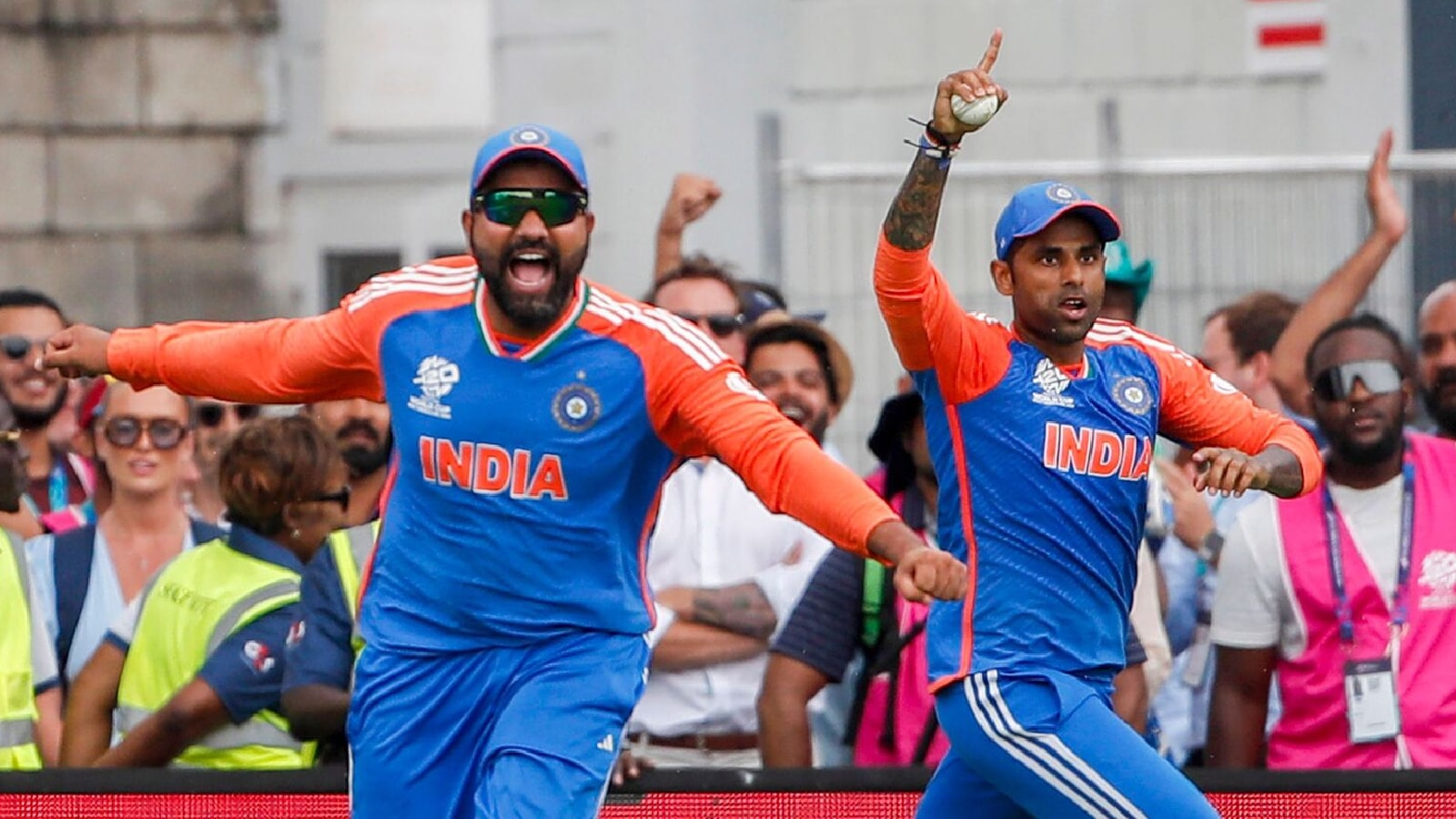 For the first time, India are in total sync with the T20 format they've watered, nourished, and grown since the inaugural IPL in 2008. (File/ANI Photo)
There was a delightful moment on Pakistani cyberworld the other day. On the YouTube channel Game Plan, the host rattled through the names in India’s batting lineup, ending with an almost rhetorical question: ‘Har ek banda akela match jita sakta hai, inke khilaaf, plan kya ho sakta hai?’ (Each one of them can win a game on their own — what can be the plan against them?) Former Pakistan batsman Basit Ali cupped his palms skyward and smiled: ‘Dua kar sakte hain’ (We can pray!).
For years leading up to the last T20 World Cup in the USA and West Indies, India seemed to have forgotten they owned the IPL. The disconnect was glaring. Their approach to the shortest format felt outdated, particularly in batting — as if they were rolling along without a proper plan. In some ways, they resembled that first Royal Challengers Bangalore side that didn’t quite know what to do with T20 cricket.
Even in the 2024 edition they won, India were almost dragged into the new style of play by their captain Rohit Sharma, with support from coach Rahul Dravid — incidentally, the captain of that inaugural RCB team. Rohit had seized the zeitgeist a year earlier during the ODI World Cup, and from then on, India began to turn around, following their Pied Piper.
And here they are at the start of another World Cup, totally transformed. For the first time in any global tournament — ODI or T20 — India stands as the most dominant team in the world. Never mind that the buzz around the tournament centers more on political developments than cricket itself.
The perfect blend
For the first time, India are in total sync with the T20 format they’ve watered, nourished, and grown since the inaugural IPL in 2008. They’ve ticked all the boxes of contemporary T20 theory.
Floaters are in: every batsman can slot in anywhere in the order. Everyone must hit, regardless of the match situation. During the recent series against New Zealand, Ishan Kishan responded to a semi-crisis by smashing his way out of trouble. Like the floating batsmen, the drifting bowlers have arrived too — Jasprit Bumrah can take the first over or bowl the fifth, Hardik Pandya can open the bowling, and so on.
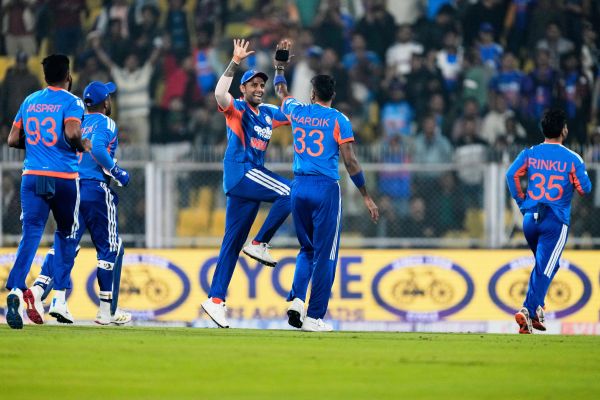 India possess a bevy of match-winners across batting and bowling departments. (AP Photo)
That old-world term ‘pinch-hitters’ is passé. Axar Patel can walk in at number four; Rinku Singh can float up the order. Intriguingly, both can hold an end if wickets tumble or counterattack depending on the team’s plan for the night. Or they can deploy Tilak Verma, a fundamentally sound batsman with the natural game to blunt and attack, possessing the nous to build an innings even in this frenetic format — as he demonstrated under pressure in the Asia Cup final.
Story continues below this ad
The arsenal
The bowling mix looks equally synchronised with the format. They have Varun Chakaravarthy, who must be at the top of his game to handle the flat pitches under dewy nights, and Kuldeep Yadav providing the spin options. They have Jasprit Bumrah, who looks in fiery form; Arshdeep Singh, who has quietly been scaling up his game and remains one of the rare new-ball bowlers in the world brave enough to hunt for swing; and Mohammad Siraj, who does what Siraj does. Then there’s Axar, Hardik, and a couple of batsmen who can turn their arms over — unlike Indian teams of recent vintage.
The presence of their MVP — a fit Hardik Pandya to blaze away with the bat in the final overs and take the new ball if needed, allowing Bumrah to target the more run-leaking fifth and sixth overs of T20 — cannot be understated.
The caveat
Does all this enthusiasm mean India will surely win the World Cup? Only time will tell. We’ve seen truly formidable teams stumble, especially when hosting. If dew kicks in — as expected in India — how will this bowling attack hold up? A couple of recent ODI games against South Africa at home offered a preview, and the verdict wasn’t encouraging. Not that they can be blamed when the ball turns into soap, but it’s worth noting that dew can neuter any attack, India’s included.
But the overarching point isn’t whether they’ll win or stumble. It’s that for the first time, they genuinely look like a proper T20 outfit. And it’s perhaps no coincidence that at the helm are two men intimate with this format: Suryakumar Yadav and Gautam Gambhir. It’s an organic evolution that began with Rohit and has now been bolstered by the current pair.
Story continues below this ad
Finally, 18 years after Pakistan’s Misbah-ul-Haq lofted a ball around the corner to Sreesanth — unwittingly clearing any obstacles Lalit Modi might have faced in launching the IPL — India are at last soulmates with T20 cricket.




 English (US) ·