

 1 hour ago
8
1 hour ago
8
ARTICLE AD BOX
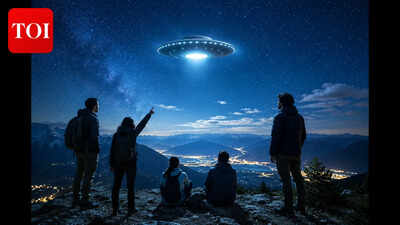
Why do UFOs still fascinate us? (AI generated)
“Two possibilities exist: either we are alone in the Universe or we are not. Both are equally terrifying.” – Arthur C. Clarke, sci-fi writer, Rendezvous with Rama, 2001: A Space OdysseyIs the truth really out there? Somewhere hovering over Earth in an unidentified flying object, that we so lovingly call UFO? Are aliens really green? These aren’t questions just a child asks.
These are questions that never leave us our entire lifetime. So we look up at the night sky, count the first few stars, watch an aircraft blink its way across the darkness and then, just for a second, wonder whether one of those tiny lights might be something else entirely. Something watching back. Something impossibly far away that has travelled unimaginable distances to arrive above the pale blue dot. And we think to ourselves one of humanity's oldest questions: Are we all alone in the universe? That enduring curiosity is what lies at the heart of World UFO Day, observed every year on July 2, to commemorate the alleged 1947 Roswell crash in New Mexico – an incident that transformed an obscure desert town into the epicentre of perhaps the greatest modern mystery.Whether Roswell was a weather balloon, a classified military experiment or something altogether stranger has never been conclusively settled in the public imagination, but that is beside the point. The real story is not about one object falling from the sky. It is about why, nearly 80 years later, we are still looking up.Today we live in a different world. Governments speak of “unidentified anomalous phenomena” instead of UFOs.
This May, the Pentagon declassified videos and reports of possible UFO sightings for public scrutiny. Astronomers have discovered thousands of planets beyond our solar system, and scientists openly discuss the statistical possibility of life elsewhere in the universe. We still aren’t closer to proving that aliens have visited Earth, but we have never had stronger reasons to believe that intelligent life may exist somewhere beyond it.
The terrifying possibilities of Clarke’s famous quote
Science fiction writer Arthur C. Clarke captured the paradox better than anyone else when he wrote that either we are completely alone in the universe, or, we are not; and both are equally terrifying. Let’s say humanity is alone. Then the responsibility resting upon our species becomes almost unimaginably large. We become the sole custodians of conscious life in a universe that stretches across billions of galaxies.
Every war, every environmental catastrophe and every act of self-destruction suddenly acquires cosmic significance because there may be nobody else to continue the story should we fail.But what if we are not alone? Then do we confront an equally unsettling possibility of civilizations older than ours by millions of years, possessing technologies so advanced that our greatest achievements would appear as primitive as stone tools? In this case, the universe suddenly will cease to revolve around us. This dilemma has fascinated scientists as much as storytellers, scientists and futurists. Author and futurist Carl Sagan wrote in his 1985 science fiction novel, Contact, “The universe is a pretty big place. If it's just us, it seems like an awful waste of space.”
While it sounds like a philosophical musing, in this book, Sagan grounded his belief in mathematical probability. He says that given the trillions of stars and planets in the universe, the statistical likelihood that Earth is the only place harbouring intelligent life seemed incredibly remote to him.It makes sense. Just on our Earth, over the past three decades, astronomers have identified thousands of exoplanets, many located within so-called habitable zones, where liquid water could potentially exist.
Organic molecules have been detected across interstellar space, while missions continue exploring Mars, Europa and Enceladus for signs of microbial life. The search for extraterrestrial intelligence is no longer confined to speculative fiction in the 21st century.
It has become an active scientific enterprise supported by observatories, space agencies and increasingly sophisticated technology.
The 20th century compressed centuries of technological progress into a single lifetime. Science and imagination always go hand-in-hand. (AI generated)
Science did not diminish our appetite for UFOs. It intensified it.
Even if little green visitors remain firmly within popular culture, the search for life itself has become mainstream science.
Ironically though, science did not diminish humanity's appetite for UFOs. It has intensified it. The 20th century compressed centuries of technological progress into a single lifetime. The Wright brothers flew the first powered aircraft in 1903. Barely 66 years later, humans stood on the Moon! Radio waves carried invisible conversations across continents.
Satellites circled Earth. Nuclear weapons demonstrated powers previously associated only with mythology.
Every decade produced inventions that earlier generations would have dismissed as impossible. Against that backdrop, the notion that another civilization might possess technologies beyond our understanding no longer sounded absurd.Then came 1947, the year that permanently changed the conversation. Pilot Kenneth Arnold reported seeing nine mysterious objects near Mount Rainier, Roswell, inspiring the now-famous term “flying saucers”.
Barely two weeks later, rancher William Brazel discovered strange debris near the Roswell incident. The military first claimed it had recovered a flying disc before retracting the statement, later explaining the wreckage belonged to the secret Project Mogul, designed to detect Soviet nuclear tests.
The shifting explanations only deepened public suspicion, transforming Roswell into the enduring centrepiece of UFO mythology, where secrecy, military involvement and conflicting accounts fuelled speculation that history's greatest discovery had been deliberately concealed.
Why the Roswell story has endured
Whether Roswell involved extraterrestrials is almost secondary to understanding why the story has endured. Psychologists have long argued that the human brain is deeply uncomfortable with uncertainty. Faced with incomplete information, we instinctively construct narratives that impose order upon chaos. UFOs occupy a uniquely powerful psychological space because they exist somewhere between possibility and impossibility.
Dragons belong entirely to mythology, while commercial aircraft belong entirely to engineering. UFOs sit awkwardly between those worlds, just plausible enough to resist easy dismissal and just mysterious enough to invite endless speculation. Our minds are remarkably skilled at filling gaps in knowledge, particularly when those gaps involve emotionally compelling questions.
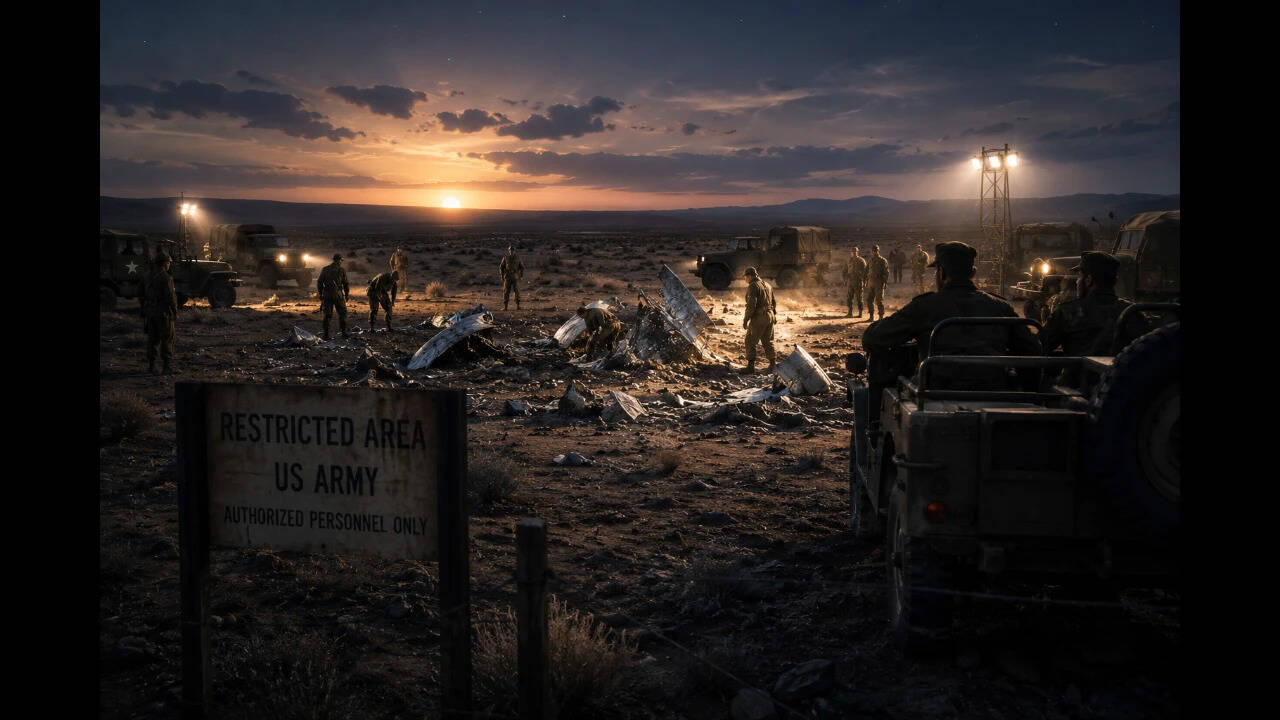
UFOs occupy a uniquely powerful psychological space because they exist somewhere between possibility and impossibility.
Psychology also offers several explanations for why so many intelligent people sincerely believe they have encountered extraordinary phenomena.
- One is called ‘pareidolia’ – the brain's tendency to recognise familiar patterns in random visual information, allowing us to see faces in clouds or figures in shadows.
- Another is ‘apophenia’ – our instinct to connect unrelated events into meaningful stories, linking a bright object in the night sky with rumours of government conspiracies or ancient prophecies.
Sociologists argue that belief in extraterrestrials is shaped by the way societies communicate. A fascinating concept known as the “cosmic closet” says that many people privately think intelligent alien life probably exists yet hesitate to say it out loud because they assume everyone else would dismiss the idea. This phenomenon, called “pluralistic ignorance”, creates a cycle of silence in which individuals underestimate how widely their views are shared.
An ecosystem where mystery renews itself
Surveys have suggested that far more people believe intelligent life exists elsewhere than believe others share that opinion. Into that vacuum, now flows social media, conspiracy websites and online communities, where stories spread with astonishing speed. Reports travel from the bottom up as ordinary people upload blurry videos of unexplained lights, while they also travel from the top down when military officials, politicians or respected scientists acknowledge unexplained aerial phenomena.
The two streams reinforce one another, creating an ecosystem in which mystery continually renews itself.
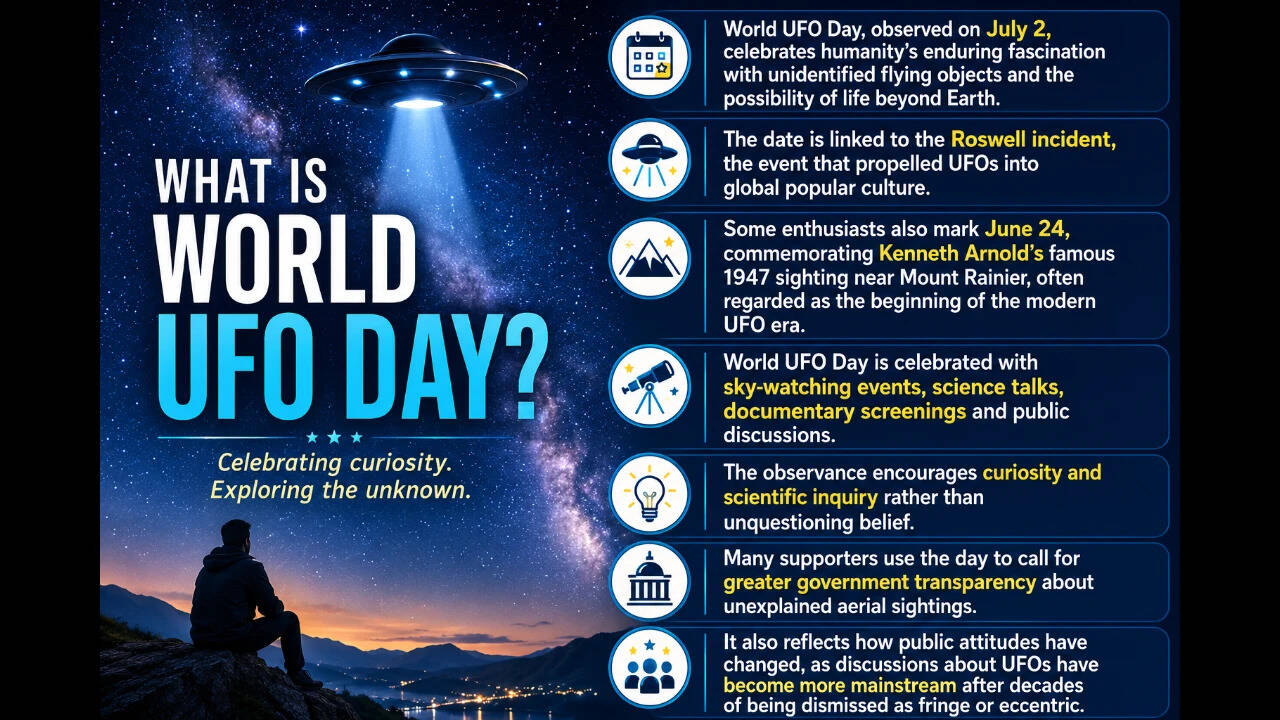
World UFO Day is celebrated every year on July 2nd.
That same ecosystem of belief also explains why aliens have changed shape over the centuries. The now familiar image of the little green man did not suddenly appear with flying saucers. Its roots stretch back into European folklore populated by fairies, elves and mysterious green beings that inhabited forests and hills long before humanity dreamed of space travel.Medieval England told the curious tale of the Green Children of Woolpit, while Irish folklore gradually clothed leprechauns in green. Eventually as astronomy replaced mythology, those strange earthly beings quietly migrated into the heavens.Nineteenth-century writers imagined green men on the Moon, while early 20th century pulp fiction introduced readers to Martians, whose appearance owed as much to folklore as to science.
Pop culture: Spielberg to Villeneuve
Cinema has done as much as science to shape those myths because every generation imagines extraterrestrials according to its own hopes and anxieties. In the optimistic years following the space race, Steven Spielberg invited audiences to see aliens not as conquerors but as fellow travellers. Close Encounters of the Third Kind imagined first contact through music rather than warfare, suggesting that mathematics, harmony and curiosity might succeed where politics invariably fails. A few years later, E.T. the Extra-Terrestrial, transformed an extraterrestrial into one of cinema's most beloved characters, replacing fear with loneliness and reminding audiences that the unknown need not always be hostile.
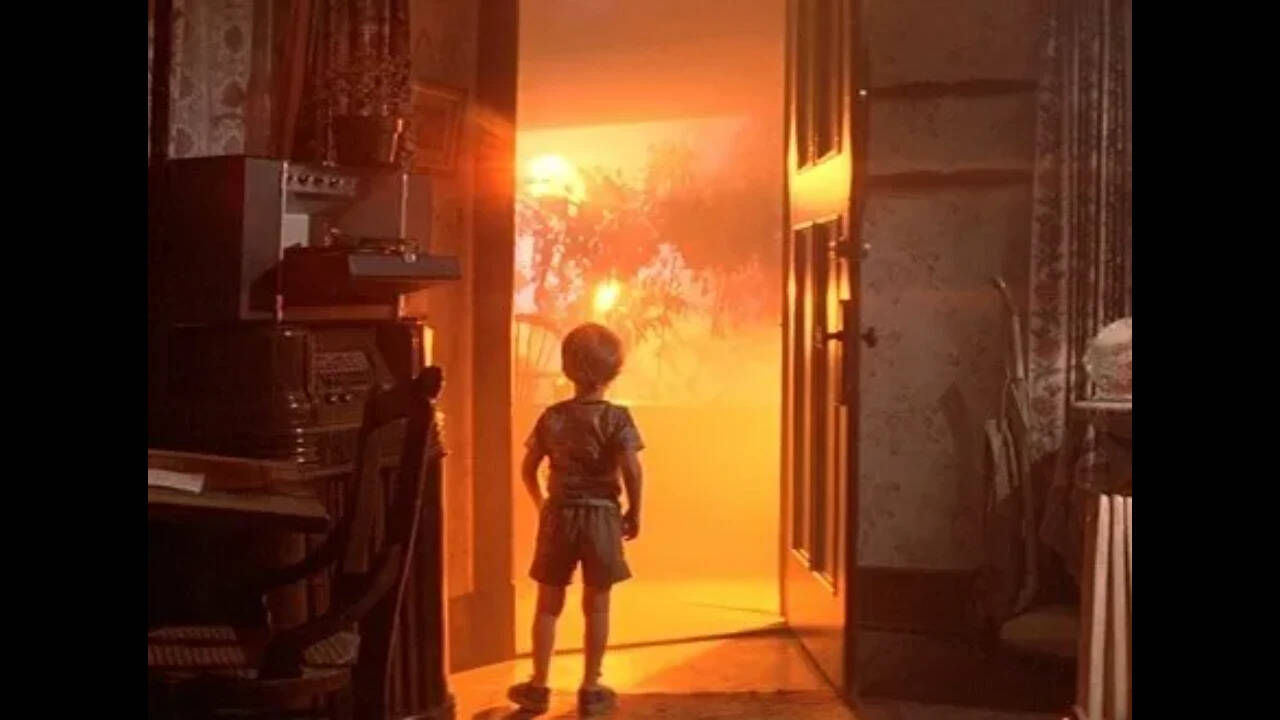
Close Encounters of the Third Kind imagined first contact through music rather than warfare.
Spielberg later admitted that the film was deeply influenced by his parents' divorce, making E.T. less an alien visitor than an outsider searching desperately for home. These stories resonated because they reflected humanity at its most hopeful, imagining that our first encounter with another civilization might reveal compassion rather than conflict.Others imagined exactly the opposite. Director Ridley Scott stripped away every comforting assumption in Alien, presenting extraterrestrial life as a perfect predator driven by instinct rather than morality.
Space itself became indifferent, silent and terrifying, while the alien embodied the fear that intelligence far superior to our own might not recognise concepts such as empathy or coexistence.Decades later, Denis Villeneuve offered perhaps the most intellectually ambitious vision in Arrival, where the greatest challenge was neither survival nor warfare but communication. The film proposed that learning an alien language might fundamentally alter the way humans perceive time, memory and existence itself, suggesting that first contact would transform not merely our technology but our consciousness.These films differ radically in tone, yet they all ask the same question. When we imagine aliens, are we really describing another civilization or simply projecting different versions of ourselves? Few works explored that tension more successfully than The X-Files, which became a cultural phenomenon not because it proved the existence of extraterrestrials but because it captured an era of growing distrust. Created in the shadow of political scandals and government secrecy, the series revolved around two investigators who represented opposing impulses within every human being.
Fox Mulder wanted to believe because mystery made the universe feel larger than official explanations allowed. Dana Scully demanded evidence because extraordinary claims required extraordinary proof. Their partnership never resolved the argument because the argument itself was the point.Humanity has always oscillated between belief and scepticism, between faith and evidence, between imagination and science.
The enduring popularity of the series lay in recognising that both instincts are essential. Curiosity without evidence becomes superstition, while evidence without curiosity risks becoming complacency.
The declassification of UFO files by the US
That balance has become even more important in recent years as governments themselves have begun acknowledging that not every object observed in the sky can immediately be explained. When the US Department of Defense released declassified reports and videos concerning what it now calls unidentified anomalous phenomena, headlines around the world inevitably proclaimed that governments were finally admitting UFOs were real.
The documents did nothing of the sort. They confirmed only that trained military personnel had encountered aerial events that investigators could not conclusively identify with the available evidence. Yet the disclosures followed because they shifted the conversation from ridicule to investigation.
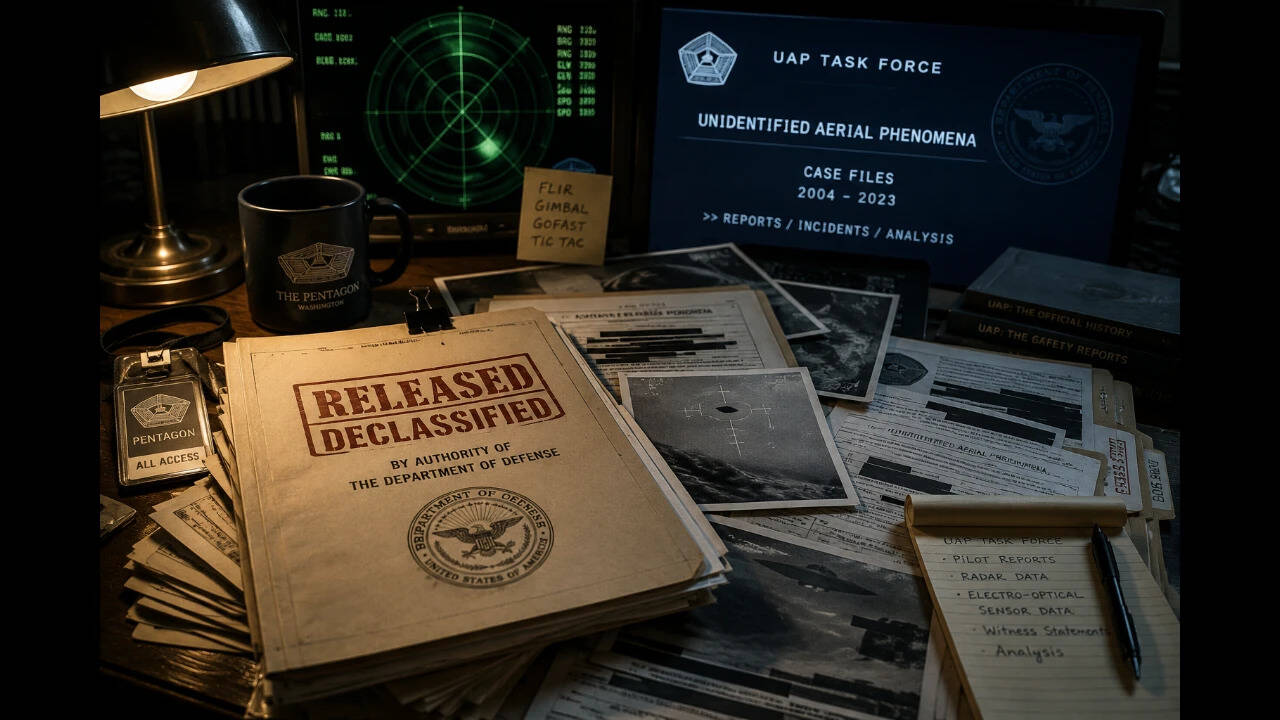
The declassification of the Pentagon UFO files started frenzied conversations as the gaze shifted from ridicule to investigation. (AI generated)
Even if another civilization exists somewhere among the stars, another profound question immediately arises. Could we ever understand one another? Polish writer Stanisław Lem argued in his novel Solaris that alien intelligence might be so different from our own that communication would prove almost impossible. An intelligence that evolved under an entirely different sun, with different senses and a different biology, might find human language as incomprehensible as we would find theirs. Writer Isaac Asimov, of Foundation and I, Robot fame, imagined advanced beings choosing to observe humanity from afar, believing that civilization must mature on its own rather than receive easy answers from superior visitors.
Ted Chiang’s Story of Your Life was adapted in the movie Arrival by Villeneuve. He offered perhaps the most poignant twist of all by pointing out that humans spend enormous resources searching the skies for voices from distant stars while often ignoring the astonishing intelligence that already exists on Earth in species threatened with extinction.
The sky above. The universe within.
Ultimately, that may explain why the fascination with UFOs has survived every debunking, every official report and every technological advance.
The search has never been solely about visitors from another world. It is about the oldest human impulse of all, the refusal to accept that the horizon marks the end of the story. Our ancestors crossed oceans because maps ran out. Explorers climbed mountains because something lay beyond the next ridge.
Astronomers built ever larger telescopes because every answer revealed deeper questions.
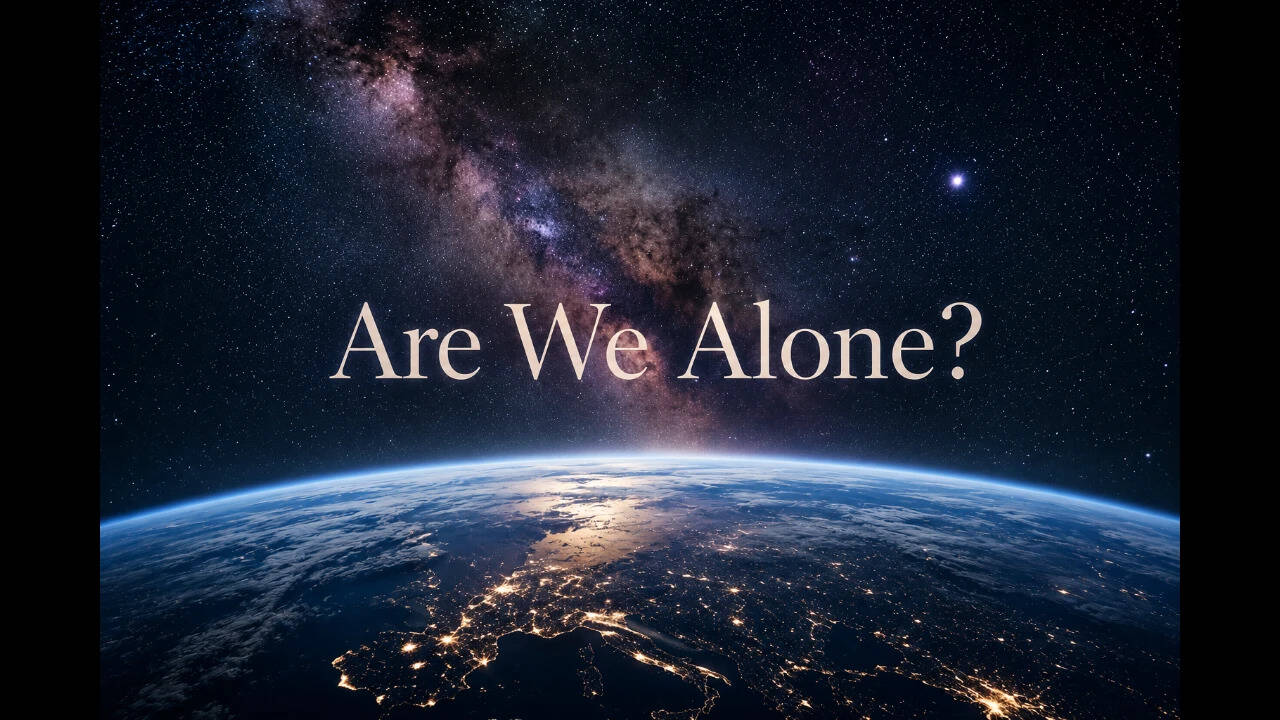
Maybe we’ve always looked into the night sky because every journey into the cosmos has also been a journey into ourselves.
The sky has always functioned as humanity's greatest mirror.
Every unexplained light invites us to imagine possibilities larger than our everyday lives, and every new discovery reminds us that certainty has never been the engine of progress. It was always curiosity.So then in the end, is the truth merely out there, hidden among distant stars, or concealed within classified archives? Or does it lie within us – in that irrepressible instinct to keep asking questions long after easy answers have run out? Maybe we’ve always looked into the night sky because every journey into the cosmos has also been a journey into ourselves. Think of it this way: If we are all made of star stuff, can a whole universe not reside just within us? Maybe that’s the reason we will never stop looking up.









 English (US) ·