

 4 days ago
3
4 days ago
3
ARTICLE AD BOX
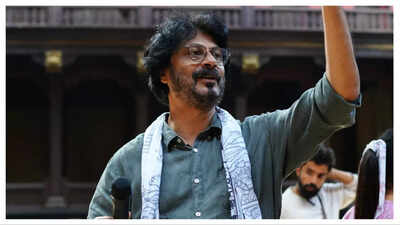
Filmmaker Yogesh Deshpande began in advertising, directing over 100 ad films before moving into feature cinema. His debut film Swaragandharva Sudhir Phadke traces the life of the celebrated composer-singer and highlights his musical legacy through recreated classics originally sung by Lata Mangeshkar, Asha Bhosale, Sudhir Phadke and Kishore Kumar.
The film received several recognitions and was among the titles submitted for consideration as India’s entry to the Oscars 2025. Reflecting on his beginnings in advertising, Yogesh credits the format for shaping his approach to filmmaking. He says, “People think advertising is smaller than cinema. I never did. When you have 30 seconds to make someone feel something, you learn a discipline that no film school can teach.
Every frame has to earn its place and every second has to breathe. After more than 100 ad films, I didn’t just have a showreel. I had a kind of muscle memory for storytelling.
That’s what I carried into cinema: speed, precision and an obsession with the audience’s emotional response. Advertising didn’t limit me. It armed me.” The transition from advertising to feature films, he says, came from a desire to tell longer stories.
“Honestly, it was restlessness (laughs!). I kept telling 30-second stories and walking away feeling like I had only written the first line of a novel. There was always more to say, more texture, more character and more silence between the words. 66 Sadashiv was my way of letting the story breathe. It allowed me to sit with it long enough to let it unfold.
That film was my leap of faith, not just into a new industry but into a new version of myself as a creator.”
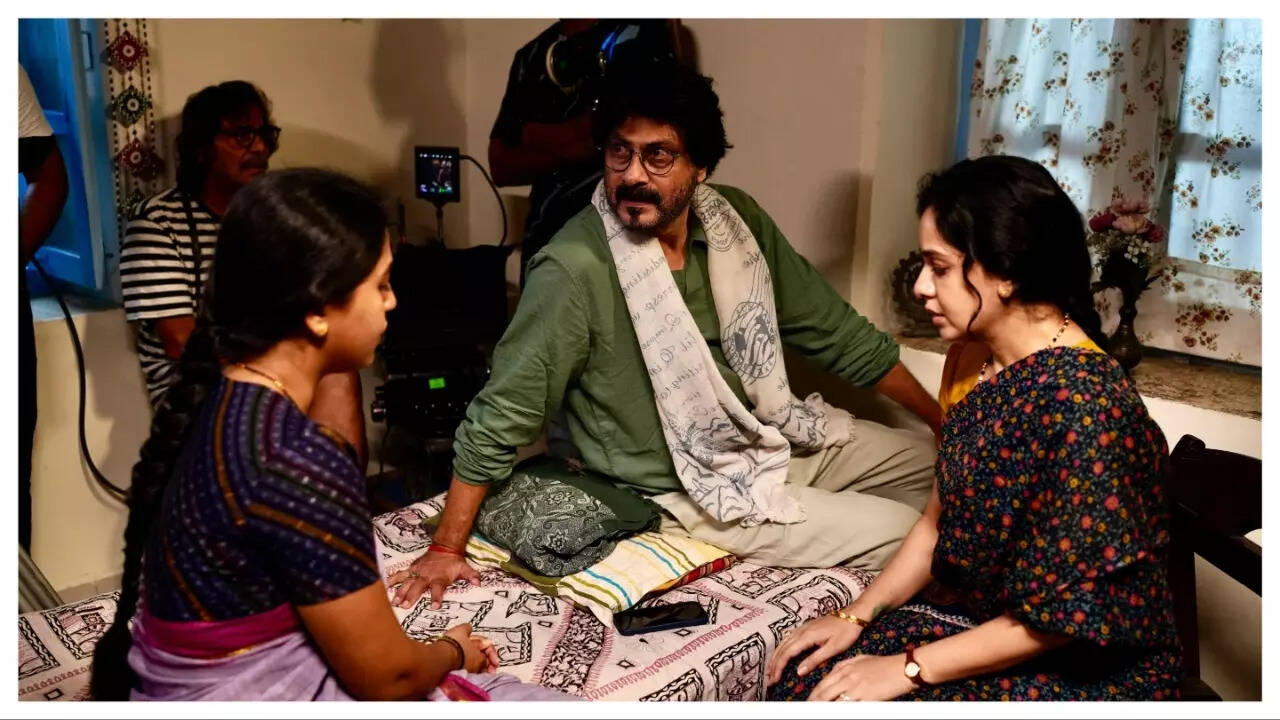
Yogesh on the sets of Swaragandharva Sudhir Phadke
His journey into Hindi cinema developed organically rather than through a long-term plan. Yogesh shares, “I never sat down with a five-year plan that said, ‘Step three: Bollywood.’ That’s not how I work. What I always believed was that the stories I want to tell deserve the widest possible audience. When Swaragandharva Sudhir Phadke released across five countries and was among the films submitted for consideration for India’s entry to the Oscars 2025, that wasn’t something I engineered.
It happened because the story was true. I think that truth is what is now naturally pulling me towards Hindi cinema. The language changes. The soul doesn’t.” His upcoming film Thumbz Up, currently in pre-production, is set in the Konkan region and explores the realities of the digital divide. The story centres on a woman navigating a rapidly changing world shaped by technology. Yogesh says the idea began with an image he could not forget. “It started with an image I couldn’t shake, a woman in a coastal village holding a smartphone she doesn’t quite know how to use but desperately wants to because her livelihood depends on it. That moment stayed with me. We talk about digital India as if it has reached everywhere, but it hasn’t. The Konkan coast is visually beautiful, but beneath that beauty is a community trying to keep up with a world changing faster than it can adapt.
Thumbz Up isn’t really a technology film. It’s a human story about aspiration and the gap between what the world promises and what it actually delivers to ordinary people.” The film is anchored by a female protagonist whose journey forms its emotional core. “She has the most at stake and the least support, and that’s where the most compelling stories exist. She doesn’t begin as a hero. She begins as someone trying to survive and be seen in a world that has moved on without asking her permission. What I find powerful about her arc is that she doesn’t become strong by turning into someone else.
She becomes strong by becoming more herself. I think audiences will laugh with her, ache for her and, hopefully, stand up for her,” he concludes.






 English (US) ·