

 1 hour ago
8
1 hour ago
8
ARTICLE AD BOX
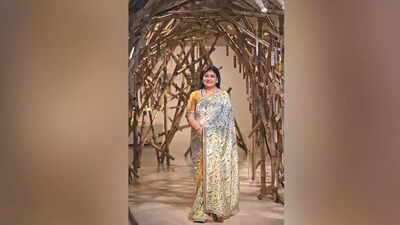
The Kolkata Centre for Creativity (KCC) owes its cachet as much to its minimalist design as to its distinctive exhibitions and cultural programming. From the amphitheatre to its fairs, festivals and a calendar that often spills beyond the campus, the multi-functional space has steadily evolved into a lively hub for artistic exchange.
In a freewheeling chat with CT, Chairperson Richa Agarwal (also CEO, Emami Art) reflects on its journey, philosophy and the road ahead. Excerpts:Tell us about your journey with KCC since its inception. The journey has been very gratifying. On paper, the building looked small. When I first came in, when only the ground and first floor were done, I suddenly felt, my god, this is larger than life! It was intimidating and overwhelming. But in the long run, I realised it was important to take that first step forward.
Since then, many people have walked in, many have looked out for us, and many have contributed with their inputs.
In that sense, we have been very blessed.
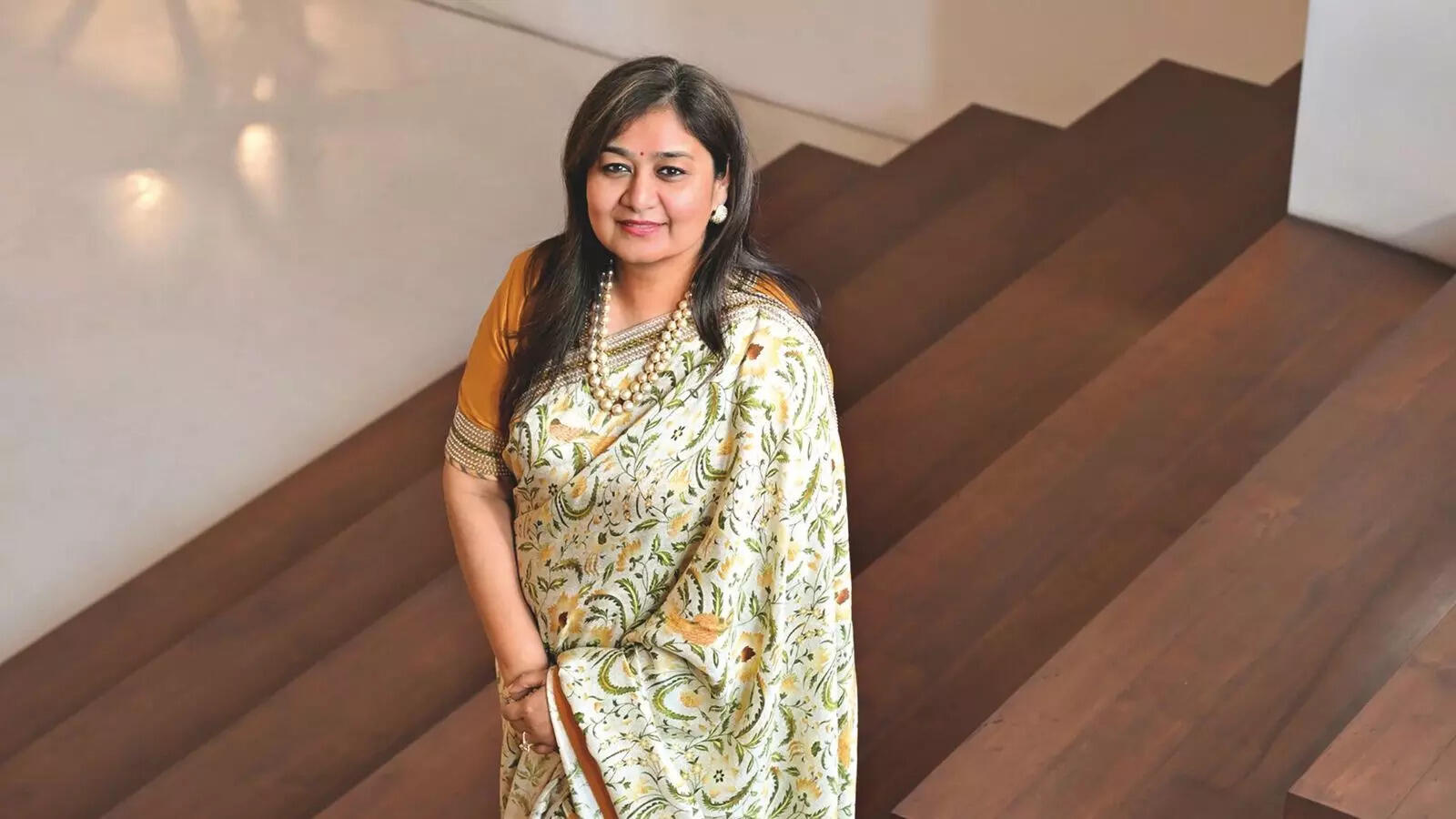
Richa Agarwal at the KCC amphitheatre
How do you see your role in driving conversations around art and culture in the city where it is not an elitist pursuit? Emami is a homegrown Kolkata group. Whatever we have built has grown from this city, through its love and support. At a certain point in life, my father-in-law (Radhe Shyam Agarwal) wanted to give back to Kolkata. He wanted to create a platform where people who want to learn can come together.
Art is not just what you see on walls, and it’s not only cerebral. It is a way of life. It should be accessible and thought provoking.
It should create beautiful dialogue and conversations. We often speak about balancing the popular and the intellectual. While the popular feeds the intellectual, the intellectual also needs the popular. You must have both. When you come here, you should feel that kuchh toh interesting wahan hoga. The space allows for interactions and performances, with an amphitheatre, library, multiple galleries, a conservation lab, braille library, café and gallery store, fostering a multidisciplinary approach to creativity.How has the city shaped you as a curator and how much of it impacts your work here? You can build a structure, but you need people to breathe life into it. Constructing a building is the easiest part; making it come alive is harder. Unless we resonate with what the city stands for, running a space like this makes no sense. The participation of like-minded people is what makes it real. And that is how Kolkata has shaped us. When I began working formally in art and culture, I was intimidated. I revere artists and senior personalities.
Over time, that intimidation transformed into love for what I do. You constantly learn and grow organically. Even without realising it, you pick up so much every day.
Deep thinkers and creative minds walk in every day with their ideas. We work together, bringing those ideas to life, articulating them.That is the creative energy that flows through this space
Richa Agarwal
The lesson in early challenges Low footfall in the early days was, by Richa Agarwal’s own admission, difficult to watch. “It was heartbreaking,” she says simply. But instead of retreating, the team focused on building a steady stream of programming that could gradually draw people in.
Over time, the calendar expanded from a handful of exhibitions to a wider mix of performances, talks, workshops and collaborations designed to engage different audiences. One initiative that emerged from this approach is AMI. “AMI means ‘me’. We’re always doing things for others. Where is the space for ‘I’?” Agarwal explains.
Conceived as a multi-segment platform, it includes museum collaborations connecting smaller institutions with the Indian Museum around documentation and conservation, theatre projects with school students, and platforms such as Utsav, an open call where performing arts students get the chance to perform at the Victoria Memorial. Classical and contemporary music, talks, workshops and craft segments like Karigari add to the mix. The shift, she says, became visible last year when a couple attended every event and asked, “What will we do after these 15 days?” ‘A city of constant inspiration’ Kolkata is not about sudden highs or lows. But a steady movement. If you want to look forward to things, there’s plenty. If you don’t, it is easy to complain. It is a city of constant inspiration; one of the few places where you can choose your pace, with something for everyone. I want people to understand that Kolkata is as important as Delhi or Mumbai. When significant events happen here, they should come, visit. We are a pivot for the Northeast and Odisha.
There is tremendous art potential here. I’ve seen drastic changes over the last 10 years, and I believe we are ready for the next many steps.
Kolkata lets you be yourself. If I were to visualise Kolkata on a canvas, I’d keep it white, a clean canvas. It’s a city that lets you be yourself. You choose your space, your pace. That freedom is special.
Richa Agarwal





 English (US) ·