

 1 hour ago
4
1 hour ago
4
ARTICLE AD BOX

A subtle habit of mouth breathing, often unnoticed during sleep, can significantly impact energy levels and long-term health. Experts highlight that nasal breathing naturally filters and humidifies air, a crucial function bypassed by mouth breathing. This can lead to fatigue, disrupted sleep, and even affect physical development in children. Addressing the root cause is key to restoring healthy nasal breathing.
It sounds simple, almost too simple to matter: breathing. But the way it happens, through the nose or the mouth, can shape sleep, energy, and long-term health. Many people assume mouth breathing only happens during a cold or a tough workout.
But what if it has become a habit, especially during sleep, without even being noticed?That shift, experts say, can have deeper effects than expected.
The hidden habit most people miss
Mouth breathing is not always obvious. It can happen during the day, but it often slips in at night. A slightly open mouth, dry lips in the morning, or waking up thirsty may seem harmless. But these are often early signs.Dr Samhita Ullod, Assistant Professor at SDMIAH, Bengaluru, explains it clearly,“Mouth breathing is the habit of inhaling and exhaling through mouth instead of nose… persistent mouth breathing especially during sleep is considered as abnormal and it requires proper evaluation and treatment.”In short, the body is designed to breathe through the nose. When that pattern changes, it is usually for a reason.

It bypasses the nose’s natural filtering system and may lead to fatigue, snoring, and respiratory issues.
Why the nose matters more than we think
The nose is not just a passage for air. It works like a built-in filter and regulator. It warms the air, adds moisture, and traps dust and microbes before they reach the lungs.When breathing shifts to the mouth, all these protective steps are skipped.As Dr Ullod puts it, “Nasal breathing… filters the air… acts as a humidifier and prevents foreign particles from entering the airways.”
Without that system, the air entering the lungs is colder, drier, and less clean. Over time, this can irritate the airways and strain the respiratory system.A detailed overview by the US National Institutes of Health highlights similar findings, noting how nasal breathing improves airflow resistance and oxygen exchange.
How mouth breathing drains energy
Ever wake up feeling tired even after a full night’s sleep? Breathing might be part of the story. Mouth breathing reduces the efficiency of oxygen exchange.
The body works harder, but gets less benefit. Over time, this can lead to fatigue and low focus.Dr Ullod notes that it may cause “fatigue, reduced concentration… and gradually may lead to different respiratory disorders.”There is also a link to disrupted sleep cycles. According to the US National Heart, Lung, and Blood Institute, poor breathing patterns can worsen sleep disorders and affect daytime energy levels.So the tiredness is not always about how long one sleeps. It is also about how well the body breathes during that time.
The sleep connection that often gets ignored
Mouth breathing and sleep are closely tied. It can lead to snoring, fragmented sleep, and even worsen conditions like sleep apnea.The problem is subtle. Sleep may look uninterrupted from the outside, but internally the body keeps waking up briefly due to poor airflow.Dr Ullod explains, “It is linked to fragmented sleep and if habituated may worsen the conditions of sleep apnea.”This broken sleep pattern slowly reduces energy, affects mood, and can even impact heart health over time.
When it starts affecting the body structure
In children, the effects can go beyond sleep and breathing. Long-term mouth breathing can influence facial growth. It may change jaw alignment, dental structure, and even posture. There is also a higher risk of gum issues and throat infections.The reason is simple. The mouth stays open longer than it should, and the natural balance of muscles and airflow changes. This is why early attention matters, especially in growing children.
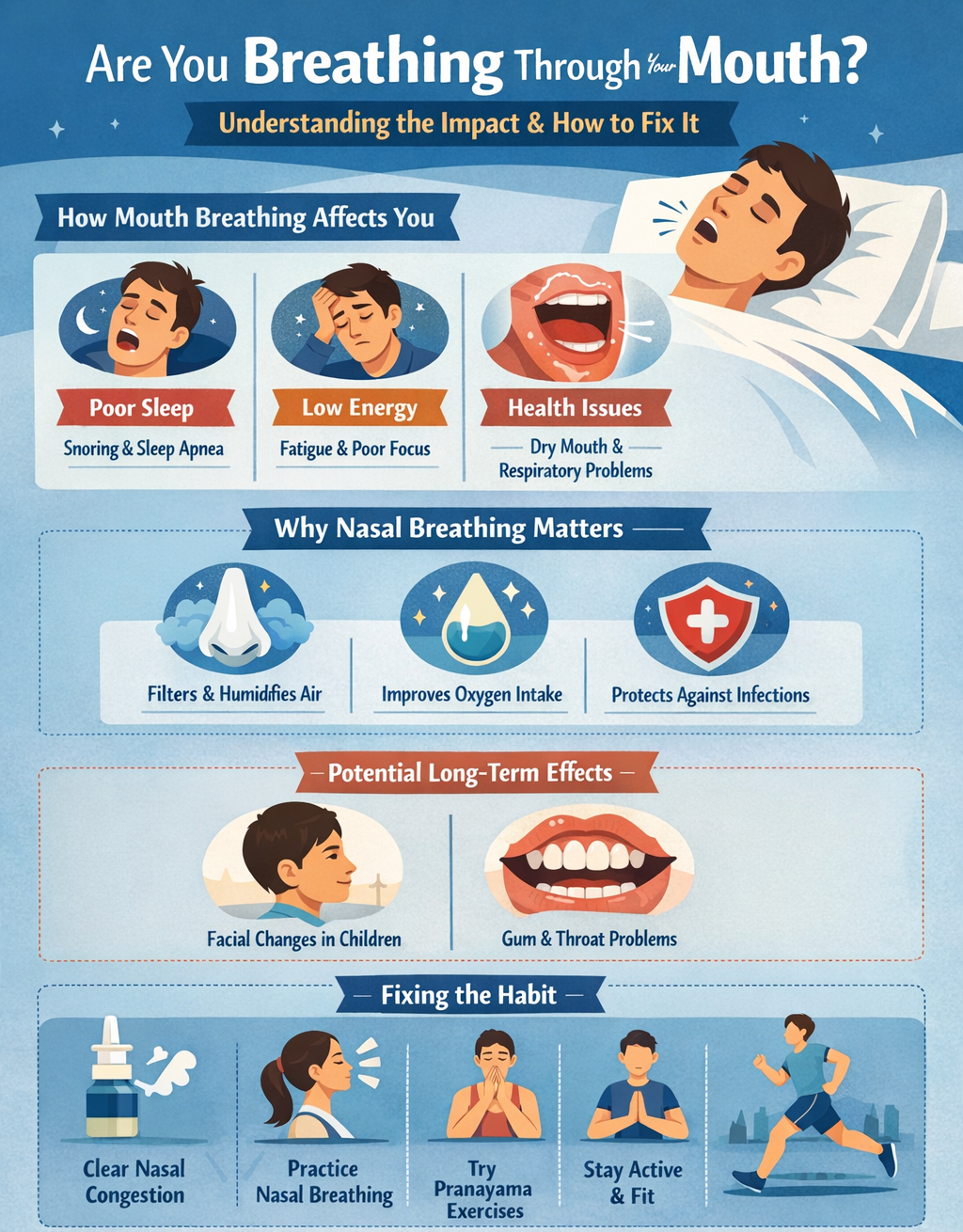
The condition is reversible with awareness, proper treatment of underlying causes, and simple practices like breathing exercises.
Fixing it: small shifts that make a big difference
The good news is that this habit can be reversed. But it starts with awareness.Dr Ullod emphasises, “The underlying cause… should be carefully identified and treated.”
Here are some grounded ways to begin:
- Clear the airway first: Nasal congestion from allergies or sinus issues needs proper treatment. Ignoring it only reinforces mouth breathing.
- Try nasal-focused practices: Traditional methods like Nasya in Ayurveda aim to clear nasal passages.
- Add breathing exercises: Practices like Pranayama help retrain the body to breathe through the nose and improve control.
- Stay physically active: Movement improves lung strength and breathing efficiency.
- Seek medical advice when needed: Especially if snoring, fatigue, or sleep issues persist.
A practical question arises here: can simply closing the mouth fix it? Not always. If the nose is blocked, the body will return to mouth breathing. The root cause must be addressed first.
A quiet habit worth paying attention to
Breathing is constant, but rarely questioned. Mouth breathing often begins as a small adjustment and slowly becomes the norm.
Over time, it touches sleep, energy, and even long-term health.The shift back to nasal breathing is not dramatic. It is gradual, conscious, and deeply beneficial.Medical experts consultedThis article includes expert inputs shared with TOI Health by:Dr Samhita Ullod, Assistant Professor, SDMIAH, Bengaluru.Inputs were used to explain how unnoticed mouth breathing can quietly impact sleep quality, energy levels, and overall health, and why recognising the signs and seeking the right guidance can help correct it effectively.









 English (US) ·