

 4 hours ago
4
4 hours ago
4
ARTICLE AD BOX
Last Updated:January 23, 2026, 10:05 IST
India is racing to modernise its Air Force, upgrading jets and missiles as threats evolve. At the centre is a plan to buy 114 Rafales and upgrade the existing fleet

Experts emphasise that Rafale F4 marks a generational shift in modern warfare, transforming the aircraft from a standalone fighter into a fully networked combat platform. (PTI)
China and Pakistan are deepening their defence cooperation through high-profile military deals. Pakistan is now almost entirely dependent on China for its defence requirements. During Operation Sindoor, Islamabad reportedly deployed Chinese missiles, fighter jets and other military equipment.
According to several reports, Pakistan is now attempting to acquire a fifth-generation fighter jet from China. It already operates Chinese aircraft such as the JF-17 and J-10.
On the other hand, the Indian Air Force (IAF) faces a serious shortfall in fighter squadrons. While the approved strength is much higher, the IAF currently operates far fewer squadrons and must remain prepared to counter threats from both China and Pakistan simultaneously.
India’s Squadron Gap And The Rafale Solution
India previously purchased 36 Rafale fighter jets from France. However, this number is insufficient to bridge the existing squadron gap. To address this, India is moving forward with a plan to acquire 114 additional Rafale jets under the Multi-Role Fighter Aircraft (MRFA) programme.
A mega defence deal worth approximately Rs 3.25 lakh crore could be finalised in the coming months. This acquisition is seen as a critical step in strengthening the IAF until India’s indigenous fifth-generation fighter becomes operational.
From Rafale F3R To Rafale F4: A Major Leap
The IAF currently operates the Rafale F3R, one of the world’s most advanced 4.5-generation fighter jets. However, all existing Rafales will be upgraded to the F4 standard, which represents far more than a routine upgrade.
According to defence sources, the Defence Acquisition Board has approved the proposal to induct the Rafale F4 variant. This move is considered a bridge solution until the Advanced Medium Combat Aircraft (AMCA) enters service, expected around 2034-35.
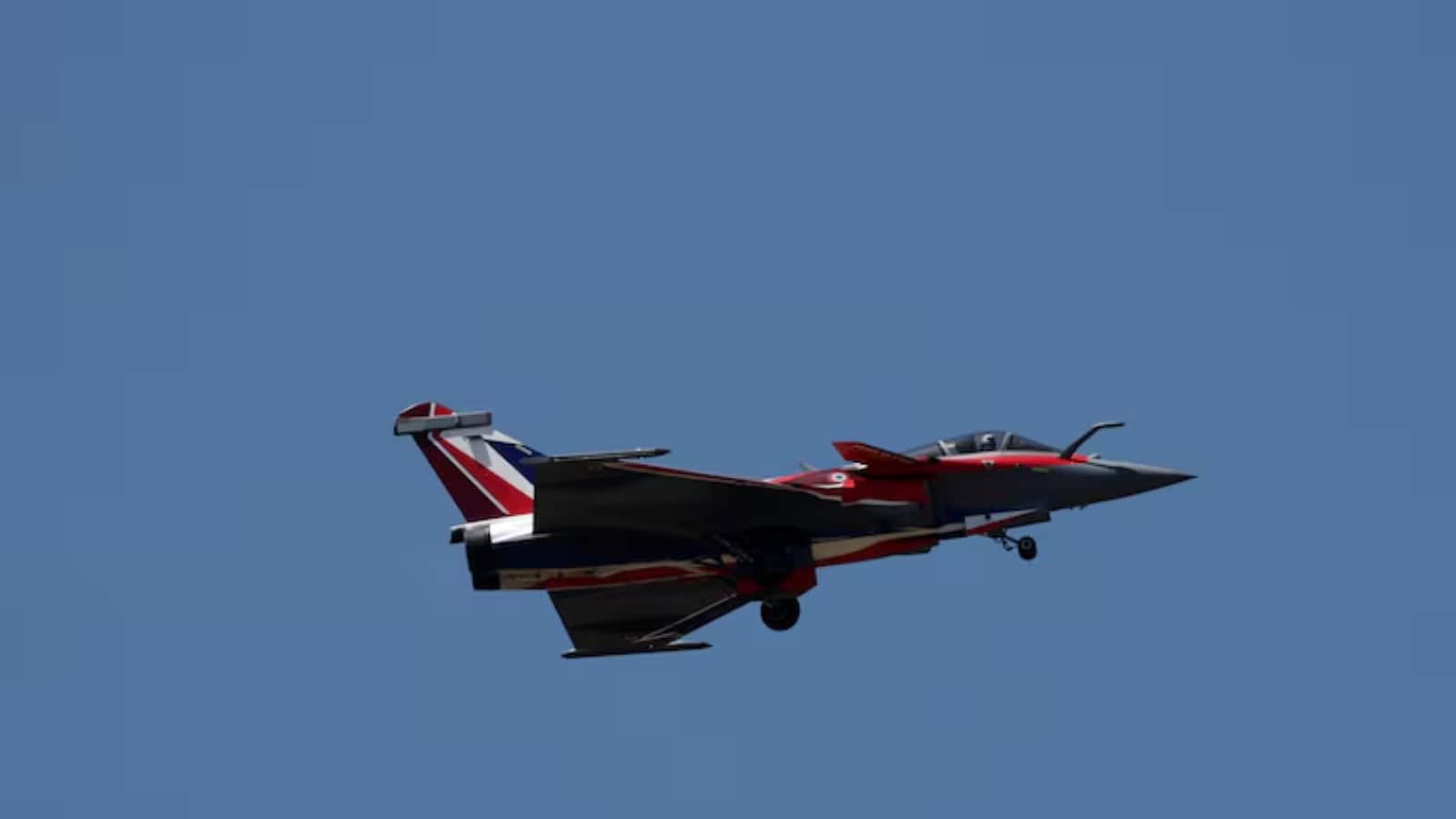
Experts emphasise that Rafale F4 marks a generational shift in modern warfare, transforming the aircraft from a standalone fighter into a fully networked combat platform.
Rafale F4: Built For Network-Centric Warfare
Rafale F4 has been designed as a hyper-connected platform, capable of integrating seamlessly with air, land, sea and space-based systems. Instead of operating independently, the jet functions as part of a network-centric combat cloud, sharing data in real time across multiple platforms.
This capability enables coordinated operations with drones, AWACS, naval assets and ground command centres, significantly enhancing battlefield awareness and response speed.
Rafale F4 Vs Rafale F3R: Key Differences
- Avionics And Sensor Upgrades: Rafale F4 features a more advanced AESA radar, enhanced electronic warfare systems and new opto-electronic sensors. The F3R uses current-generation avionics.
- Network-Centric Capability: F4 offers advanced data links, cloud-connected mission systems and superior multi-platform coordination. F3R has limited networking capability.
- Weapon Integration: F4 supports next-generation air-to-air and air-to-ground missiles, along with smart stand-off weapons. F3R’s weapons package is comparatively limited.
- Maintenance And Operational Availability: F4 uses AI-based predictive maintenance and advanced logistics systems, improving mission readiness. F3R relies on traditional maintenance methods.
- Software And Cyber Security: Rafale F4 introduces a new software architecture with enhanced cyber-security features, far superior to those in F3R.
Why Rafale F4 Is So Powerful
The most significant upgrade in Rafale F4 lies in its sensor and radar systems. While F3R uses the highly capable RBE2 AESA radar, F4 incorporates an advanced version with:
- Ground Moving Target Indicator (GMTI)
- Synthetic Aperture Radar (SAR) modes
These allow pilots to generate high-resolution battlefield images in all weather conditions and track moving ground targets with extreme precision. This dramatically enhances deep-strike, surveillance and reconnaissance capabilities.
Collaborative Combat And Real-Time Data Sharing
One of Rafale F4’s standout features is its collaborative combat network. Unlike earlier versions that relied mainly on Link-16, F4 integrates:
- Thales CONTACT software-defined radio
- Secure high-speed satellite communication
This enables real-time data sharing not only with other fighter jets, but also with drones, naval platforms and ground command centres. Pilots operate within a shared battlefield picture rather than fighting in isolation.
Deadly Strike Capability
The power of Rafale F4 is evident in its ability to deliver 1,000 kg precision-guided bombs, capable of neutralising heavily fortified targets.
Its strike capability allows it to conduct devastating attacks deep inside enemy territory.
Major Cockpit Upgrades
According to defence.in, the cockpit will undergo significant changes. The existing Elbit DASH IV helmet-mounted display will be replaced by Thales’ Scorpion helmet-mounted display.
This system provides:
- Full-colour, high-resolution visual data
- Digital symbology directly in the pilot’s line of sight
- Advanced hybrid tracking technology
Pilots can cue weapons and sensors simply by looking at the target, enabling instant reaction and decisive superiority in high-intensity combat.
Weapon Systems: Even More Lethal
Rafale F4 significantly enhances its weapons package:
Meteor long-range air-to-air missile remains a key strength
MICA NG (Next Generation) missile added, featuring:
- Dual-pulse rocket motor
- Longer range
- High agility
- AESA seeker
These capabilities make it extremely difficult for stealth aircraft to evade.
Additionally, the integration of 1,000 kg HAMMER precision-guided munitions boosts heavy-strike capability, allowing accurate destruction of bunkers and hardened targets from stand-off distances.
Artificial Intelligence And Predictive Maintenance
Artificial Intelligence plays a central role in Rafale F4. Instead of conventional sensor fusion, onboard AI processes massive volumes of data from radar, electronic warfare systems and external platforms, presenting only the most critical information to the pilot.
This reduces cognitive overload and improves decision-making during combat.
AI-based predictive maintenance continuously monitors aircraft health, detects faults early and reduces downtime, crucial for sustained high-intensity operations.
Preparing India For Future Warfare
Strategically, Rafale F4 is designed to counter:
- Stealth aircraft
- Dense air-defence networks
- Advanced electronic warfare threats
With AMCA still under development, prototype expected around 2026-27, Rafale F4 will serve as the backbone of India’s air power for the next decade.
A Platform That Redefines Air Power
Defence experts believe that selecting Rafale F4 under the MRFA programme will not only strengthen the IAF’s immediate capabilities but also position India strongly in the era of network-centric and AI-enabled warfare.
Rafale F4 is not just a fighter jet; it is a transformative platform set to redefine India’s air dominance in the years ahead.
First Published:
January 23, 2026, 10:05 IST
News india 1,000 Kg Bombs And 2,200 Kmph Speed: Why Rafale F4 Could Redefine Air Warfare
Disclaimer: Comments reflect users’ views, not News18’s. Please keep discussions respectful and constructive. Abusive, defamatory, or illegal comments will be removed. News18 may disable any comment at its discretion. By posting, you agree to our Terms of Use and Privacy Policy.
Read More









 English (US) ·