

 1 hour ago
6
1 hour ago
6
ARTICLE AD BOX
Sometime last year, when he was an ambassador at Tata Steel Chess Tournament, Viswanathan Anand heard a voice at the back of his mind.
For at least half a decade before that question popped up, Anand had been weaning himself off competitive chess, playing a couple of events a year and referring to himself as a ‘semi-retired’ player.
Story continues below this ad
He’d taken on other roles to fill the void. He is a deputy president of the global chess federation, FIDE. He occasionally does analysis on the official FIDE YouTube stream for events like the World Championships and World Cups. And then — through his Westbridge Anand Chess Academy — he mentors players like reigning world champion D Gukesh and R Praggnanandhaa.
But last year, the aforementioned voice told him he’d had enough of sitting on the sidelines. The sportsperson’s itch to compete had taken over.
Story continues below this ad
“At the end of last year in Kolkata, I had the feeling that I’d hit my limit just coming to watch the tournament. It (watching) is much harder than playing. I got fed up with not playing. Probably you’re experiencing this now,” Anand told his one-time contemporary Dibyendu Barua at a press conference during the recent Tata Steel India Rapid and Blitz tournament after almost winning the Rapid portion.
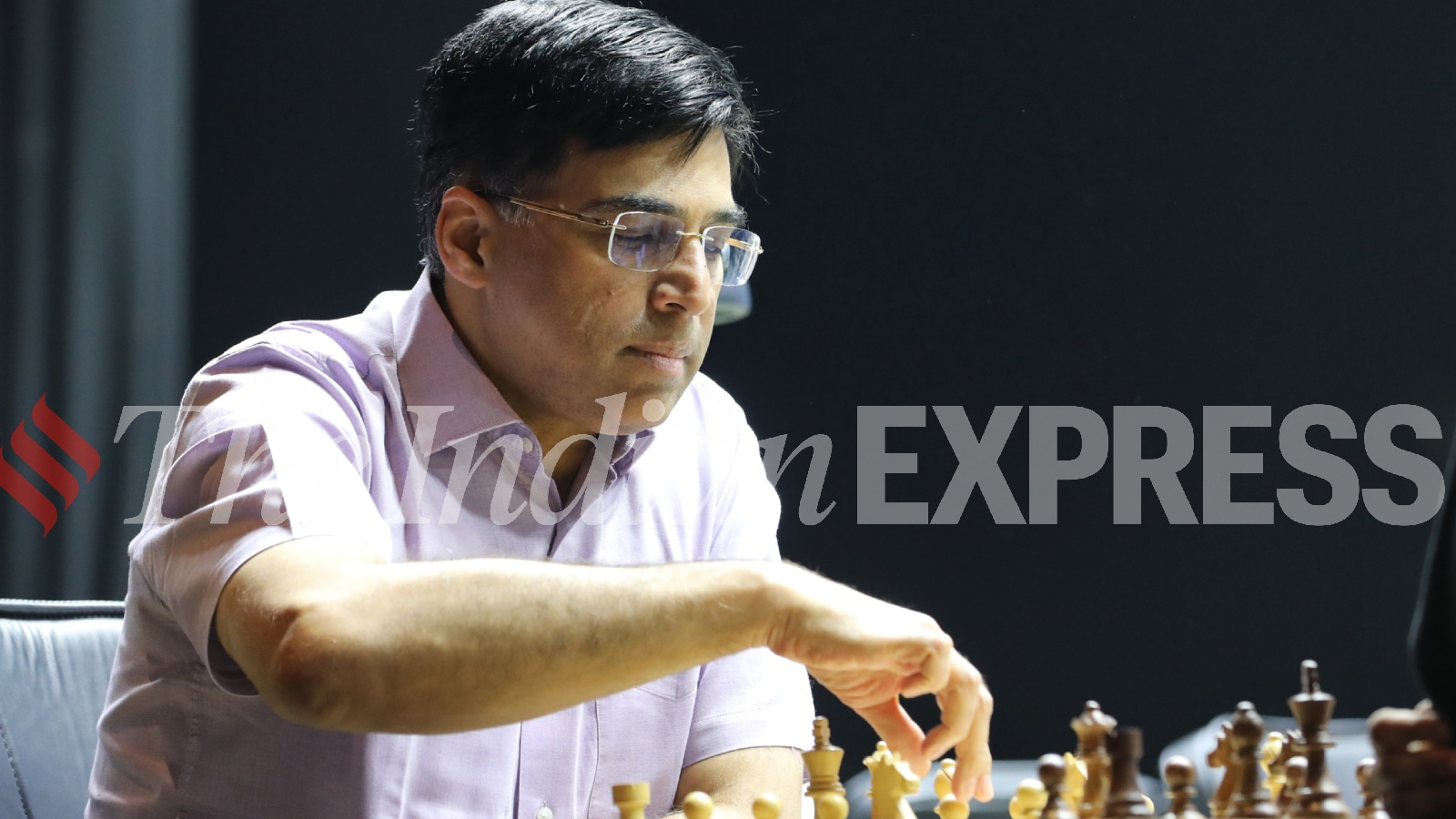 Viswanathan Anand in action. (Express photo by Partha Paul)
“It’s funny. You come to a tournament and the first year, you enjoy it: it’s fun watching and leaving. The following year, you do it again. But last year, I thought, ‘How many years can I just stand there and watch?’”
Nagged by this question, Anand accepted the invitation to play at Kolkata. By a strange coincidence, another invitation appeared out of nowhere, to play in Jerusalem.
Story continues below this ad
Having played at the top for decades, the mental muscle memory of finding good moves had not gone away.
“It’s not that my moves would be totally off. I know what the young chess players are doing these days (in terms of opening ideas). But after seven-eight months of not playing chess, when you’re actually playing, the thought of, ‘What am I actually going to do now? What opening am I going to play?’… all these decisions, you forget how to think about that after a long break,” said Anand.
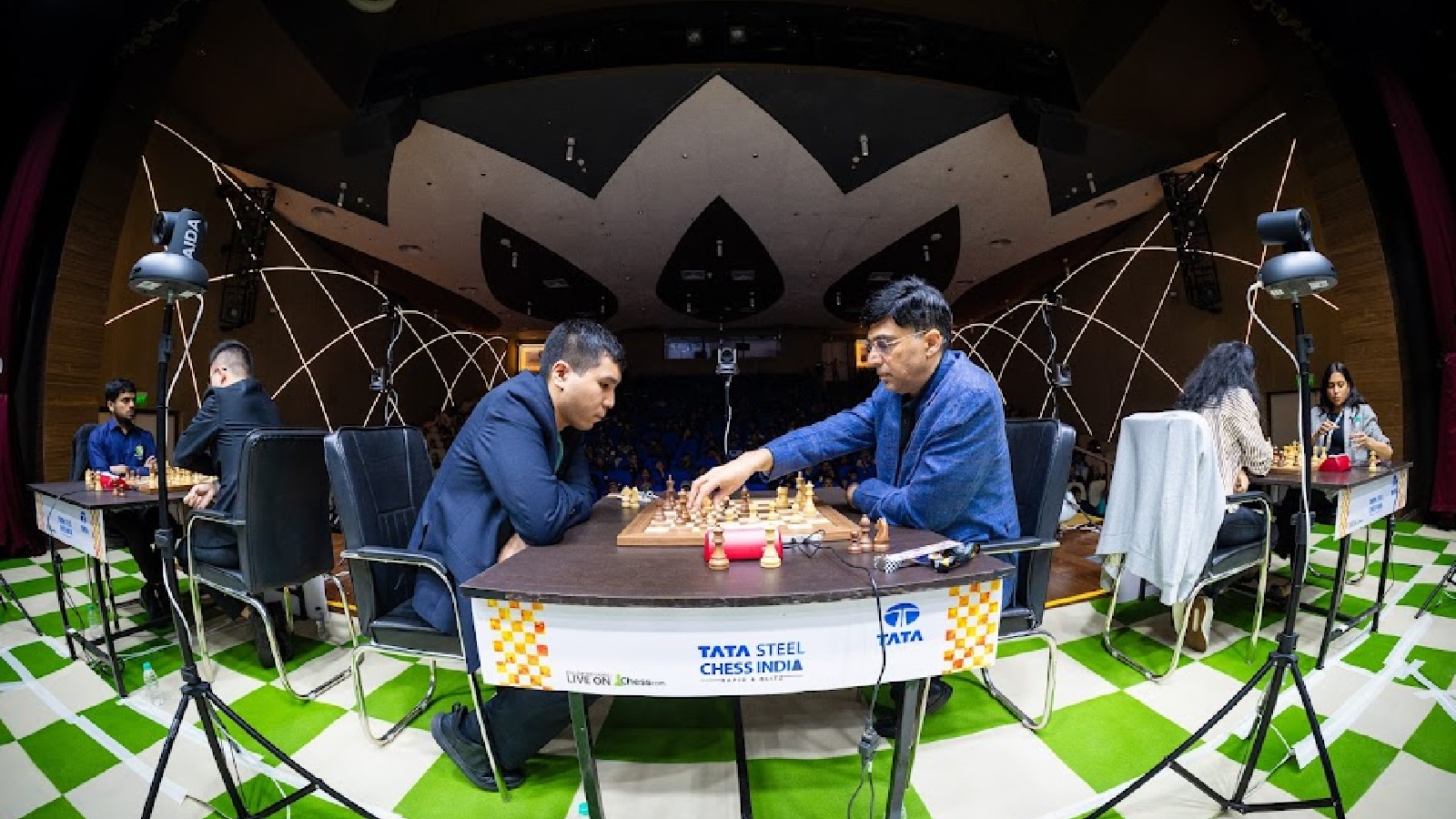 Viswanathan Anand takes on Wesley So on day 1 of the Tata Steel India Rapid and Blitz Chess tournament in Kolkata. (PHOTO: Lennart Ootes)
What happens in six months
Story continues below this ad
The internal monologue reminds one of a different conversation the five-time world champion once had 21 years ago with Garry Kasparov at the Linares tournament. Back then, Kasparov had stunned the world by announcing his retirement at the age of 41 right after winning that event. At the closing ceremony, Anand had questions for Kasparov.
“Don’t you think that six months from now, you will be sorry? That you will be lost without playing?” Anand wanted to know.
“Ask me in six months,” came Kasparov’s response.
Kasparov never did reverse his decision to retire, instead choosing to stay in touch with the sport by authoring multiple books, besides becoming a public speaker and an activist for democracy in Russia. Anand, on the other hand, perhaps wondering if he will be sorry in six months if he retired, never cut the cord.
Athlete retirements are treacherous things.
Story continues below this ad
About a decade ago, ESPN’s Wright Thompson spent considerable time with Michael Jordan to write a profile on arguably the greatest basketball player of all time as he was turning 50. It had been a decade since Jordan had called time on his career and become a billionaire thanks to his sponsorship and deals.
But Thompson recognised in Jordan a man who was still aching to play: he’d see NBA games on TV and start pitting himself mentally against the stars of the day; he’d get on the weighing scale and think about 218 pounds, his weight during his playing days.
“There’s a palpable simmering whenever you’re around Jordan, as if Air Jordan is still in there, churning, trying to escape. It must be strange to be locked in combat with the ghost of your former self,” Thompson wrote.
Story continues below this ad
It was during interviews for that profile that Jordan revealed that he always thought he would die young. As Thompson rationalised later, Jordan “just could never imagine being old. He seemed too powerful, too young, and death was more likely than a slow decline. The universe might take him, but it would not permit him to suffer the graceless loss and failure of aging. A tragic flaw could undo him but never anything as common as bad knees or failing eyesight.”
Can’t call quits
In some sports, particularly team ones, the decision is sometimes made for an athlete by coaches or team management. In other cases, the body or mind informs an athlete that it’s time. This is what happened with Australia skipper Alyssa Healy, who called time on her career with an admission: “The last few years have been probably more mentally draining than anything else (due to injuries). You got to dive into the well a couple of times and probably that well was getting less and less full of water, so it was getting harder to dive back in there.”
Later at a press conference, Healy would go on to explain: “I’ve somewhat lost that competitive edge that’s kept me driven since the start.”
As he showed at the Tata Steel Chess tournament, Anand can still summon that edge whenever he needs. This Madras Tiger can never change its stripes.


 English (US) ·