

 1 hour ago
4
1 hour ago
4
ARTICLE AD BOX
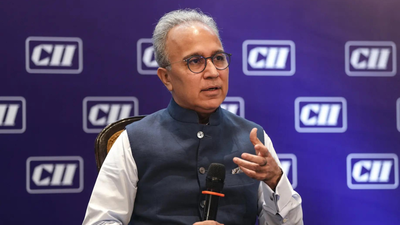
CII president Rajiv Memani, who is chairman and CEO EY India, describes 2025 a year of reforms and calls for the momentum to continue. In an interview with TOI he flags power, mining, ease of doing business and judicial reforms as focus areas.
Excerpts:There have been a series of reforms this year, starting with the Budget to change in GST, labour codes and insurance laws and a rush of trade agreements. Do you see govt in overdrive?Relative to what's happening in the world, India ending half year with 8% GDP growth is remarkable. The other parameters are also looking good, including fiscal deficit, corporate and bank balance sheets. There have been reforms and several steps on ease of doing business.
This year will be remembered for the reforms and the trade deals and hopefully that momentum will continue.What is the wish list for the coming months?The CII membership has looked at it sector-by-sector and they can be broken into ease of doing business and factor reforms. On factor reforms, there is energy and mining. While energy costs have come down, corporates still have to pay at least Rs 1.50 more per unit due to cross subsidisation.
Also, you have to pay for access charges. State distribution companies are incurring losses. There is a need for aggressive privatisation of discoms.
Similarly, opening up of the mining sector, particularly those mines that are locked up, will help reduce manufacturing cost significantly. In logistics, we need large investments in high speed rails. We analysed India's imports. Of the roughly $725 billion imports this year, $250-300 billion will include energy, fertiliser, rare earth.
They were difficult to substitute, but you still have $300-400 billion of imports that we can look at manufacturing in India. We looked at ease of doing business. Digitisation of land records is taking place, can we look at tokenisation? Judicial reforms is a big area of focus given that cases are piling up. Unless we find a way of dealing with it, it will choke growth.
How are US tariffs hurting business and what is your recommendation to govt?Our goods exports are still up but the composition has changed.
The trade diversification piece is working well, especially in food products, shrimps. There are some sectors that are impacted and some are labour intensive. A lot of new contracts are signed around this time and a lot of businesses will try to sustain because winning a new contract & building new relationship again is not that easy.How is industry preparing for the new labour codes?Companies are preparing, a lot of implementation has to happen at the state level.
They are also requesting govt to train. First, due to digitisation, compliances can be done digitally and a portal for all states can be helpful. Second is that getting the inspectors and others also fully trained. Third, there shouldn't be any inconsistency between what the states recommend and what is there in the codes. Fourth, there are some questions around whether this will be retrospectively done or prospectively done.
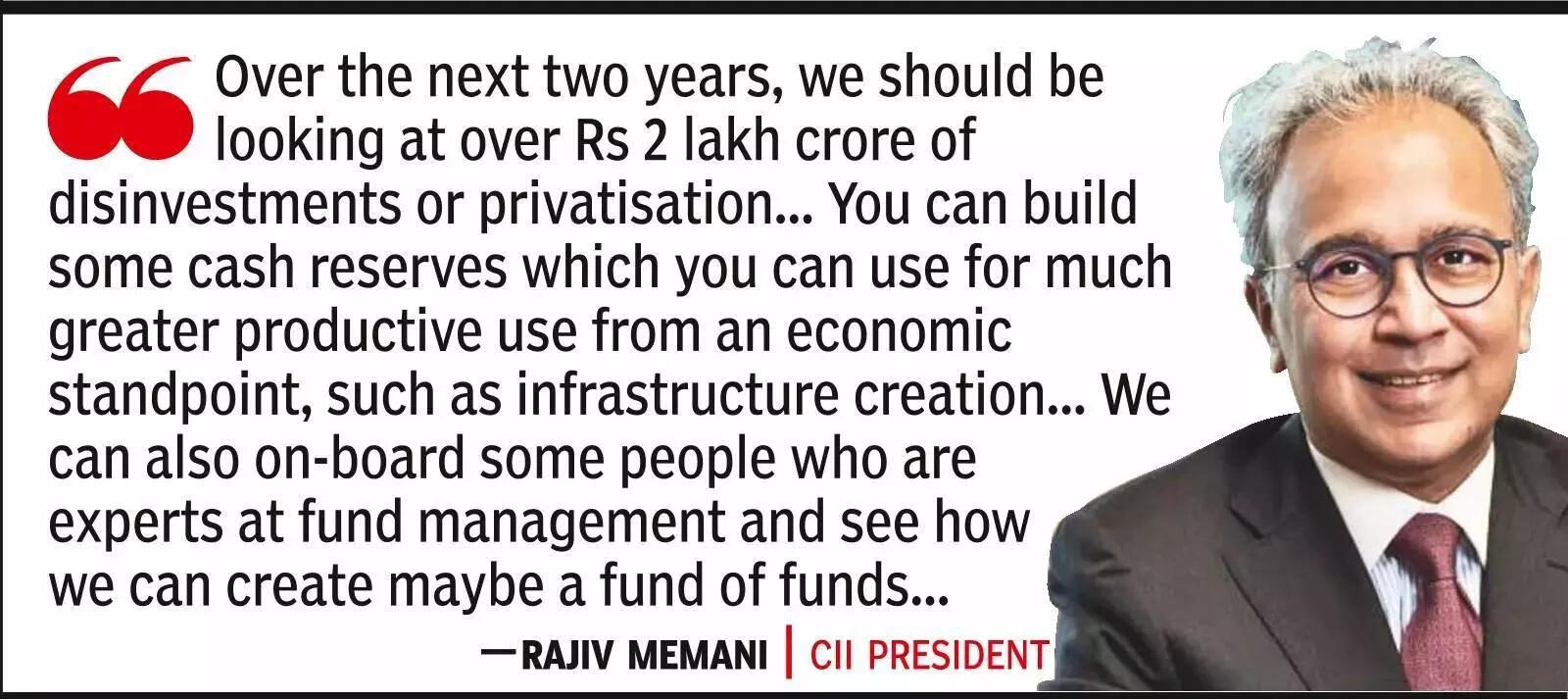
What are your recommendations on the tax side in the budget?A lot of our tax recommendations are to deal with simplification, whether you look at mergers, demergers, acquisitions, which are pain points. Second is dispute resolution with 85% cases stuck at the level of Commissioner of Income Tax (Appeals). On customs, there is talk of reducing the number of slabs.Disinvestment is one area where there's been some slowdown. How can that be activated? Over the next two years, we should be looking at over Rs 2 lakh crore of disinvestments or privatisation.
You can build some cash reserves which you can use for much greater productive use from an economic standpoint, such as infrastructure creation... There is a lot of uncertainty vis a vis China and other countries. When you're looking at manufacturing and acquiring strategic resources, rare earths, funding some of the newer areas like aerospace, defence, medical devices, look at MSMEs.
.. What we have today is not working efficiently. So, whether we consolidate all that into one ministry or we consolidate that at a central level somewhere so that it works at a rapid pace... We can also on-board some fund management experts and see how we can create maybe a fund of funds.







 English (US) ·