

 1 hour ago
4
1 hour ago
4
ARTICLE AD BOX
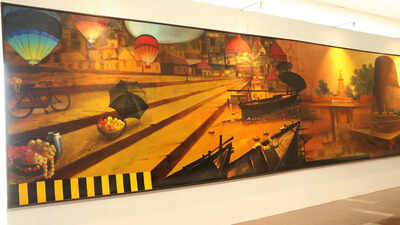
At the Noida International Airport, Paresh Maity’s art turns transit into contemplation
At the soon-to-be-operational Noida International Airport in Jewar, whose design draws from the haveli architecture of western Uttar Pradesh, two monumental works by Paresh Maity invite travellers to pause amid transit.Tracing some sacred geographies through art Among the works is Jagriti , an 8-ftby-100-ft six-panel oil-on-canvas painting. Installed near the Check-In area for now and set to move closer to the Departures walkway once operations begin, the work traces India’s spiritual landscape through sites in Uttar Pradesh. Characteristic of Maity’s visual language is the play of light, which flows across the panels and binds them into one narrative. “ Jagriti , meaning awakening, is an ode to India’s rich heritage, aesthetics, natural beauty, architecture, art and spirituality,” says the artist, who spent nearly two years conceptualising the artwork.
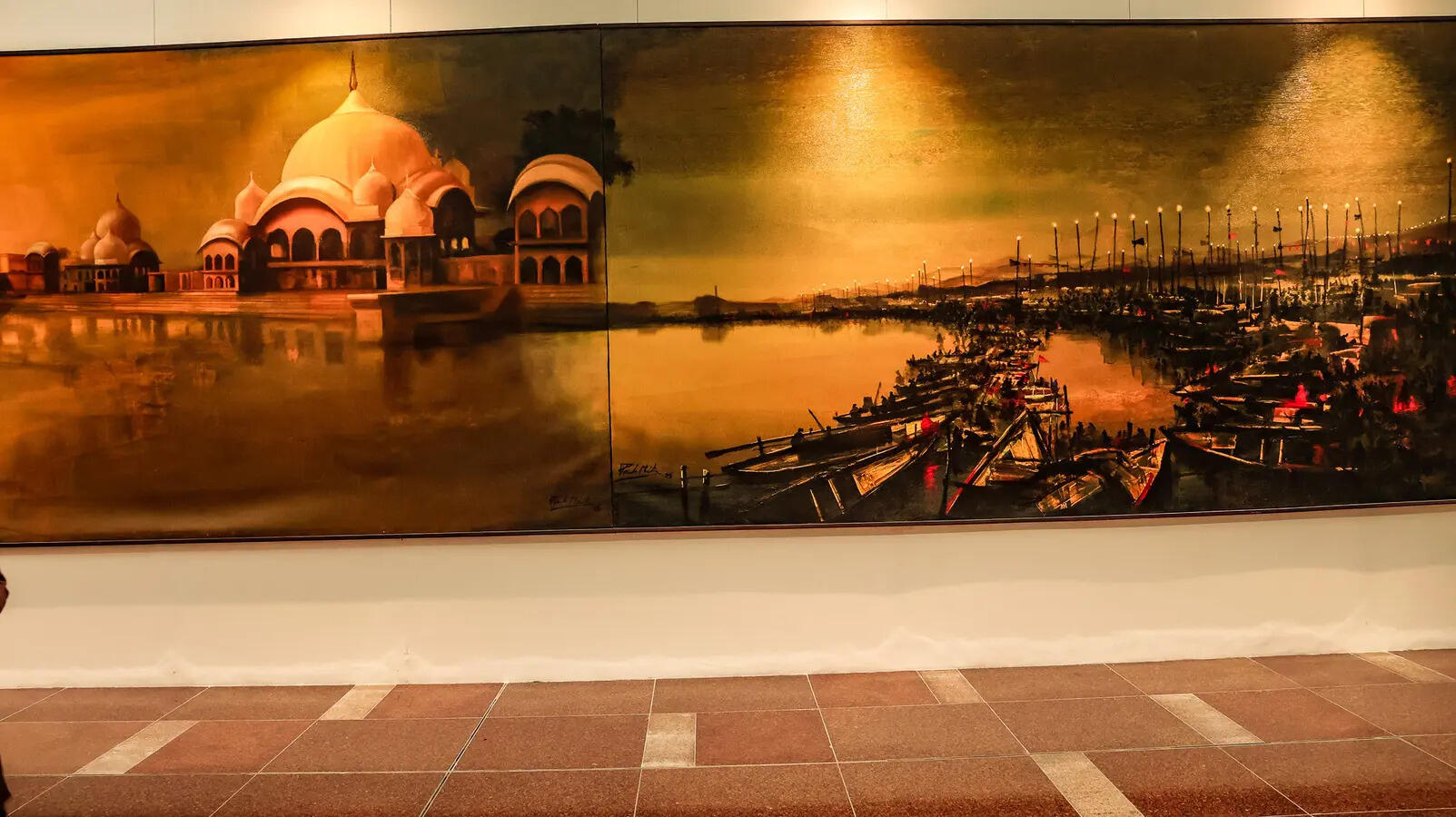
Grounded in sadanga – the six limbs of aesthetics in Indian philosophy – Jagriti , an 8-ft-by-100-ft six-panel painting is linked through the visual thread of the rivers Ganga, Yamuna, Saryu and Saraswati
The first panel captures the early morning tranquillity of the ghats of Varanasi; the second turns to Sarnath and the philosophy of detachment. The third depicts the Taj Mahal on the banks of the Yamuna, while subsequent panels move through Mathura-Vrindavan and Ayodhya, culminating in the Maha Kumbh in Prayagraj.
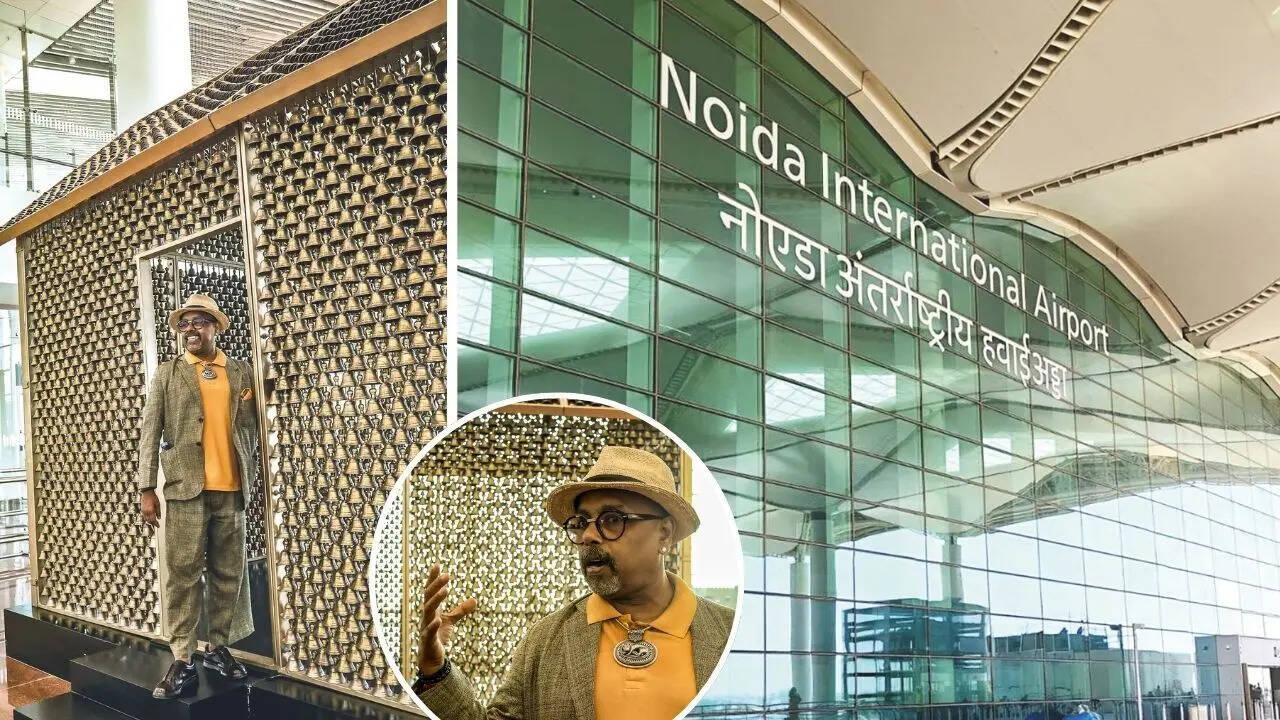
A 12-and-a-half-foot immersive installation Mystic Abode, featuring over 8,000 brass bells, stands tall near the boarding gate
Art adds soul to any structure: Paresh MaityWhat lends soul to architecture, says Maity, is art itself.
“Art predates formal language, and it is universally understood. Art adds soul to any structure, be it a home, a hotel or an airport. At locations such as airports, art adds value to public life, making it accessible to all,” he says.Near the boarding gates stands Mystic Abode, a 12-and-a-half-foot-tall immersive installation comprising over 8,000 brass bells. First showcased at an art fair in Switzerland in 2016, the work draws from the significance of bells in Indian homes and temples. “I drew inspiration from the spiritual significance of bells in Indian homes and temples, where their resonance symbolises peace and positive energy. The work invites travellers to pause, reflect and reconnect with their inner senses, creating calm within the transit environment.
It is going to be a meditative experience for travellers,” adds Maity.






 English (US) ·