

 1 hour ago
4
1 hour ago
4
ARTICLE AD BOX
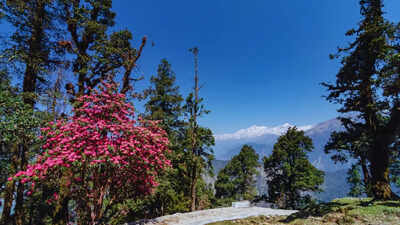
Spring time in Uttarakhand
India has numerous local festivals that are still deeply embedded in local culture. Most of these festivals are quietly celebrated in villages, carrying ancient traditions that speak of a close association between people and nature.
One such festival, held in the Himalayan state of Uttarakhand, has recently gained public attention due to a heartfelt message posted by industrialist Anand Mahindra, @anandmahindra, on social media platform X.The festival is called Phool Dei, a lovely spring festival celebrated mainly in the Kumaon and Garhwal regions of Uttarakhand. Phool Dei is the celebration of the arrival of spring and the beginning of the Hindu month of Chaitra.
Phool Dei revolves around one of the simplest and most beautiful acts of human nature, that of children offering flowers as blessings.On the day of Phool Dei, the children of villages in the region wake up early in the morning and go to the forests and hills to collect fresh flowers. They carry small baskets filled with flowers and then move around the houses in their villages.At every doorstep, they place flowers on the threshold while singing traditional verses that bless the household with prosperity, good harvest, and happiness.
The act symbolises the arrival of spring and abundance for the family living there.
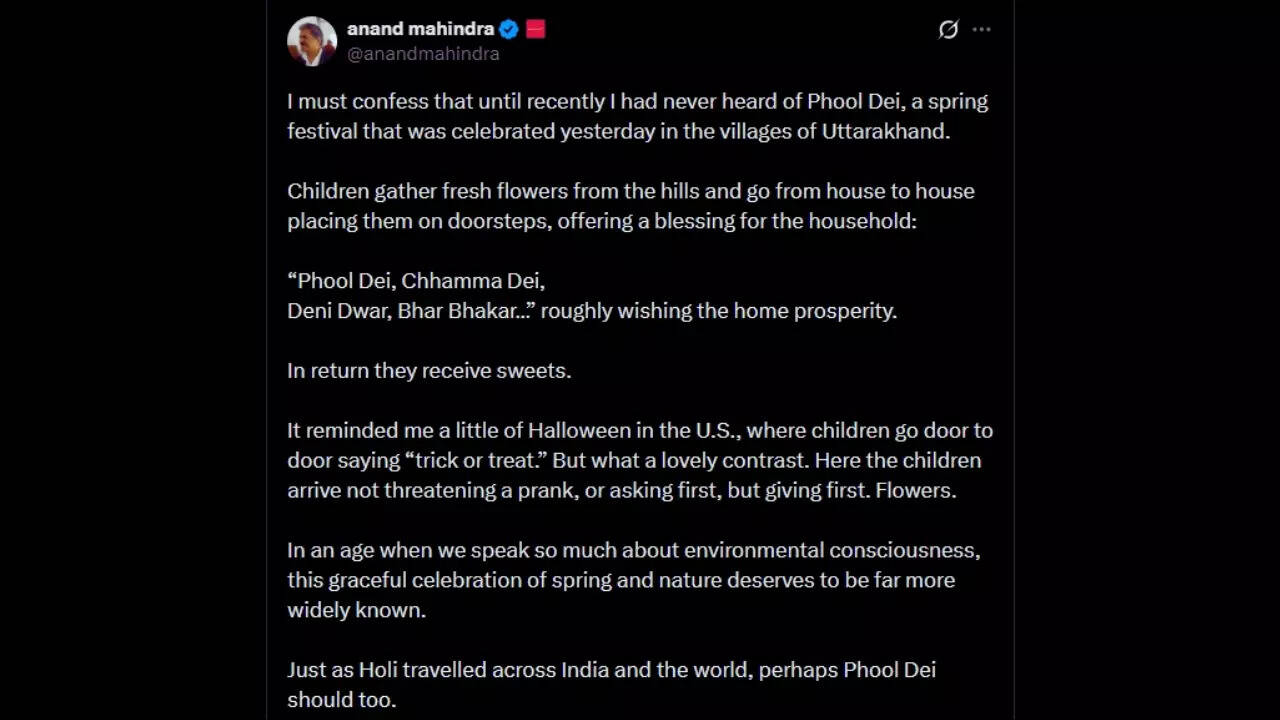
Anand Mahindra on X
In return for the blessings, homeowners welcome the children warmly and offer them sweets, jaggery, rice, or small gifts. The exchange creates a joyful ambiance in the village, where laughter, songs, and flower petals are used to celebrate the renewal of nature.
A tradition that touched Anand Mahindra
The beauty of this tradition was recently felt by Anand Mahindra, who shared his thoughts on social media after hearing about the festival.
His post drew attention to the quiet charm of Phool Dei and how its message feels especially meaningful today.He wrote:“I must confess that until recently I had never heard of Phool Dei, a spring festival that was celebrated yesterday in the villages of Uttarakhand.Children gather fresh flowers from the hills and go from house to house placing them on doorsteps, offering a blessing for the household:‘Phool Dei, Chhamma Dei,Deni Dwar, Bhar Bhakar…’ roughly wishing the home prosperity.In return they receive sweets.It reminded me a little of Halloween in the U.S., where children go door to door saying ‘trick or treat.’ But what a lovely contrast. Here the children arrive not threatening a prank, or asking first, but giving first. Flowers.In an age when we speak so much about environmental consciousness, this graceful celebration of spring and nature deserves to be far more widely known.Just as Holi travelled across India and the world, perhaps Phool Dei should too.”
Celebrating nature and community
For communities in Uttarakhand, the festival represents gratitude for nature and the arrival of a new agricultural season. The flowers symbolize freshness, growth, and hope for prosperity in the coming year.At a point in time when the voices on sustainable living and environmental awareness are getting louder by the day, Phool Dei is one such tradition that has been celebrated by people living in harmony with nature for long.Although Phool Dei is a tradition that is perhaps known only in the Himalayan villages of Uttarakhand, the festival itself has a universal appeal. The message that it conveys is simple and profound: “Do good by giving,” and nature is definitely worth celebrating.As people become aware of this tradition through stories and social media, there is a greater appreciation for these hidden gems of traditional culture that have been living quietly in India.Perhaps, as Anand Mahindra said, Phool Dei too may one day travel beyond the hills—to spread the gentle tradition of children coming to doorsteps not with demands, but with flowers and blessings.







 English (US) ·