

 1 hour ago
6
1 hour ago
6
ARTICLE AD BOX

Sara Ali Khan with Henry Cavill and Natasha Poonawalla at Royal Ascot 2026
Every June, Royal Ascot turns a racecourse in Berkshire into one of Britain’s most-watched cultural stages. Officially, it is a five-day racing festival; socially, it is a theatre of hats, tailoring, protocol and power dressing.
The event’s roots go back to 1711, when Queen Anne identified the site as an ideal place for “horses to gallop at full stretch.” The first race, Her Majesty’s Plate, was worth 100 guineas, had seven runners, and required horses to carry 12 stone. More than three centuries later, the meeting remains closely tied to royal attendance, formal dress codes and a very British idea of occasion dressing. But in recent years, Royal Ascot has also become a visible platform for Indian presence — not merely as guest attendance, but as cultural performance.
Sarees, handloom textiles, embroidered stories and Indian celebrities have entered a space once defined almost entirely by Western formalwear. The result is not just fashion diplomacy; it is a quiet rewriting of who gets to look “appropriate” at an elite British social event.Indian glamour at Royal Ascot 2026The 2026 edition of Royal Ascot ran from June 16 to 20, with Ascot Racecourse describing the week as one of “world-class racing, style, and pageantry.” This year, that pageantry also had a distinctly Indian layer. Natasha Poonawalla, the Indian philanthropist and global fashion figure, attended the race meeting. Sara Ali Khan also appeared at Royal Ascot 2026, making her presence known alongside international names such as Henry Cavill.
Together, the two appearances made a larger point visible: the Indian presence at Royal Ascot is no longer just a curiosity. It now stretches across high fashion, Bollywood, luxury branding, diaspora identity, textile heritage and race-day social culture.
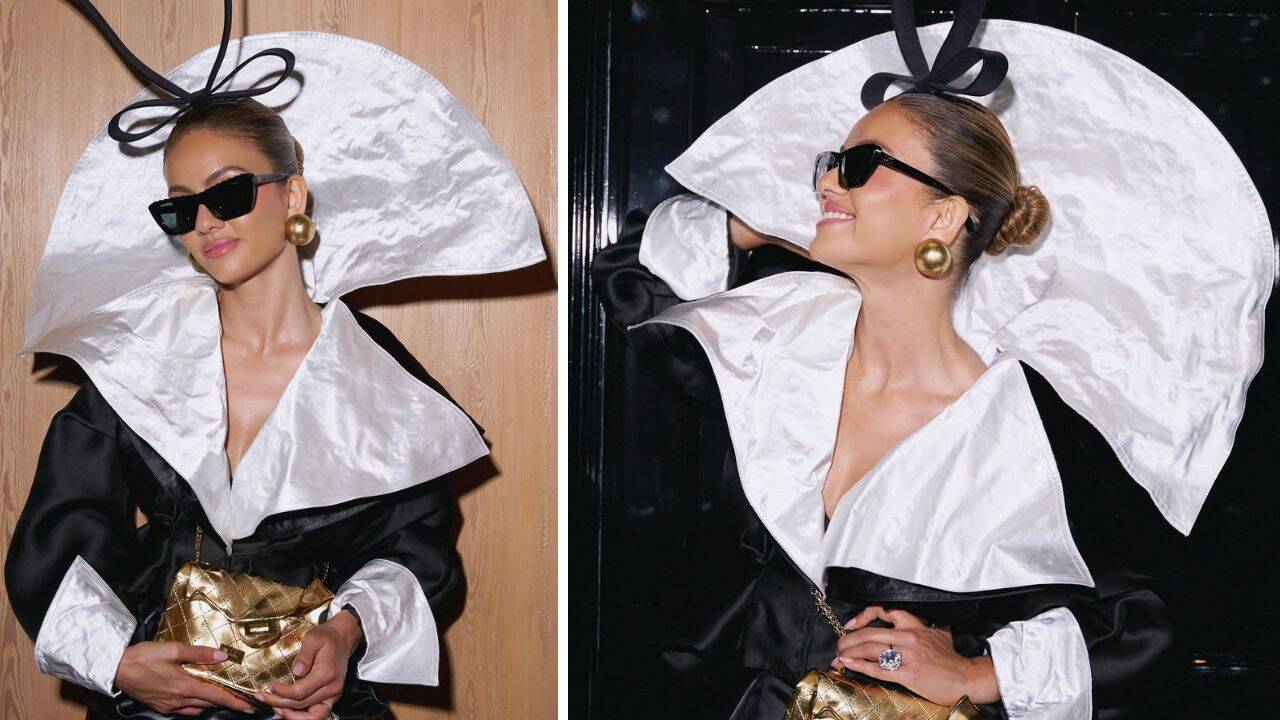
Philanthropist and global fashion figure Natasha Poonawalla attended the race meeting
Natasha’s presence this year is significant because she represents a different kind of Indian visibility from the Bollywood star turn. She is not merely a celebrity attendee; she is part of India’s global fashion-and-philanthropy circuit.
She stands at the intersection of fashion, wealth, philanthropy and racing-adjacent society - exactly the world Royal Ascot has long symbolised in Britain. Her presence allows the story to broaden beyond “Indian actors at Ascot” into a sharper cultural observation: Indian high society is now part of the same global circuit that moves between the Met Gala, Cannes, London benefit galas, racing events and royal-adjacent social calendars.
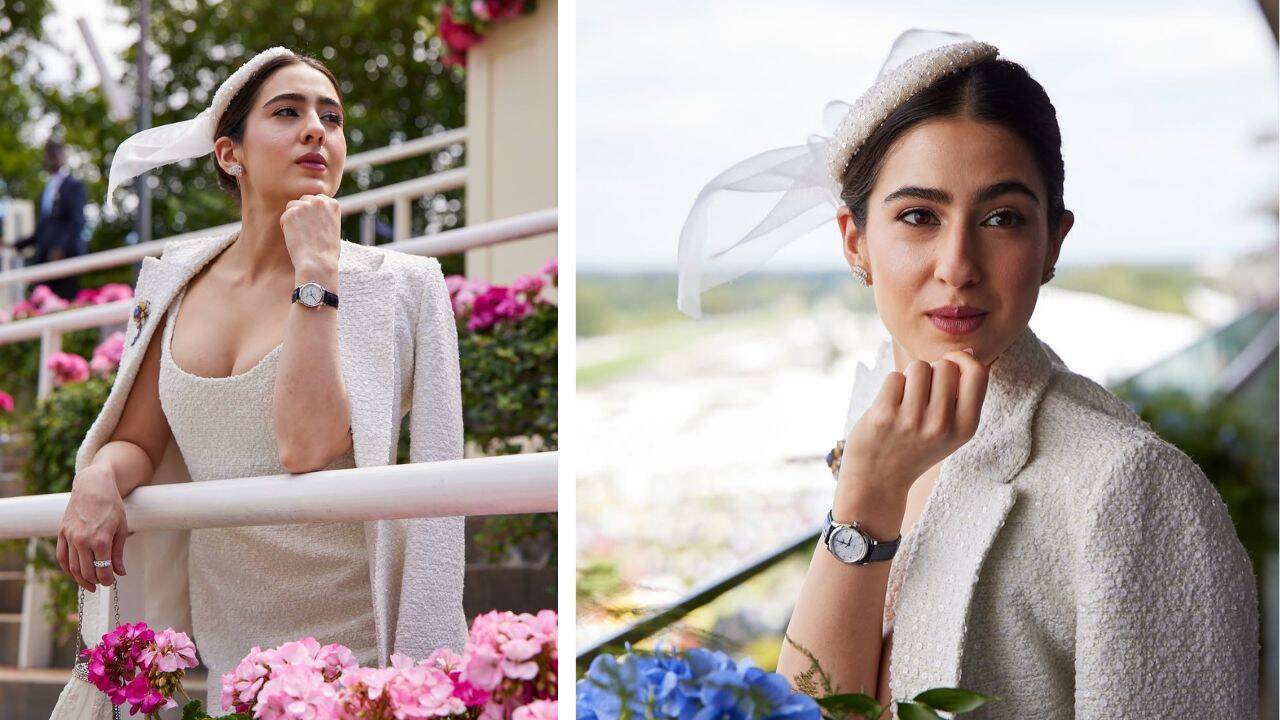
Sara attended Royal Ascot in an ivory ensemble with a statement fascinator
Sara attended Royal Ascot in an ivory ensemble with a statement fascinator, aligning with the event’s classic dress codes while bringing a young Bollywood face into the frame. She and Henry Cavill appeared together at the five-day horse racing festival as global ambassadors for Swiss luxury watchmaker Longines. Priyanka Chopra and the Indian formalwear intervention
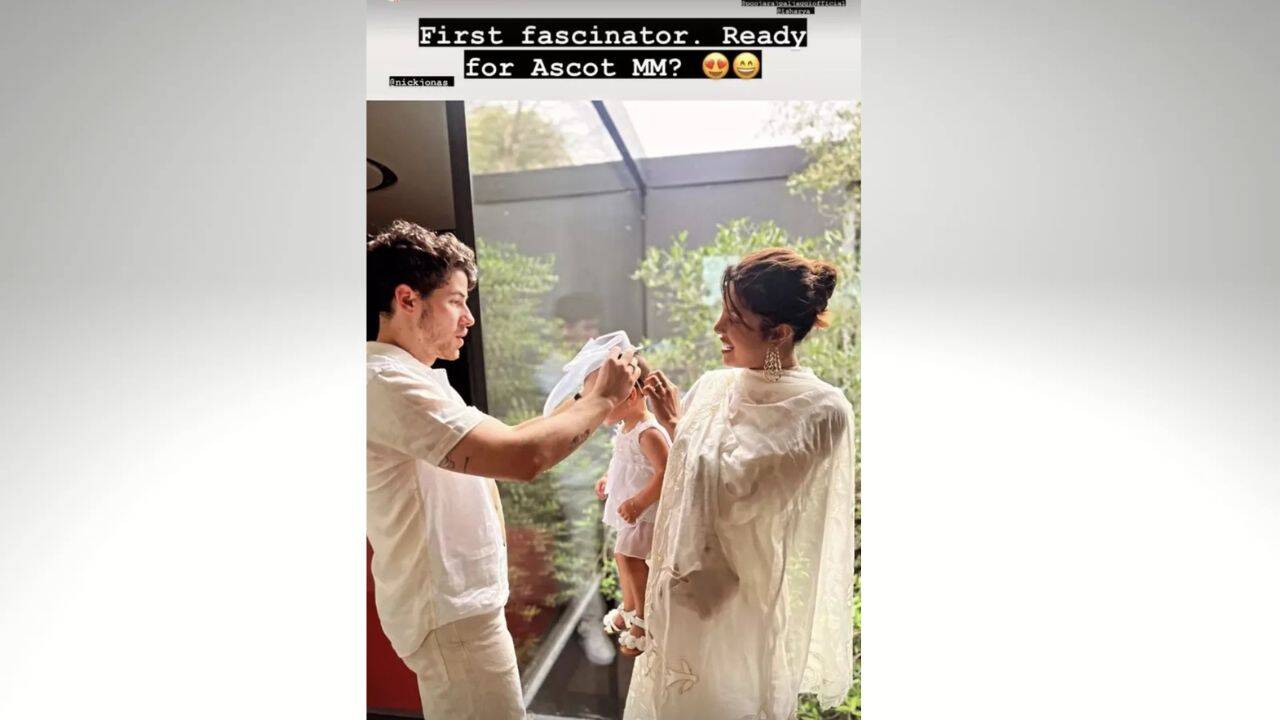
Priyanka Chopra posted a behind-the-scenes image from daughter Malti Marie’s first visit to the Royal Ascot in 2023. She wore a cream kurta set, widening the conversation around what formal race-day dressing could look like
Priyanka Chopra’s Royal Ascot appearance in 2023 brought another kind of Indian visibility: not just celebrity presence, but an Indian silhouette inside a rigidly coded British fashion space.
She apparently wore a cream kurta set to a strict, formal-dresses-only Royal Ascot event.That look mattered because Royal Ascot has long been associated with formal daywear, hats, fascinators and Western silhouettes. Priyanka’s kurta set suggested that Indian formalwear could enter the same space without needing to disguise itself as Western occasionwear. It was a soft but visible challenge to the event’s inherited style vocabulary. Aishwarya Rai Bachchan was the Bollywood trailblazer here too
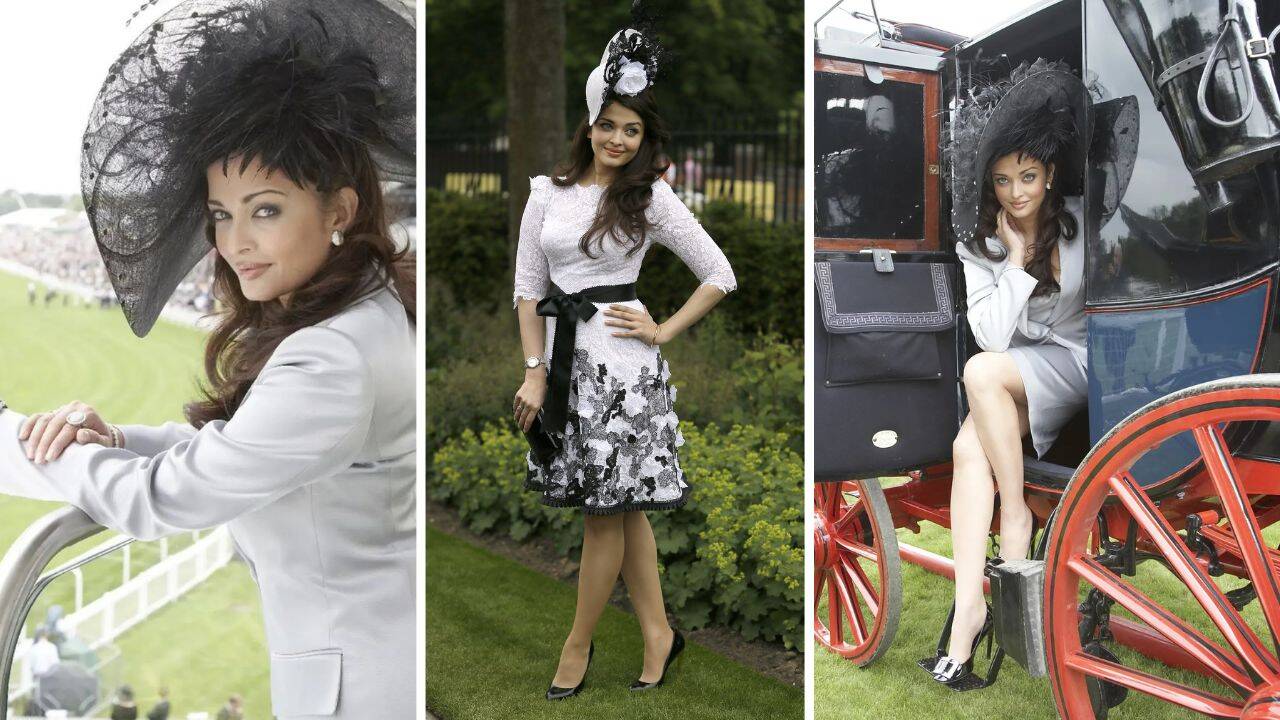
Aishwarya Rai Bachchan at Royal Ascot in 2009 and 2013
Before the social-media virality of 2026, Aishwarya Rai Bachchan had already brought Indian star power to Royal Ascot. First in 2009 and then again in 2013, she joined Longines at the races, where the Swiss watchmaker was the official partner and watch of Royal Ascot. In 2013, Aishwarya presented Conquest Classic watches to the winning jockey, owner, trainer and lad of Sole Power, winner of the King’s Stand Stakes on the opening day of the meeting.
Her presence placed Indian celebrity glamour within Royal Ascot’s luxury-brand ecosystem: watches, prize presentations, equestrian symbolism and formal race-day style. The 2022 sari collective: When Indian textiles took over Ladies Day
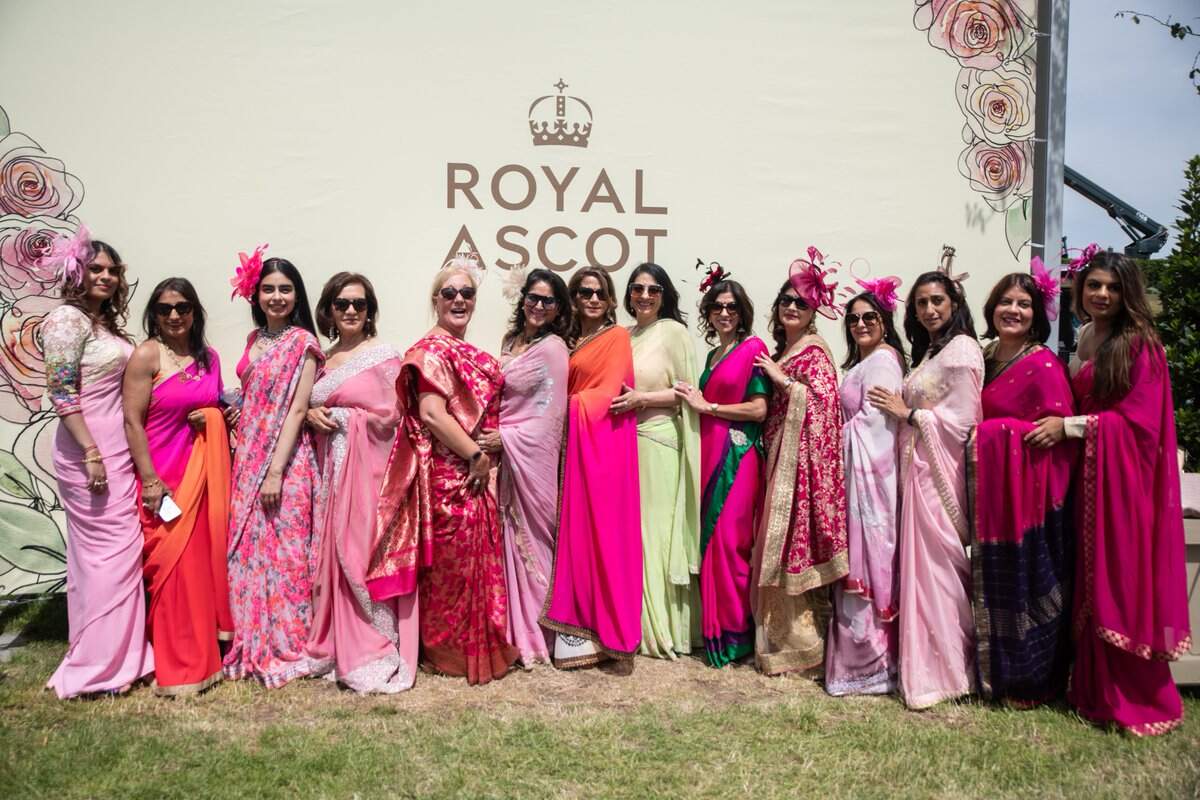
In 2022, more than a thousand Indian-origin women attended Royal Ascot in saris, turning Ladies Day into a statement of textile pride
If this year’s story is about Indian high fashion and celebrity visibility, the strongest collective cultural moment came in 2022. More than a thousand Indian-origin women attended Ladies Day in sarees on June 16, 2022.
The group, many of them doctors and bankers, wore traditional drapes to one of Britain’s most prestigious racing events. The initiative was started by Dr Dipti Jain and aimed to draw attention to Indian weavers, especially in the aftermath of the COVID outbreak. The sarees reflected regional craft traditions, including Kantha work from West Bengal, Madhubani silk and Assamese Mekhala Chador. Dr Dipti Jain herself wore a silk saree embroidered with the London and Kolkata skylines, and the Queen’s face.
Here, the saree was not costume or nostalgia.
It was formalwear, craft advocacy and cultural confidence. Even older echoes: Indian women at Royal Ascot
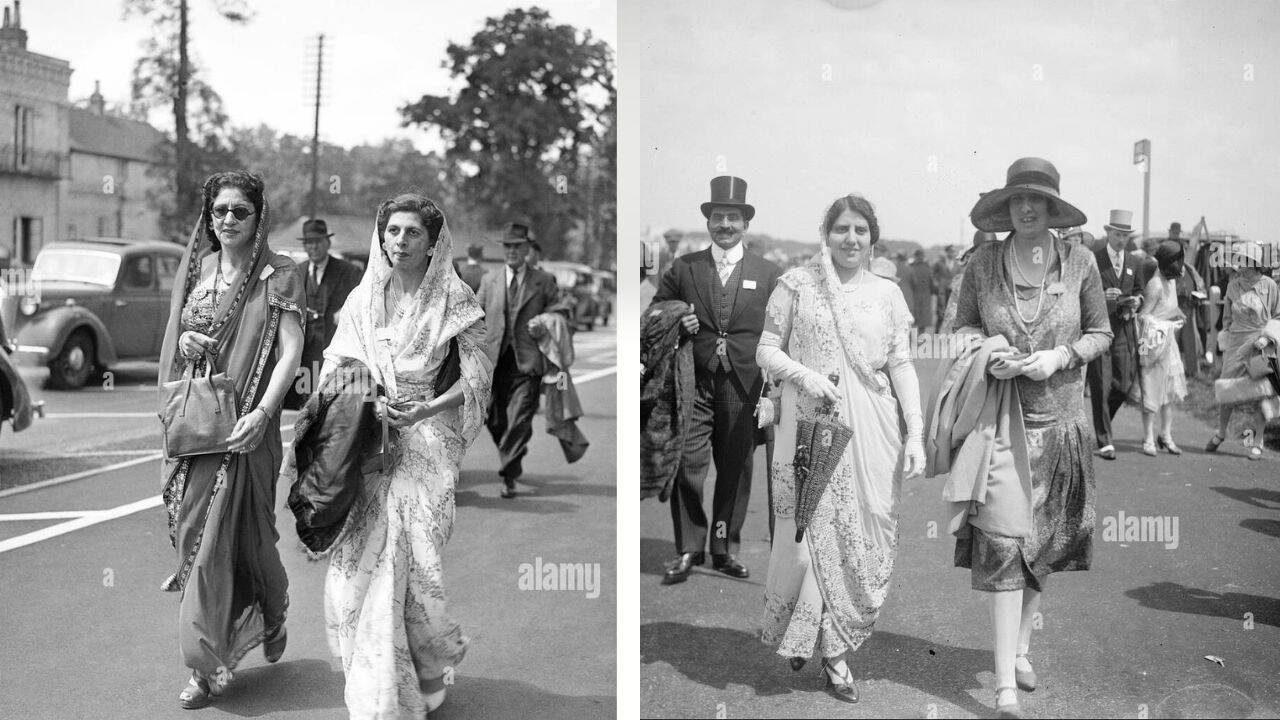
(Left) Indian women in saris at Royal Ascot in 1947; (right) Lady Bomanji at the Royal Ascot in 1926
The Indian presence at Royal Ascot is not entirely recent. Archival images show many Indian women in traditional dress at Royal Ascot events. These images give the Indian presence at the event historical depth. What has changed is not the fact of Indian presence, but its scale, confidence and visibility.
Royal Ascot turns a racecourse in Berkshire into one of Britain’s most watched cultural stages




 English (US) ·