

 3 days ago
5
3 days ago
5
ARTICLE AD BOX
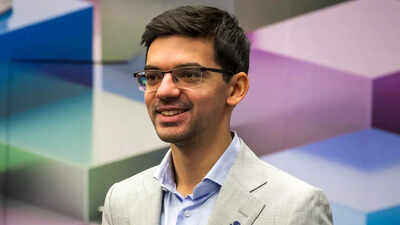
Grandmaster Anish Giri. (Image: File)
MUMBAI: At first glance, the Global Chess League is a glitzy, fast-paced spectacle with rapid games and a venue as opulent as Mumbai’s Royal Opera House. But for Dutch Grandmaster Anish Giri, the real intrigue at this edition of the GCL lies not on the board, but in the conversations off it.Three of the players who will soon be fighting each other for the most coveted seat in chess — a shot at the World Championship — find themselves in the same team here. Giri, Fabiano Caruana and India’s R Praggnanandhaa are teammates for the Alpine SG Pipers, even as they remain direct rivals for the Candidates tournament in March next year. The result, Giri says, is a delicate psychological dance, less like collaboration, more like a high-stakes game of poker.
GM Bibisara Assaubayeva Exclusive: Sindarov’s World Cup win, Candidates ambitions, and more #chess
“It’s a very interesting dynamic,” Giri admits. “We do exchange information, but every single word matters. You’re kind of showing one card, knowing the other person knows that you’re showing it.”All three, by Giri’s own description, are obsessive preparers, players who live deep inside engine lines and spend endless hours refining ideas. In that world, information is critical. Sharing even a fragment of a thought can be revealing, which is precisely why conversations become layered with subtext.
“If I tell him something about a line, normally I’m revealing something,” Giri explains. “But now he’s thinking, why is he revealing this to me? And I’m thinking, why am I revealing this to him? It creates an extra dimension.”With Caruana, the exchanges have already been rich and carefully incomplete. One day, Giri recalls, Caruana pulled up a position from his preparation, but only from a very deep endgame.“He showed a position, but we couldn’t know how it came there,” Giri says, smiling.
“Later, I joked, imagine months from now you’re playing Fabi, and suddenly you realise you’ve reached that position he showed you.”These are not attempts to mislead each other with false hints, though.“This is such a unique opportunity,” he says. “You’re talking to someone who is in exactly the same situation as you. My coaches understand chess, but they’re not living the Candidates. Fabiano and Pragg are.”That shared pressure makes restraint harder. Conversations drift towards preparation routines, the use of seconds, or how to structure days at tournaments like the GCL, where players compete briefly but wait endlessly.“We’d love to share everything,” Giri says. “But we can’t. So it becomes this weird conversational dance, how much can I say, how much should I stop?”With Praggnanandhaa, the relationship runs even deeper. The two have previously played for the same Bundesliga team, and those discussions went straight to the heart of the profession.“We were literally talking about the best way to improve at chess,” Giri recalls. “What are you doing? What am I doing? You want to keep secrets, but at the same time, there’s no one else like them.
Pragg has made it. He understands.”Beyond the Candidates intrigue, Giri also addressed the growing scrutiny around India’s new world champion, D Gukesh, and the pressure that comes with wearing the crown.“Once you gain the title, you’re suddenly expected to carry it around saying, ‘I guess I’m the best,’” Giri says. “But Gukesh never claimed that.”For Giri, the criticism misses the point entirely. Gukesh followed the path laid out before him: qualifying for the Candidates, winning it, and then winning the World Championship match.“He did everything right,” Giri stresses. “And then suddenly the discussion becomes whether he’s the best player in the world. Where did that come from?”Drawing on history, Giri points out that not every world champion has been a towering, unchallenged force like Garry Kasparov or Magnus Carlsen. Some eras produce a dominant figure; others produce a champion who emerges from a cluster of equals.“That’s okay,” he says. “After Magnus stepped away, there isn’t one player much above the others. Someone has to win. It’s not his (Gukesh’s) fault that he won.”




 English (US) ·