

 1 hour ago
4
1 hour ago
4
ARTICLE AD BOX
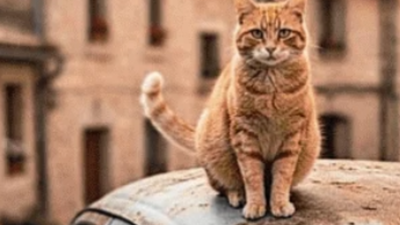
If an ant is drowning in a puddle, should you try to save it, bioethicist Jeff Sebo asks in an article. If yes, is your decision based on Indian tradition, which teaches that all life manifests God, or emotion, or cold logic? While it’s unlikely you’ve weighed the pros and cons of saving an ant, in his book, The Moral Circle , Sebo shows how, and why, you could.Saving that ant means you consider it part of your ‘moral circle’, which is the set of all beings that matter to you “for their own sake”. Sebo explains it with the example of a car and a cat. If you kick the car, you might damage it, but you cannot “wrong” it. But if you kick the cat – we don’t want you to – you may not damage it, for cats are supple and agile, but you would certainly wrong it. That’s why the cat matters for its own sake, but the car doesn’t.Through his book, Sebo aims to show you how not to wrong beings and things that matter for their own sake. To summarise, he recommends rapidly expanding your moral circle, to include cats, elephants, ants and even AI and aliens, because it’s the right thing to do: “Living an ethical life requires thinking about which beings matter and why, as well as what we owe them and why.”But this isn’t an appeal to emotion. Ethics, after all, is moral philosophy, so the argument for not wronging others is based on logic.
Which is that, our understanding of others – not just ants but also our human neighbours, our own children – is limited. “We can never know for sure what it feels like to be someone else”. So, a few thousand yearsago, we reserved our consideration for people of our own tribes. Animals were nothing but biological machines.
Then, we included sentient beings, mostly mammals like cats and dogs, in our moral circle, not realising that octopuses, which predate dinosaurs, are also sentient.
Because they feel pleasure and pain, they can be wronged.Since this delay in according dignity to animals arose from the limitations of our own minds, Sebo argues we should also be mindful of our current limitations. Perhaps, some years down, we’ll discover that centipedes are sentient. In 2022, a researcher claimed Google’s LaMDA bot was sentient, and lost his job. Maybe AI hasn’t attained sentience so far, but does down the line.
It might even surpass us in intelligence and start making moral decisions for us.
In that future, our present behaviour towards it will determine AI’s own moral circle. If we expect it to be good, let’s be good while training it now, Sebo says.“If a being has a non-negligible chance of being sentient,” he says, “we should extend them some moral consideration.” Of course, you won’t jump into a flooded river to save an ant, but skimming it out of a puddle on a leaf is doable and should be done.The calculus is simple: higher the probability of sentience, say 90% for cats vs 10% for ants, higher should be your consideration for that being. While we won’t stop prioritising humans, we should dial down our importance a few notches, and dial up the importance of others a few.







 English (US) ·