

 3 hours ago
5
3 hours ago
5
ARTICLE AD BOX
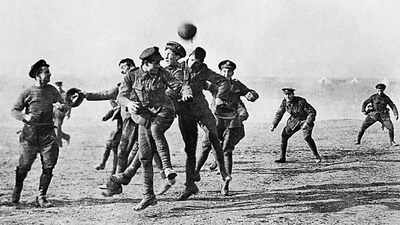
Soldiers playing football in No-Man's Land a year after the Christmas Truce in 1914 (Photo Credit: Universal History Archive/UIG/Getty Images)
On Christmas morning in 1914, something happened that no military plan could have predicted and no weapon could have forced. In the middle of World War I, one of the bloodiest conflicts in human history, soldiers laid down their guns and stepped out of their trenches.
And what did they do? They ended up playing football.For a few precious hours, war made way for humanity. This moment, now known as the Christmas Truce, remains one of the most powerful stories ever told about football and peace.
The Untold Football Journey of Ranjeet Bajaj That Will Ignite Your Inner Champion | MINERVA
Fought between the Allied Powers, backed by France, Britain, Russia, later joined by the US, Italy, and Japan, and the Central Powers, led by Germany, Austria-Hungary, the Ottoman Empire, and Bulgaria, World War I had erupted in the summer of 1914. Europe was torn apart as nations rushed into battle with confidence and somewhat misplaced optimism. Many soldiers believed the war would be short. “Home by Christmas,” they said.Instead, by December, the war had stalled into a brutal deadlock. Soldiers on both sides were trapped in muddy trenches across Belgium and northern France. Life there was unbearable. Freezing cold, constant shelling, disease, hunger, and fear became daily companions.
Young men, many of whom were barely out of school, faced death every hour. Christmas was approaching, but joy felt impossible.
'Merry Christmas'
On the night of December 24, something strange happened along parts of the Western Front. British soldiers heard singing coming from the German trenches. At first, they suspected a trick. But the tune was unmistakable. The Germans were singing Christmas carols. “Stille Nacht”, which translates to Silent Night in English, floated gently through the cold air.
British troops replied with their own songs.Soon, laughter replaced gunfire. Shouts of “Merry Christmas!” crossed no man’s land, the deadly strip of ground that usually meant instant death.
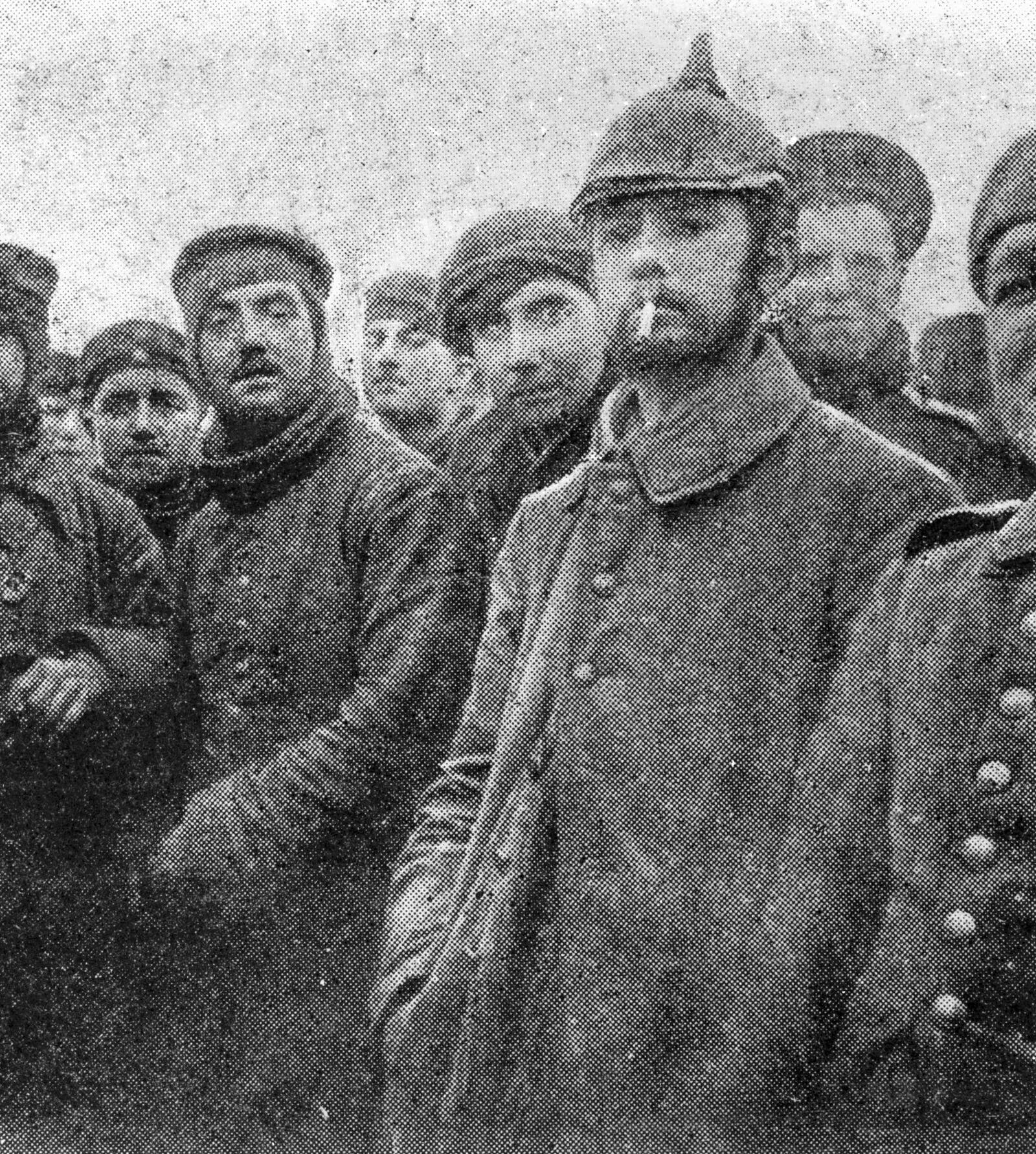
9th January 1915: British and German troops make a Christmas and New Year truce in the trenches of the Western Front. (Photo by Hulton Archive/Getty Images)
Against all logic, the blazing sounds of gunfire went silent.As dawn broke on Christmas Day, soldiers cautiously climbed out of their trenches. Hands raised. No weapons. No orders. No one fired.British and German soldiers met in the middle. They shook hands.
They smiled awkwardly. They exchanged cigarettes, chocolate, buttons, badges, and even small gifts sent from home.Photographs of loved ones were shown. Stories were shared. For the first time, soldiers saw the faces of the men they had been told to hate. They discovered something shocking. The enemy looked just like them.
As Football became the protagonist
Then came the football. In some places, it was a proper leather football. In others, it was a bundle of rags tied together.
It didn’t matter. There were no goalposts, no referee, no rules. Hwever, soldiers marked goals with caps or coats. Their boots were heavy, and the ground was frozen and uneven. But they couldn't care less.British soldiers kicked the ball with German soldiers. Scores were kept loosely, if at all.
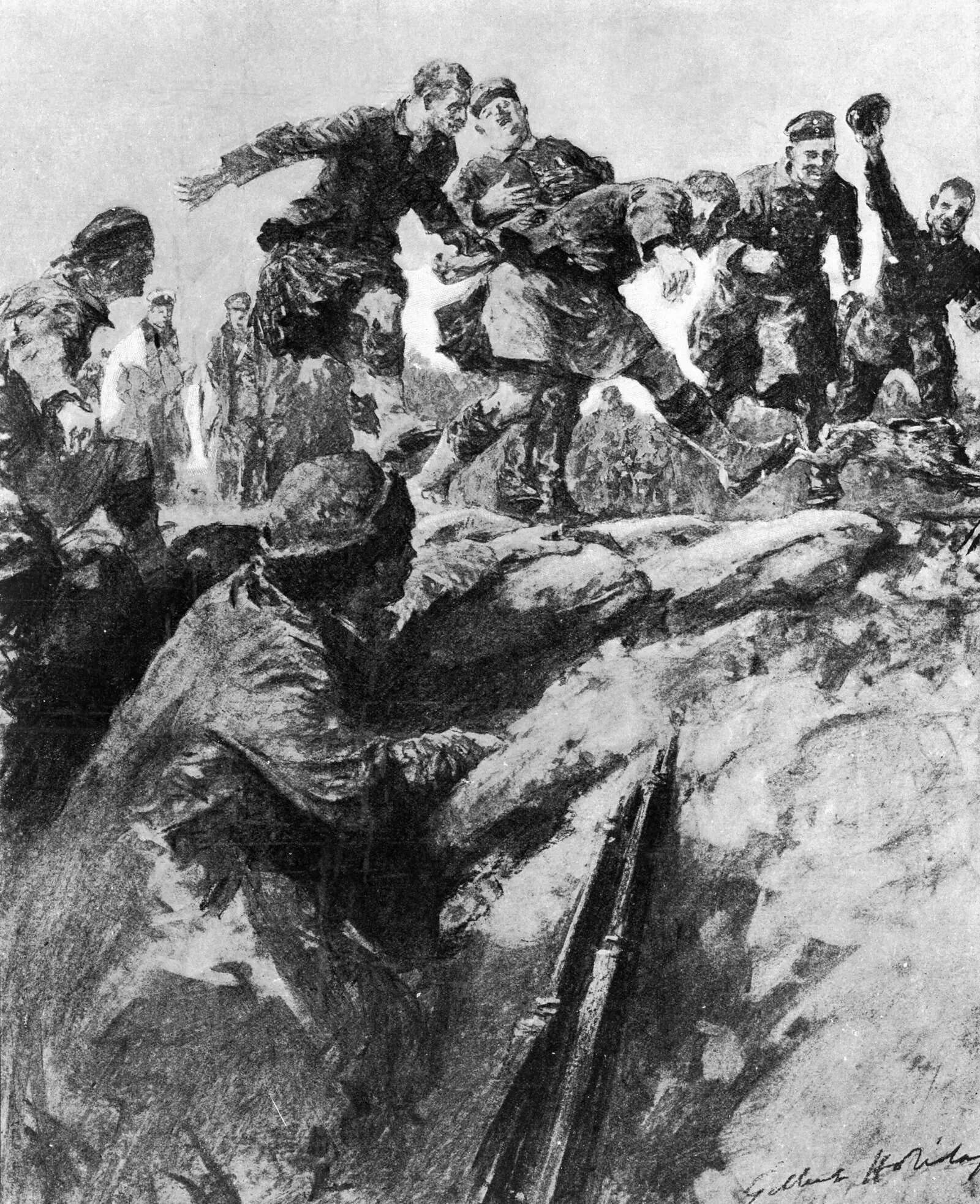
'Christmas Truce in the Trenches : Friend and Foe Join in a Hare Hunt'. Original Artwork: Drawing by Gilbert Holliday, from a description by an eye witness rifleman. Original Publication: The Graphic. (Photo by Hulton Archive/Getty Images)
Some accounts claim the Germans won one match 3–2. Others say the result didn’t matter, because the real victory was simply playing.Soldiers used the calm to recover bodies that had been lying in no man’s land for weeks. Joint burial services were held. Prayers were said together.Men who would soon be ordered to kill each other stood side by side in silence.Many later wrote letters home describing how surreal it felt. One British soldier wrote that it seemed “too wonderful to be real.” Another admitted he struggled afterwards to fire at men he had just shared laughter with.
The return of war
The Christmas Truce was never officially approved. High-ranking officers were furious when they learned what had happened. To them, the truce threatened discipline and the will to fight.Orders were quickly sent down the line. By December 26, the guns roared again. The war resumed its brutal course. Many of the men who played football that day would be killed in the months that followed.For years, the Christmas Truce was pushed aside. Military leaders feared it showed too much humanity in war.
Some reports were censored. Others were ignored. But stories have a way of surviving.Letters were found in attics. Diaries were published. Veterans spoke quietly of that day when the war stopped making sense. Slowly, the truth emerged.Football already belonged to everyone in 1914. It was played in England, Germany, France, and beyond. It needed no shared language. No explanation. You just kicked the ball.That simplicity made football powerful. It reminded soldiers of home.
Of weekends. Of joy. Of life before the trenches.Football did not end the war. But it proved that hatred was learned, and humanity was natural.
A story that lives on
Today, more than a century later, the Christmas Truce is remembered across the football world. Memorial matches are held. Statues stand near former battlefields. Clubs and fans share the story every December.
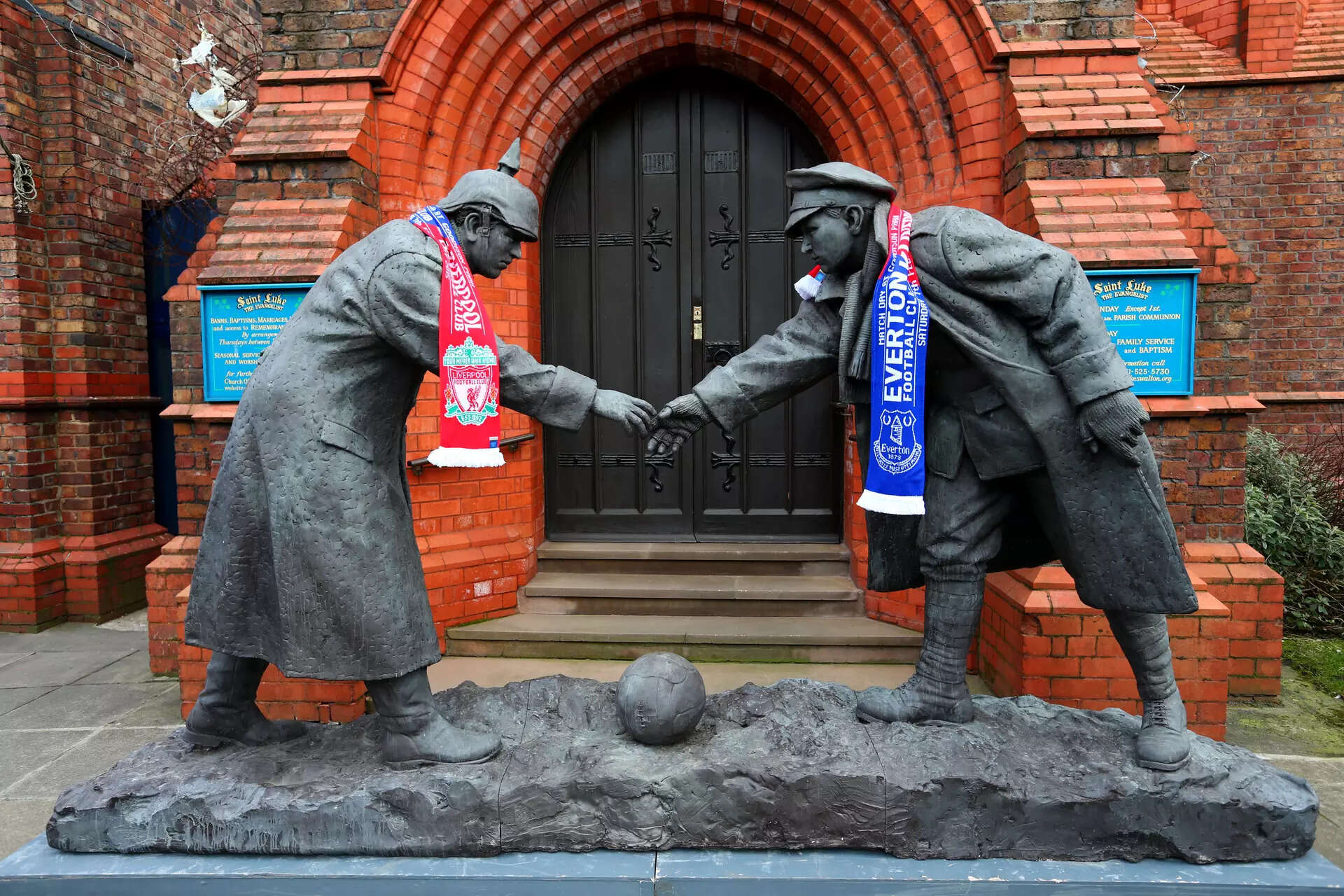
Liverpool and Everton scarves adorn a Christmas Truce statue outside a church near the stadium before the English Premier League match in Liverpool. (Photo by Clive Brunskill/Getty Images)
Because on Christmas Day in 1914, football did something extraordinary. It reminded the world that before we are soldiers, enemies, or nations, we are human beings. And sometimes, a simple game is enough to make us remember that.






 English (US) ·