

 11 hours ago
3
11 hours ago
3
ARTICLE AD BOX
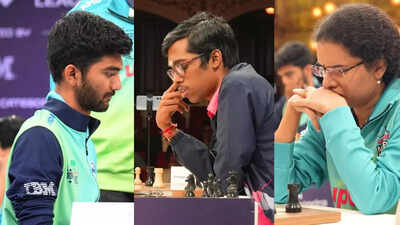
D Gukesh, R Praggnanandhaa, and Koneru Humpy (GCL Photo)
NEW DELHI: Former World chess champion and one of the greatest ever to grace the game of 64 squares, Bobby Fischer once said, “I like the moment when I break a man’s ego.”Few quotes capture the long-held mythology of elite chess as sharply as that one.
Anish Giri Exclusive: FIDE World Cup in Goa, Candidates 2026 prep, GCL stories, and more
Chess has always been portrayed as a battlefield of egos, where confidence borders on arrogance and humility is often learned the hard way.Garry Kasparov once called chess “mental torture”, while Viktor Korchnoi warned that “a chess player’s ego is his most dangerous opponent.”For generations, fans have accepted this as the truth. Chess players don’t talk much. They guard ideas, emotions and even friendships because it is a brutally zero-sum game.
If you win, someone else must lose.As Grandmaster Vidit Gujrathi puts it bluntly during his recent interaction with TimesofIndia.com, “It’s very hard to be friends with your peers because chess is a zero-sum game… there’s huge competition, everybody has their guards up.”And yet, as the Global Chess League (GCL) enters its third season, chess, the ultimate individual sport, is being forced into a team setting, with players from different countries, cultures and generations sharing jerseys, coaches and dinner tables.
The question is no longer just about results. It is about personalities.Do they talk enough? Do egos clash? And can a league like GCL gently nudge chess players out of their shells?Something different from the traditional settingGrandmaster Koneru Humpy, a well-respected name in Mumba Masters, admits she was sceptical when she first encountered GCL.“We are most of the time used to calm surroundings and being very focused on the sport,” she told this website ahead of the league's third season, currently being hosted at the Royal Opera House in Mumbai.Traditional chess tournaments resemble libraries: a hushed hall, minimal movement, eyes glued to boards. GCL, by contrast, opens with music, team colours, spectators and camera crews.“Before the games, half an hour earlier, we would gather in a room dressed in polo shirts,” Humpy recalled. “There was a band entering the playing hall, spectators cheering, a lot of noise happening.”
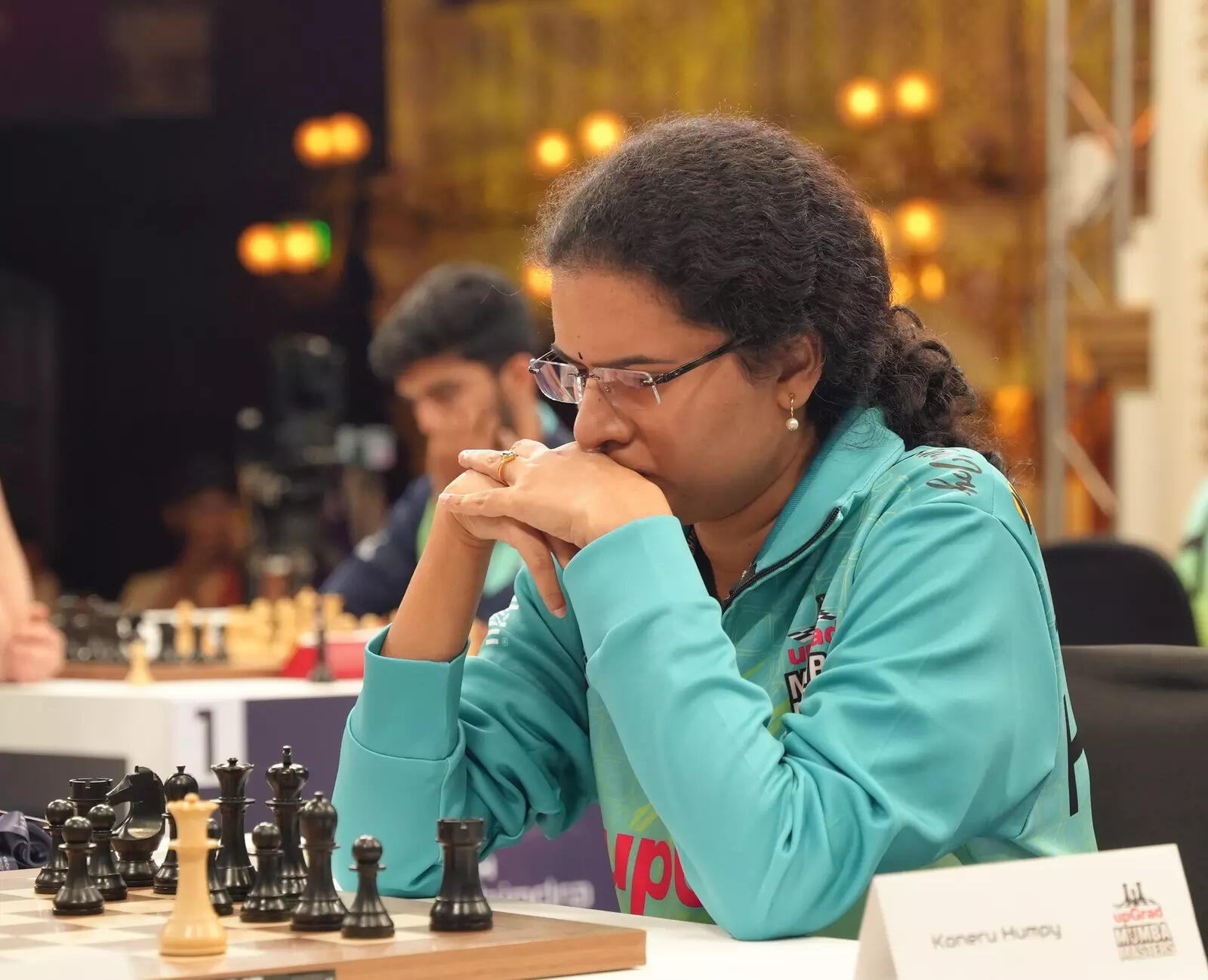
Koneru Humpy from Mumba Masters in action (GCL Photo)
Initially, it felt distracting.“It’s not usual,” she said. But soon, they adjusted as Humpy added, “Once we sit over the board, they maintain pin-drop silence. After a couple of rounds, I got used to it. Then it's kind of fun.”That word, fun, is telling. Fischer rarely associated chess with fun. His relationship with the game was obsessive and massively combative. GCL introduces what can be considered chess as a shared experience.“You don’t feel the same stress as in Candidates or Grand Prix events,” Humpy admitted.
“You enjoy even off the board… you get a chance to interact with your teammates. We go out for dinners together.”Do chess players really talk in teams?Dutch No. 1 Anish Giri, who will be playing in the Candidates next year, smiles at the stereotype.Chess players, he agrees, are not naturally wired for team bonding.“It depends on the player, the setting, the tournament, the mood and even the stage of one’s career (if he or she wants to talk or not)...
If you are playing football, you are taught team spirit from childhood,” Giri, donning SG Pipers' colours this season in GCL, remarked. “In chess, most events are individual. You are not really taught team bonding.”In GCL teams, that reality doesn’t disappear overnight. Giri describes teammates who would leave dinners early or skip them entirely, locked into personal routines.Yet the league forces interaction. “In our team, we shared enough moments and enough fun that we became a good homogeneous team last season,” he noted.The key, he believes, lies in leadership, the team's captain in this case.“As a captain, you sometimes have to let go. For example, you may want to call a team meeting for everyone, but if you see that certain players are not really inclined to have it that evening, then maybe it’s better not to insist on forced team spirit. Trying to enforce it can actually break things apart even more," the Dutchman said.
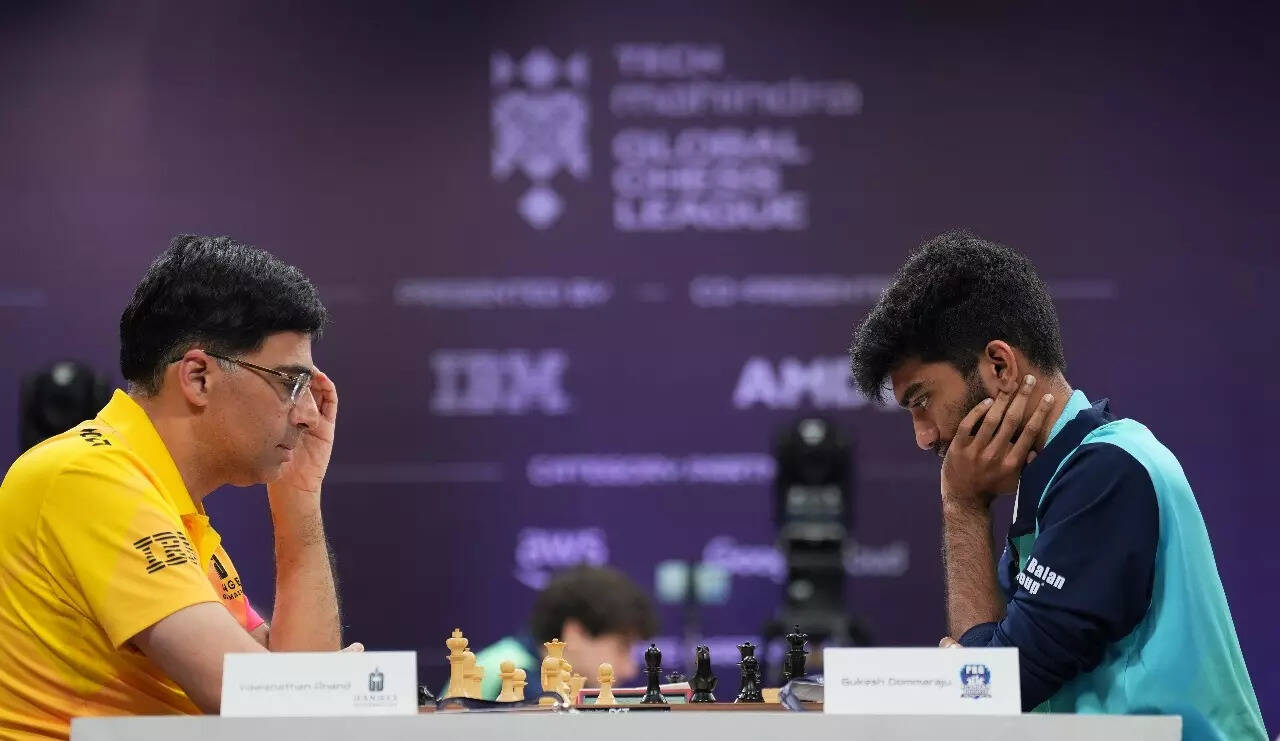
Viswanathan Anand and D Gukesh in action at Global Chess League (GCL Photo)
"Sometimes you realise, okay, today is the day to just let it be.
For the sake of the team, you skip one meeting, but you preserve the good spirit between the players and the coach. Our coach last season, Abhijit Kunte, was very tactful and very smart in sensing when the team was drifting a little. He would let us go apart, only to bring us back together stronger. There’s a lot of complexity there, and that’s what makes these team events in chess so interesting.
”And it's not only Giri, but Humpy also feels that leadership plays a huge role in bridging the communication gap.“It depends first on the personality of the player. In general, from what I have observed in our team over the past two seasons, even if we were not very talkative, our team captains and managers were active in making everyone interact."They made sure that everyone gathered at the same place. Initially, maybe for a day or two, you feel that hesitation, but then it goes on well. Everyone here is grown up, so it’s not really an issue.”Is GCL competitive enough?While some may feel that the friendly nature of the tournament is the reason why many players prefer to put their guards down. Grandmaster Richard Rapport, who plays for American Gambits this season, doesn't feel the same.“You arrive thinking it’s relaxed, a commercial event,” the Hungarian said. “Then you see how much people care. And suddenly you realise you have to take it seriously.”“You don’t want to be the one who destroyed the good atmosphere,” Rapport added.In individual events, a bad day damages your rating, but in a league, losing affects teammates who prepared just as hard.
Poll
Do you think the Global Chess League (GCL) helps break the traditional ego-centric mentality of chess players?
Yes, it encourages teamwork.No, it remains an individual sport.Somewhat, but not significantly.
Over the last two seasons, Rapport has played alongside legends Viswanathan Anand and Magnus Carlsen."If I recall correctly, we spent a bit more time with Magnus. In general, it was still somewhat distant because of the generational difference (with Anand), but there was good energy.
Before the games, we would see him and spend some time together, and during double rounds, there was space to talk a little," he added."After the games as well, we could watch the games together and discuss things. Maybe it was more important for the younger players. For me personally, I’ve known Magnus for quite a long time, so I wasn’t particularly starstruck. Still, it was nice to have those moments."Make no mistake: GCL is not a holiday.“Everyone wants to show their superiority over the board,” Humpy added.Short formats encourage risk-taking. Pressure leads to mistakes, not because players are weaker, but because the stakes are different.“Even irrelevant online games can get very competitive after two losses,” Rapport added. Add cameras, crowd and standings to the setting, and the tension escalates quickly.Magnus Carlsen once said, “If you don’t believe you are the best, you will never become the best.”Ego, in that sense, is fuel, something that can help young chess players, as Humpy said, "It’s also a great opportunity for junior players, because they get a chance to interact with star players and some of the most experienced, world-ranked players. That really helps them grow as players.”Chess may never become football or any other team sport. Players will still retreat into silence before games, guard routines, and protect their own ideas, and there is nothing wrong with doing that.They may not always talk enough. But for a few weeks each year, leagues like GCL remind the chess world that greatness doesn’t have to be lonely. In a sport built on breaking egos, GCL is quietly teaching players how to live with them, together.ALSO READ: The rise of ‘Queen’: From ages 8 to 18, how an all-girl team is bringing free chess to rural India








 English (US) ·