

 1 hour ago
6
1 hour ago
6
ARTICLE AD BOX
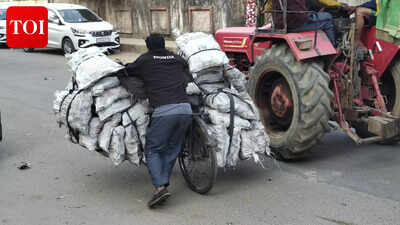
As the LPG crisis deepens, a frantic demand for improvised coal sources has taken root in Jharkhand's Hazaribag, Ramgarh, and Ranchi districts. Street vendors are burning the candle at both ends, adjusting to the skyrocketing prices as restaurants and even public schools turn to coal as a cooking alternative.
Ranchi/ Hazaribag/Ramgarh: Ramesh Mahto, 40, a hawker from Pithoria on the Ranchi outskirts is a busy man these days, making rounds between Ramgarh and Pithoria to supply coal to local eateries before dawn and dusk.
From a few weeks back, his work has doubled as well his earnings.The ongoing LPG supply disruption has led to a rise in demand for coal extracted from illegal and abandoned mines for powering chulhas at eateries across Hazaribag, Chatra and Ramgarh districts and even Ranchi.“Earlier, I only used to make one round on the Patratu (Ramgarh)-Pithoria-Ranchi route, covering distance of about 40 km, carrying coal sacks on my cycle before dawn.
Now, I have cut down on the distance, to cover more clients,” he said, adding that he used to earn Rs 800-Rs 1,000 daily, which has more than doubled.Mahto, like many others in the trade, have engaged other family members. His sons too are ferrying coal sacks on bikes on the Patratu-Ranchi route. Along the NH-33 (Hazaribag-Ranchi) too, hordes of hawkers cycling with coal sacks are common during late nights or before dawn.
Hazaribag, a coal-rich district, has several abandoned mines, from where locals illegally extract the mineral for daily earnings, notwithstanding the risk to their lives and administrative crackdown from time to time.“There are several abandoned mines across Hazaribag in areas like Mandu, Charhi, Barkagaon and Keredari,” said an official on the condition of anonymity.“Villagers from nearby areas enter abandoned pits, dig out coal and pack it into cement sacks.
These sacks are then transported to Hazaribag on bicycles and motorcycles, forming a steady but unregulated supply chain. Until recently, each sack fetched around Rs 180. Following the LPG crisis, prices have surged to nearly Rs 250-Rs 300 per sack due to rising demand and hoarding,” he said.Elderly Hazaribag residents recalled that almost every locality had licenced coal depots once. However, all licences were withdrawn in 1990s.Suresh Prasad, owner of a prominent restaurant in Nagwa on NH-33, said the area has 50 restaurants and hotels with roughly over 700 people dependent on them. “There are countless roadside eateries here. One must operate them to sustain several families dependent on food business. Hence, people don’t mind buying coal illegally to run chulhas,” he said.In Ramgarh, another coal-rich district, not just eateries, even midday meals in govt schools are being cooked on ‘illegal’ coal.Munsi Rajwar, who runs a dhaba on NH-23, said, “All chulhas at our dhaba run on coal stoves. Operational cost has gone a bit up due to rise in coal prices. Also, a spurt in demand is making it difficult for hawkers to supply coal in time.”






 English (US) ·