

 5 hours ago
5
5 hours ago
5
ARTICLE AD BOX
The Bombay High Court refused to stay the conviction of Maharashtra NCP leader Manikrao Kokate but suspended his two-year jail sentence and granted him bail pending the hearing of his criminal revision appeal.
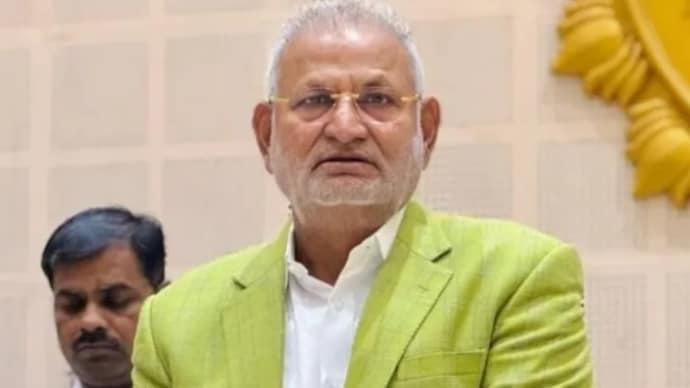
Manikrao Kokate (Photo: PTI)

Mumbai,UPDATED: Dec 19, 2025 23:03 IST
The Bombay High Court on Friday refused to suspend the conviction of Maharashtra NCP leader Manikrao Kokate but stayed his two-year sentence of imprisonment pending the hearing of his criminal revision appeal and granted him bail.
A bench of Justice RN Laddha held that Kokate’s conviction could not be stayed merely because his sentence had been suspended. The court underlined that a holder of constitutional office is bound by a higher standard of accountability.
“The office he occupies is not merely titular but is with a solemn obligation to uphold the rule of law and safeguard the collective interest of citizens,” the bench observed.
The court said allowing a convicted person to continue solely on the ground that the sentence has been suspended would cause “grave and irreparable prejudice to public service.” It added that such a course would erode public confidence in democratic institutions and demoralise those who adhere to the law.
“The balance between democratic representation and legal accountability must therefore be struck in favour of institutional integrity and public trust,” the bench said.
However, the high court noted that the hearing of the criminal revision was likely to take considerable time, while Kokate had been awarded only a two-year sentence. On this ground, the court suspended the sentence and granted him bail on furnishing a bond of Rs 1 lakh.
Earlier, a Sessions court in Nashik had upheld Kokate’s conviction and sentence, holding that he had “deceived the State Government and dishonestly induced it to allot a flat to him” under a housing scheme meant for the Economically Weaker Section (EWS), which was applicable only to those with an annual income below Rs 30,000. The court found that Kokate’s income was significantly higher than the prescribed limit.
The Sessions court convicted Kokate for cheating, forgery, forgery for the purpose of cheating, and using a forged document as genuine. He was acquitted of two other charges. The court also set aside the trial court’s direction to the State Government to cancel Kokate’s flat allotment and restore possession, terming that direction unsustainable. The order was passed by Additional Sessions Judge PM Badar.
According to the prosecution, the Maharashtra government introduced an EWS housing scheme in 1989 and 1992 for economically weaker and needy sections of society, limiting eligibility to applicants with an annual income not exceeding Rs 30,000. The prosecution alleged that Kokate and his brother submitted false income affidavits, bogus ration cards and other fabricated documents to secure flats under the scheme at Vise Mala on College Road in Nashik.
The case further alleged that apart from securing a flat in his own name, Kokate purchased two additional flats in the same building through benami transactions in the names of other individuals under the same EWS scheme.
The Additional Collector and Competent Authority (ULC), Nashik, later lodged a case at Sarkarwada Police Station for offences of cheating, forgery and common intention against Kokate, his brother and other accused.
While deciding the case, the Sessions court held that Kokate’s economic status from 1989 until the year of allotment in 1994 was relevant. “This entire period is relevant because if appellant Manikrao’s income had increased during the time between the application and the allotment, it was incumbent upon him to inform the Government of such change in his economic status and to withdraw his application,” the judge said.
Evidence showed that Kokate and his brother supplied sugarcane to the Kopargaon Sahakari Sakhar Karkhana. In 1993–94, Kokate supplied 51.876 tonnes of sugarcane and received Rs 35,016 at the prevailing rate of Rs 675 per tonne. In the following year, he was paid Rs 1,15,762.
The court concluded that this clearly demonstrated that Kokate’s annual income from 1989 until the allotment in 1994 was well above Rs 30,000. Kokate had claimed that his monthly income from farming was Rs 1,500 and from advocacy Rs 1,000, totalling Rs 2,500. The court noted that even on this admission, his annual income exceeded the eligibility limit.
Similar findings were recorded against Kokate’s brother Vijay, an engineer, who had not disclosed his employment. The court also noted the “sound financial background” of the family, observing that they sold sugarcane separately and not as a joint family.
With the conviction remaining in force but the sentence stayed, Kokate will remain on bail until the high court hears and decides his criminal revision appeal.
- Ends
Published By:
Akshat Trivedi
Published On:
Dec 19, 2025
Tune In







 English (US) ·