

 53 minutes ago
4
53 minutes ago
4
ARTICLE AD BOX
As Delhi Gymkhana fights eviction from prime Lutyens' land, the row has reignited a larger debate on whether public land should continue subsidising hereditary privilege and elite exclusivity in modern India.
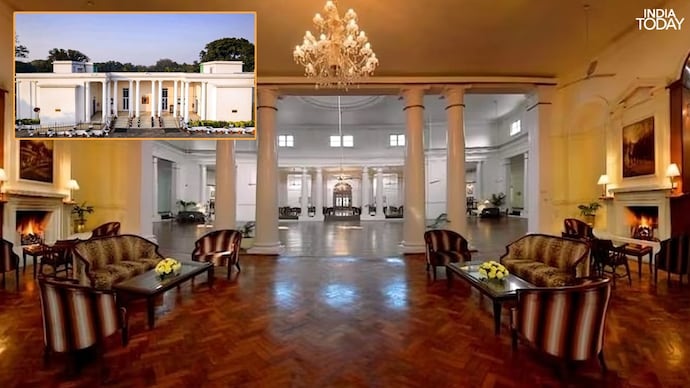
You can become a Cabinet minister, a Supreme Court judge or a three-star General, but without the right family or connections, the gates of the Delhi Gymkhana remain shut. (Images: Delhi Gymkhana)
New Delhi,UPDATED: May 25, 2026 15:23 IST
Barely steps from the Prime Minister's residence, the Delhi Gymkhana Club is where India's most powerful played by rules written over a century ago. The club has long been the symbol of hereditary privilege. You can achieve the most in life, rise to the very top, and have all the credentials, yet find the gates of the Delhi Gymkhana shut for you. While many heritage clubs in India, such as the Bombay Gymkhana, Secunderabad Gymkhana and Bowring Institute, are highly exclusive, none match the Delhi Gymkhana's level of insularity. Its exclusivity has truly been unparalleled.
You can become a Cabinet minister, a Supreme Court judge or a three-star General, but without the right bloodline or the right connections, the gates remain shut. Now, as the government orders the club to vacate its prime land by June 5, the elites who have been maintaining its exclusivity are crying foul. Some of them are claiming that the eviction notice is an attack on "heritage". But at the end of the day, it was public land that was seemingly being turned into an heirloom.
On May 22, the Land and Development Office (L&DO) directed the club to vacate its 27.3-acre prime Lutyens Delhi property at 2, Safdarjung Road. The land, leased from the government at a token rent of Rs 1,000 a month, is now being taken back for "public purpose" — for strengthening defence infrastructure, governance facilities and high-security requirements near the Prime Minister's residence, the 7, Lok Kalyan Marg.
The club on Monday moved the Delhi High Court challenging the order. Senior Advocate Abhishek Manu Singhvi mentioned the matter before Justice Avneesh Jhingan, who agreed to hear it on May 26. In a letter dated May 23, the General Committee urged the Centre not to disrupt operations until clarity is given on relocation and alternative land allotment. It warned that abrupt eviction would affect thousands of members, employees and stakeholders.
This is not the first time that the elite institution finds itself in the crosshairs of the government. Multiple litigations related to the Delhi Gymkhana have been on for over seven years. But the current row has triggered a sharp public debate on elitism, hereditary privilege and the right to public land.
NEED 'ELITE FACTOR' TO BECOME DELHI GYMKHANA MEMBER
For the 113-year-old club, applicants are proposed, interviewed by the board, and admitted only when vacancies arise. A general committee member told India Today Digital that you need to have the "elite" factor to become a member, and yet, the process was over 20-30 years long. Children of existing members are often put on the waitlist at 18. Many young IAS and IPS officers who apply today receive membership only when they become grandparents.
"It can be called hereditary in a way," a member of the club told India Today Digital on condition of anonymity. "The Gymkhana membership is like an accolade. When the interview is conducted, how one talks, and their demeanour and their backgorund matter a lot. A stiff upper lip accent has certainly helped many, but of course, the background matters a lot."
Unlike the India International Centre (IIC) or India Habitat Centre (IHC), which allow non-members limited access, the Gymkhana remains strictly members-only. Outsiders are permitted entry only as guests and must be accompanied by a member. This iron-clad rule has become the flashpoint in the current controversy.
Social media reactions have been brutal. "The 'Elites' are exposing themselves. What a time to be alive to see their entitlement being taken away," wrote a critic on X.
Another person commented, "This entitled guy who is an ex-Army Officer thinks because Delhi Gymkhana is his second home the Govt of India has given fictitious grounds to evict them."
"I am not sorry for Delhi Gymkhana, not because I wasn't a member, but because I could never be. Although one could apply and wait for 30-40 years to get membership, the truth is it was practically hereditary. Of course, the green card holders would lament the high-handedness of the government, but even they knew the party was nearing an end," said columnist and satirist Kamlesh Singh in a post on X.
GYMKHANA USED PRIME PUBLIC LAND, OPERATED LIKE A FIEF
Critics pointed out that the club sits on prime public land while operating like a private family fiefdom. The long waitlist of 20-30 years, steep fees of Rs 8.5 lakhs deposited without any interest, and hereditary access have led many to argue that the institution has ossified rather than evolved. "If one looks at the membership, it was notoriously difficult to obtain. There was a waiting list that could span up to 30 years," noted Puja Teli on X.
Many defended the Gymkhana by pointing to other exclusive venues like ITC's Bukhara restaurant. The counter was swift. "Bukhara does not sit on 27 acres of prime government land in Lutyens Delhi leased at a token rent of Rs 1,000 a year," an X user countered.
Defenders of the club, however, paint a different picture. Historian Swapna Liddle called the move unfortunate, saying cultural institutions must evolve but not be destroyed. Defence expert Major General (Retd) PK Sehgal described the sudden notice as a threat to 600 employees and labelled the potential destruction of the heritage site a "sacrilege".
Yet even some voices have urged restraint. A serving Army officer, Lt Col Sandeep Ahlawat, posted on X advising retired veterans to stay silent, warning that defending the club reflects poorly on the armed forces' image. "DGC is not indispensable. Far more meaningful public use can emerge from that land," he wrote.
WHAT HAPPENS NEXT IN DELHI GYMKHANA CASE?
The club's letter to the L&DO emphasised its heritage value and requests no dislocation of services until relocation is finalised. But public sentiment is increasingly unsympathetic.
Many argue that 27 acres of prime Lutyens land should serve broader public interest rather than remain the preserve of a few thousand elites who enjoy it at highly subsidised rates.
The biggest irony is some of the very babus who once pushed for greater access through the earlier NCLAT intervention are now part of the system issuing the eviction notice. The Centre's move is being seen by critics as a rare instance of the establishment turning against its own favourite recreation club.
For now, the future of the Delhi Gymkhana hangs in the balance.
The High Court hearing on May 26 will decide whether the club gets breathing room or whether the government proceeds with its plan to reclaim the land.
As journalist Sheela Bhatt put it, "In the land of Mahabharat, nobody surrenders land without prolonged litigation."
It is the Delhi Gymkhana's inherited privilege and restricted access that has exposed it to allegations of elitism, a charge its defenders once brushed aside.
- Ends
Published By:
Anand Singh
Published On:
May 25, 2026 15:23 IST







 English (US) ·