

 4 days ago
6
4 days ago
6
ARTICLE AD BOX
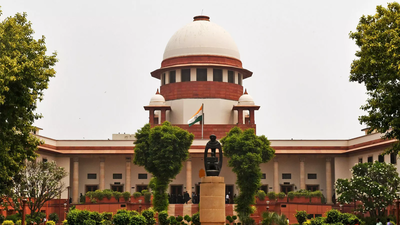
NEW DELHI: The Supreme Court on Wednesday continued hearing matters related to Delhi’s air pollution crisis, with air quality remaining in the “severe” category in several areas of the national capital region.During the hearing, the court said, “Let us think of pragmatic and practical solution of the menace,” stressing the need for workable measures to address the pollution crisis.The court asked the Delhi government to verify construction workers rendered idle by pollution curbs and ensure direct transfer of funds to their bank accounts, cautioning that the money should not “disappear, travel to another account”.
It also asked the government to consider providing alternative work to affected workers.Responding to the court, the Delhi government said that around 7,000 construction workers have so far been verified out of nearly 2.5 lakh workers affected, and that money would be transferred into their bank accounts.The observations came as the top court reviewed the continuing impact of air pollution despite repeated directions issued over the years.
A bench headed by Chief Justice of India Surya Kant, along with Justices Joymalya Bagchi and Vipul M Pancholi, has been monitoring the situation as air quality continues to pose serious health risks.Earlier, amicus curiae and senior advocate Aparajita Singh had informed the court that air quality in the region continues to hover in the “severe” category despite multiple orders passed by the Supreme Court. She had pointed out that implementation of the court’s directions and enforcement of pollution-control protocols has remained tardy.The bench has also flagged lifestyle choices of the affluent as a major reason behind poor implementation of pollution-control measures. The Chief Justice observed that the well-off continue to use large diesel vehicles, generators and other polluting equipment in violation of restrictions, even as vehicular emissions choke the region. The court noted that it is the poor and working classes who are the most exposed to hazardous air and suffer the worst health consequences.The Commission for Air Quality Management (CAQM) told the court last week that the transport sector contributes about 41 per cent of Delhi-NCR’s ambient air pollution load. Dust and construction activities account for 21 per cent, industry 19 per cent, power plants 5 per cent, residential activities 3 per cent and other sources 11 per cent. CAQM said stubble burning is a periodic factor limited to a short window each year, while other sources remain constant.The amicus has also complained that despite Supreme Court directions barring schools and organisations from holding sporting events for children during periods of severe pollution, organisers continue to sidestep the restrictions, exposing children to hazardous air.\









 English (US) ·