

 1 hour ago
5
1 hour ago
5
ARTICLE AD BOX
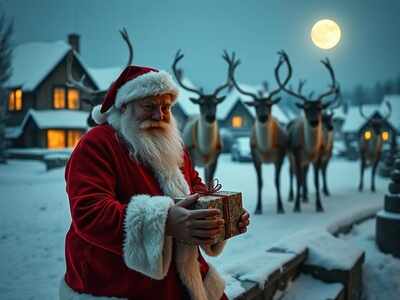
Who was the real Santa Claus?
Jingle Bells, Jingle BellsJingle all the wayOh, what fun it is to ride in aOne-horse open sleighEvery December, Santa Claus arrives with prosperity, happiness, and the fond hope of a “Happy New Year.” We all wish that our desires manifest in their truest forms. Amid playing Secret Santa games and waiting for our socks to be filled with gifts, have you ever wondered who the real Santa Claus was?He smiles from billboards, peers out from shop windows, and quietly takes over living rooms across the world.
Children accept him without question. Adults rarely stop to ask where he came from. Yet behind the red suit and rehearsed laughter lies a story far more grounded, human, and surprising than the fantasy suggests. Santa Claus was not born at the North Pole. He was born in history.
A man before the myth
The figure we now call Santa Claus began as Saint Nicholas, a real man who lived in the fourth century. He was a Christian bishop in Myra, a coastal town in present-day Turkey.
Unlike the larger-than-life character we know today, Nicholas lived simply, he had no sleigh, no reindeer, and no workshop. What he did have was a reputation for generosity that travelled far beyond his small town.Nicholas strongly believed that wealth held meaning when it was shared with benevolence. He helped the poor quietly without seeking praise. Eventually his stories travelled faster with time. The stories of benevolence and hope.
The acts that built a legend
The most enduring stories about Saint Nicholas focus on secrecy. He gave money anonymously. He helped families who had no one else to turn to. In one widely retold account, he provided financial support to three sisters so they could escape poverty and social ruin. He did it at night. He did not reveal his name.These acts made him a beloved figure residing in people’s hearts. Nicholas' name has been enshrined in communities even after his death.
He is celebrated not always through grand ceremonies but small gifts given in his name.
When Europe turned a saint into a tradition
By the Middle Ages, Saint Nicholas had become the main figure of the winter celebrations in parts of Europe. Children received gifts on December 6, his feast day. In many places, he appeared dressed as a bishop, reminding children that kindness and discipline went hand in hand. However, as religious reform occurred across Europe, traditions began to shift. Gift-giving slowly moved from early December to Christmas Eve and Christmas Day. The focus shifted, but Saint Nicholas remained a piece of the story.
The American reinvention of Santa Claus
The modern image of Santa Claus took shape far from Europe. Dutch settlers carried the legend of Sinterklaas to New Amsterdam, which later became New York City. Over time, the name changed. The character softened.In 1823, an American poem describing a cheerful man in a sleigh pulled by flying reindeer reshaped public imagination. Santa has become a playful persona, less religious and more approachable. Artists and writers built on this version by the late nineteenth century.
Santa Claus had settled into the image now recognised worldwide.
From cultural figure to global icon
As media expanded, so did Santa’s reach. Radio, television, films, and advertising cemented his appearance and personality. The red suit, white beard, and warm smile became standard. Santa stopped belonging to one place or tradition. He became universal.What remained unchanged was his role. He was still a giver and still associated with children.
He was still tied to the idea that goodness deserves to be celebrated.
Why the story still holds
Santa Claus has survived centuries not because of fantasy, but because of values. At his core, Santa represents generosity without reward, kindness without recognition, and the belief that small acts can change lives.In a world driven by visibility and applause, Santa’s story offers a quieter message. The most meaningful gifts are often given unseen.That idea began with a man named Nicholas. The rest is history.







 English (US) ·