

 1 hour ago
3
1 hour ago
3
ARTICLE AD BOX
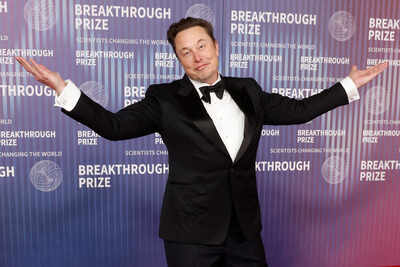
Tesla CEO Elon Musk has sounded the alarm on America's energy infrastructure crisis, calling the country's lagging power generation capacity a "major competitive disadvantage" as China races ahead in the global power race.
Musk's stark warning came in response to market analyst Adam Kobeissi's December 19 analysis revealing that China now commands 3.75 terawatts of power generation capacity—nearly three times the United States' 1.30 terawatts.The disparity represents more than just numbers on a grid. With China's power capacity doubling over the past eight years while US growth has remained relatively stagnant, the energy gap threatens America's ability to compete in AI development, advanced manufacturing, and technological innovation.
In 2024 alone, China added 429 gigawatts of new capacity—equivalent to adding multiple entire countries' worth of power generation in a single year, with wind and solar accounting for 83% of these additions.
China's nuclear push leaves US behind In clean energy race
Beyond renewable energy, China is aggressively expanding its nuclear infrastructure with 34 reactors currently under construction—more than the next nine countries combined. Nearly 200 additional reactors are either planned or proposed for future development.
In stark contrast, the United States has no large commercial nuclear reactors under construction, raising concerns about America's ability to meet the growing power demands of AI development and data centers.Goldman Sachs has previously warned that US power grid limitations could severely restrict AI growth, highlighting how China's energy advantage is becoming a critical differentiator in technological development.
Morgan Stanley estimates China will invest approximately $560 billion in power grid projects by 2030, with over $80 billion invested in 2024 alone.
AI development depends On reliable power infrastructure
The power capacity gap has direct implications for the AI race between the two nations. Advanced AI development increasingly relies on abundant, reliable electricity to run massive data centers and computing infrastructure.Research indicates that US data center power demand is rising faster than the grid can handle, with transmission bottlenecks persisting despite record infrastructure spending.
China's rapid grid expansion and substantial renewable energy investments are providing the country with a strategic edge in supporting AI development at scale.Musk also praised China's solar power progress, stating "Incredible progress by China in solar power! America needs to do the same." His comments underscore growing concerns among tech leaders about America's energy infrastructure falling behind global competitors.






 English (US) ·