

 1 hour ago
4
1 hour ago
4
ARTICLE AD BOX
History is the only way to find out the past and predict the future. This is why one of the most exciting and thrilling jobs in the world is archaeology, where you dive deep into the layers of the Earth to get to know more about it.
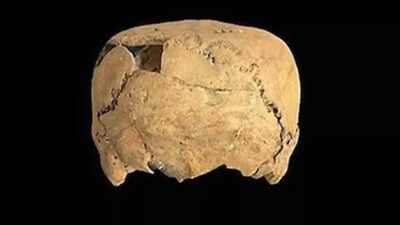
They say a head carries a thousand thoughts, but when it comes to excavation, a head could carry in itself the existence of a dynasty, the blood of a kingdom or the rituals of a practice. Case in point is a cube-shaped skull found in Mexico that researchers state could give new insights into an ancient cultural practice. What is it and what information does the skull withhold? Let's find out!
The mysterious skull
According to a press release from Mexico's National Institute of Anthropology and History (INAH), the skull belonged to a 40-year-old man who lived in the Sierra Madre Oriental mountain range more than 1,000 years ago during the Mesoamerican Classic period (400-900 AD). According to the institute, the peculiar cube shape of the skull was a sign of "intentional cranial deformation". The ancient practice was carried out during a child's early years with the help of boards and bandages wrapped around the skull to sculpt it as the child developed.“Not only was intentional cranial deformation identified for the first time for this type of site, but also a variant [was found] with respect to the models recognised in Mesoamerica not reported until now in the area,” said anthropologist Jesus Ernesto Velasco Gonzalez, as per the translated press release.
An ancient tradition
He shared that the square shape of the skull was different from the typical "conical" shapes seen elsewhere in the region. The reshaping of the skull was done to alter the person's appearance and emphasise headdresses and ornaments that would differentiate them from others in life later. Artificial cranial deformations were common among the Mesoamerican societies.However, Velasco Gonzalez explained that the modified skulls found in Balcón de Montezuma are typically “erect” and distinctly “alien” — but the one that was unearthed most recently was uniquely cube-shaped.The modifications were made by practices using a "compression plane" to reshape the baby's head. He said the artefact is “parallelepiped,” or closer to the shape of a parallelogram than a sphere.
Why the reshaping?
Shaping the skull was a sign of the elevated class and deep spirituality, depending on the civilisation, said the anthropologist. It influenced an entire society's cultural attire, including the use of cranial "ornaments that distinguished them from others," as per the release.
A historical connection
Flat-topped skulls have been previously unearthed in and around the territory associated with the Mayans. In their culture, cranial modifications were seen as a symbol of protection and were a required step in the "ritual ensoulment" a process they believed ensured lifelong protection, as per a 2011 research published by the Cambridge University Press. According to researchers, the discovery may support the theory that there exist cultural and historical ties between the ancient people of the mountainous region of the northern Huasteca and the Mesoamerican people of the Lowlands on the Gulf Coast, along with groups from northern Mexico and "even from the territory that is now the southern United States." The scientists tested the skull's bones and teeth and determined that the man likely lived in Tamaulipas, his entire life.
The region was inhabited by the Olmec, Chichimec and Huastec tribes at different periods.They speculate that the man's peculiar skull was common and specific to his culture, but the meaning and affiliation are yet to be found.









 English (US) ·