

 1 hour ago
4
1 hour ago
4
ARTICLE AD BOX
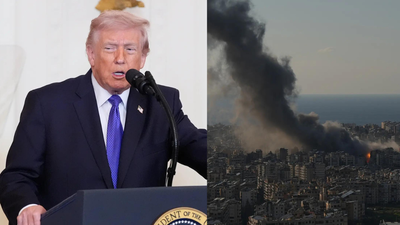
Israel, a close ally of the US, kept Washington firmly on a path that eventually led to war with Iran. In February, Israeli Prime Minister Benjamin Netanyahu visited the Oval Office determined to convince US President Donald Trump to take strong action against the then Khamenei-led Islamic Republic.Under Ayatollah Ali Khamenei’s long rule, Iran largely remained at odds with Washington. Trump further escalated tensions, using both sharp rhetoric and military pressure to curb Iran’s nuclear ambitions.The US and Israel had been quietly discussing the possibility of strong military action against the Islamic Republic. At the same time, the Trump administration was also considering diplomatic talks with Iran over its future nuclear plans. Netanyahu, however, opposed this approach and wanted to ensure that any new diplomatic effort did not undermine plans for tougher action.During a nearly three-hour meeting, Netanyahu and US President Donald Trump decided on the prospects of war, possible timelines for a strike, and the thin possibility of securing a negotiated agreement with Iran.
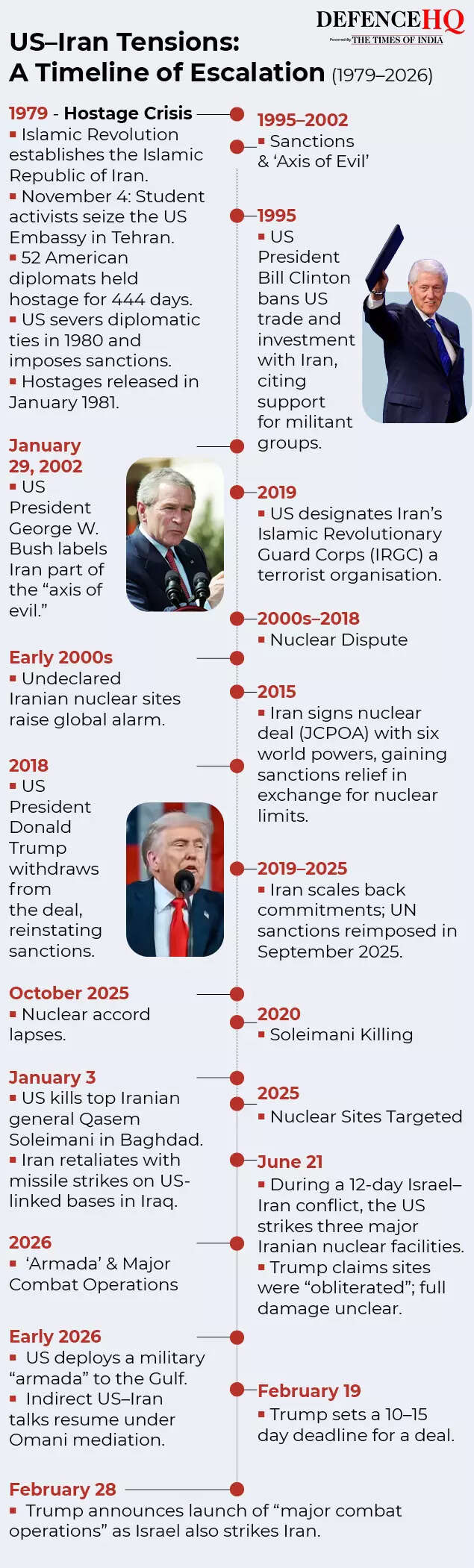
iran timeline
Days later, Trump signalled growing scepticism toward diplomacy, publicly dismissing past negotiations with Tehran as years of “talking and talking and talking.” When asked whether he supported regime change in Iran, the US president said it “seems like that would be the best thing that could happen.”
From closed-door briefings to “no aborts”: How diplomacy gave way to ‘Operation Epic Fury’
Marco Rubio
did not indicate that the administration was considering regime change in Iran, according to people familiar with the meeting, as cited by the New York Times.However on February 27, while aboard Air Force One en route to an event in Corpus Christi, Texas, Trump authorised a sustained military campaign against Iran, beginning with a strike targeting the country’s supreme leader.“Operation Epic Fury is approved,” Trump said, according to officials familiar with the exchange. “No aborts. Good luck.”While previous negotiations yielded no breakthrough, they provided the US administration with time to carry out what officials described as the largest US military buildup in the Middle East in a generation. Trump later characterised the campaign as a war of “overwhelming strength and devastating force.”In an interview with The New York Times on Sunday, the president said he had ultimately concluded that diplomacy would not succeed.“Toward the end of the negotiation, I realized that these guys weren't going to get there,” he said. “I said, ‘Let’s just do it.’”American and Iranian delegations met twice in Geneva in February, but the talks produced no progress. Even as diplomacy continued, US and Israeli officials were already discussing the possibility of military action.
How were the strikes carried out?
According to officials familiar with the matter, a strike was initially considered for Wednesday, a day before the scheduled round of negotiations in Geneva but was delayed until Thursday night to give Tehran what the White House described as a final opportunity to abandon its nuclear ambitions. It was postponed once more to Friday, with plans to target Tehran during the night.The timetable shifted after what officials described as a significant intelligence breakthrough, as cited by the New York Times
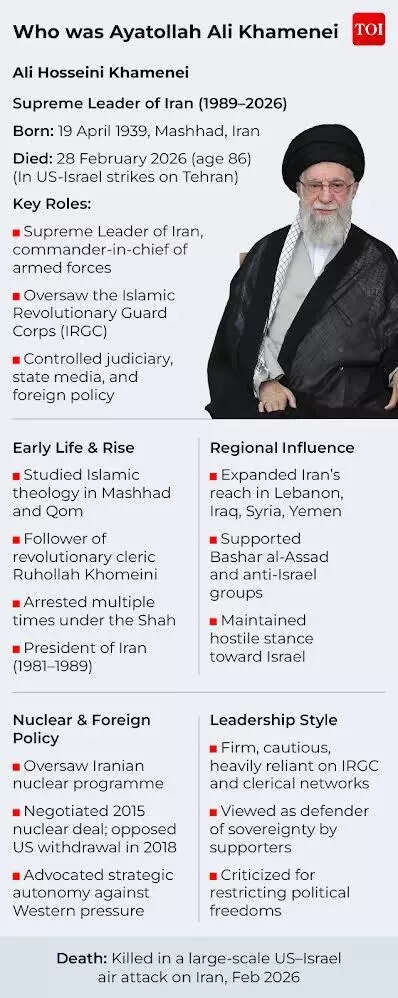
.
The CIA, which had been closely monitoring Iran's Supreme Leader Ayatollah Ali Khamenei’s movements, learned that he was expected to be at his residential compound in central Tehran on Saturday morning.Senior civilian and military officials were also scheduled to gather there at the same time.The intelligence was shared with Israel. Officials in both Washington and Jerusalem then agreed to open the campaign with what officials called a bold “decapitation” strike, carried out in broad daylight rather than at night.Exactly how US and Israeli intelligence determined the precise location of Iran’s senior leadership at 9.40 am (local time) on Saturday remains unclear.What is evident, according to defence officials, is that both countries acted swiftly on that information, along with other sensitive intelligence gathered inside Iran. The data was used to coordinate a three-wave assault that crippled much of Iran’s senior military command and rapidly degraded the country’s air defence systems.Saturday marked the start of the workweek in Iran. Children were in school while government offices were open.
Members of the Supreme National Security Council gathered without moving to underground bunkers or undisclosed locations that might have been shielded from US or Israeli purview.According to Iranian officials, Khamenei had told close associates that if war came, he would remain in place and accept martyrdom rather than risk being remembered as a leader who went into hiding. He was in his office elsewhere in the compound as senior officials convened and had asked to be briefed once their meeting concluded.The missiles struck shortly after the session began.On Friday afternoon, as he flew to Corpus Christi to deliver a speech on energy policy, Trump gave the final order to proceed with the strike.After landing, Trump signalled his frustration with how the diplomatic talks were proceeding. He told reporters he was “not happy with the negotiation,” accusing Iran of decades of aggression. “They’ve been blowing the legs off our people, blowing the face off our people, the arms.
They’ve been knocking our ships one by one and every month there’s something else,” he said.Despite indications that the United States was preparing for possible military action, several Iranian officials later said they believed a daytime strike was unlikely.The 'element of surprise'
He subsequently went into hiding, and another opportunity did not present itself.That experience shaped the planning this time. According to Israeli defense officials, any attempt to eliminate a senior Iranian leader would have to occur in the first wave. They assessed that once hostilities began, Tehran would swiftly implement precautionary measures, making high-level targets far harder to reach.Launching the attack in the morning, rather than at night, when Israel has conducted previous operations against Iran enhanced the element of surprise, an official familiar with the matter said, as cited by NYT.A second wave followed almost immediately after the initial strike on Iran’s leadership. Israeli forces targeted surface-to-air missile batteries, particularly those defending Tehran, according to defense officials.Among the key weapons used was a long-range ballistic missile launched from F-15 fighter jets. Originally developed as a practice target for Israel’s Arrow anti-ballistic missile system, the upgraded version, known as the "Black Sparrow" is designed to hit distant targets deep inside Iranian territory.Crucially, it allows aircraft to fire from beyond the reach of Iran’s surface-to-air missile defences, preserving both distance and surprise.US and Israel unleashed full military arsenal in Iran strikes
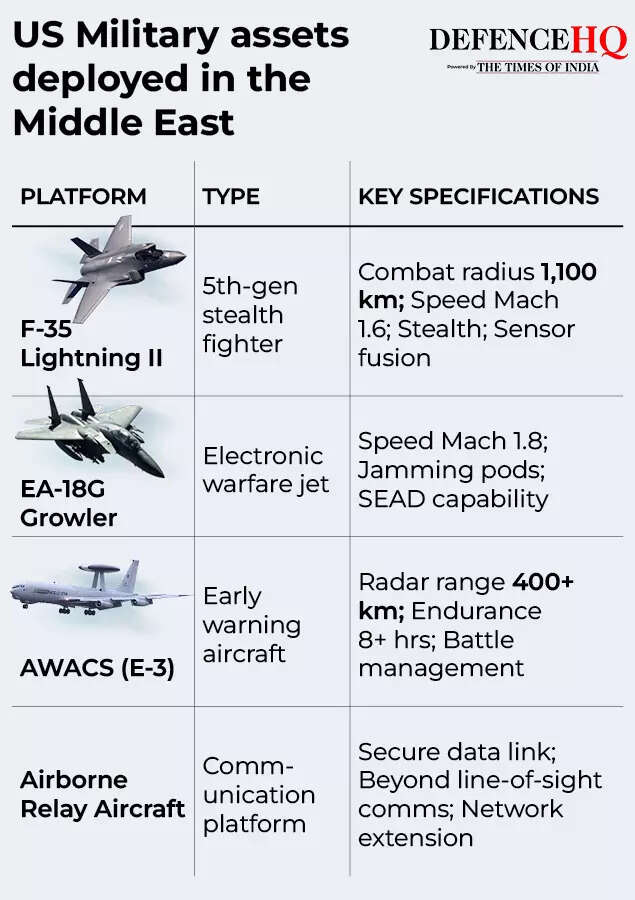
US Military assets deployed in the Middle East
The operation also drew on layered air and missile defence systems such as Patriot interceptors and THAAD batteries, alongside intelligence, surveillance and reconnaissance platforms including RC-135 reconnaissance aircraft, P-8 maritime patrol aircraft, airborne early warning and control systems, and MQ-9 Reaper drones.Additional capabilities reportedly included M-142 HIMARS rocket systems, counter-drone systems, refuelling tanker aircraft and ships, C-17 and C-130 cargo aircraft, as well as naval firepower from nuclear-powered aircraft carriers and guided-missile destroyers, underscoring the scale and technological depth of the campaign.







 English (US) ·