

 1 hour ago
5
1 hour ago
5
ARTICLE AD BOX
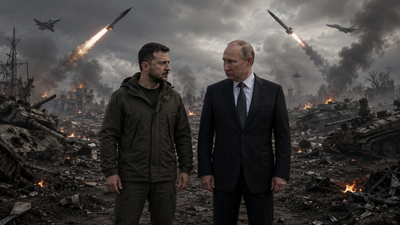
The Russia-Ukraine war did not just redraw battle lines in Europe. It accelerated the fragmentation of the global economy (AI image)
More than four years after Russian tanks crossed into Ukraine, the “special military operation” that was supposed to last a few days has reshaped the world in ways nobody fully anticipated.
The conflict has since evolved into the largest and most consequential war on European soil since 1945..Russia's invasion failed to break Ukraine. Yet Ukraine has not succeeded in liberating all of its territory. Nato emerged larger and more united, but Europe is less secure than it was before the war began.Military innovation accelerated at remarkable speed, even as entire cities were reduced to rubble. Every apparent success has been accompanied by a profound cost.
More than four years on, the war's legacy cannot be measured solely in kilometres gained or lost on the battlefield. It must also be judged by what it changed beyond Ukraine's borders, from global security and energy markets to the future of warfare itself.Here’s what the good, the bad and the ugly that world has learned from the Russia-Ukraine war:
The good
A more united Nato (minus US)Vladimir Putin launched the invasion partly to halt Nato’s eastward expansion.
It is one of history's more spectacular own goals. Russia's full-scale invasion prompted Finland and Sweden to abandon policies of military non-alignment that had lasted, in Sweden's case, for nearly 200 years. Finland joined Nato in April 2023 and Sweden followed in March 2024, making the alliance 32 members strong — its largest size ever.
The consequences for Russia are severe. Finland alone added roughly 1,340 kilometres of new NATO-Russia border, effectively doubling the land frontier between the alliance and Russia overnight.
Russia now faces a strategic liability on its northwestern flank that will force it to divert military resources away from other theatres for years to come. The irony is sharp: the alliance Putin most feared has emerged from this war larger, more unified, and more militarily capable than at any point since the Cold War.
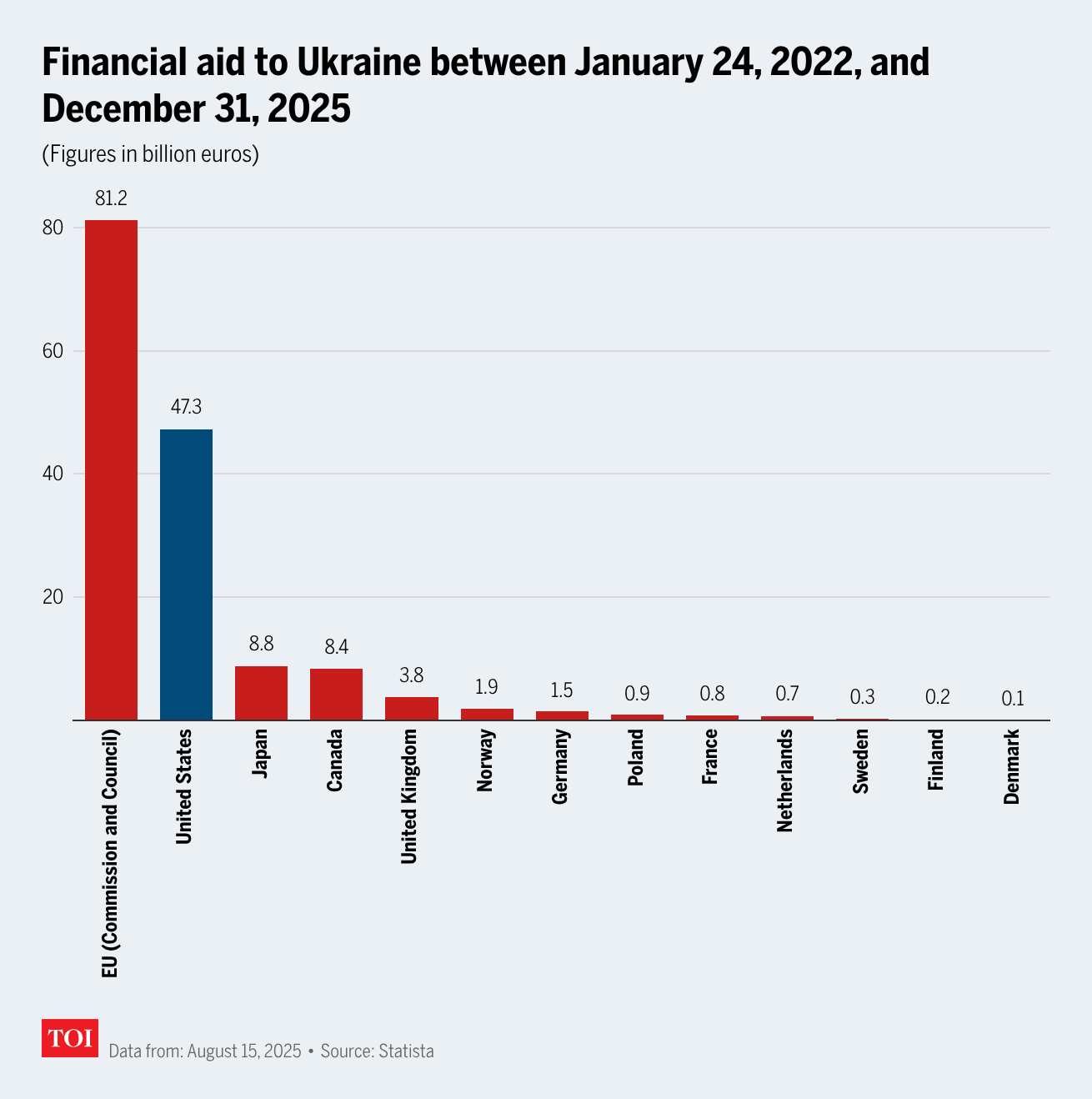
European defence spending, long a source of frustration for Washington, has also risen sharply. Nato members who once treated the two-per-cent-of-GDP spending target as a distant aspiration are now treating it as a floor, not a ceiling.But, what may be a major concern for the alliance is the disinterest that the Trump administration 2.0 has taken in maintaining ties.For Ukraine, a national identity forged in fireBefore February 2022, Ukraine was often described, including by some within Ukraine, as a country still searching for a unified identity. The east spoke Russian. The west looked to Europe. The political fault lines often ran along language and culture. The invasion changed all of that.Russian-speaking and Ukrainian-speaking populations largely rallied around the Ukrainian state. The war accelerated the formation of a national identity that, paradoxically, Russia's attempt to erase has only strengthened. A country that Moscow insisted did not really exist has proved, under extraordinary pressure, that it does.The laboratory of modern warNecessity has always been the mother of military invention. Ukraine has become the most consequential laboratory for 21st-century warfare in decades.
Cheap, mass-produced first-person-view drones have inflicted up to 80 per cent of Russian battlefield casualties, according to analysis from the Atlantic Council. Ukraine has fielded tens of thousands of drones monthly, supported by a civilian-military innovation ecosystem that includes hobbyist engineers and small domestic manufacturers.
In December 2024, Ukrainian forces conducted what is believed to be the world's first fully unmanned assault on enemy positions, using ground-based robotic systems alongside aerial drones.The lessons are already reverberating through military establishments worldwide. AI-assisted targeting, electronic warfare, satellite connectivity on the front line, and the adaptation of off-the-shelf commercial technology for combat use have all evolved faster in four years than in decades of peacetime defence procurement.Europe cuts the Russian energy cordBefore 2022, Europe's dependence on Russian gas was both a vulnerability and a source of political inhibition.
The war forced a rapid and painful diversification. New liquefied natural gas terminals were built, supply agreements were renegotiated, and investment in renewable energy accelerated across the continent. The process was costly and disruptive. But Europe is now substantially less exposed to Russian energy leverage than it was when the invasion began — a structural change that would likely have taken decades in peacetime.
The bad
The bloodiest war in Europe since 1945Neither Russia nor Ukraine publishes reliable casualty figures, and independent verification is close to impossible. But the numbers that have emerged from Western governments, think tanks, and investigative journalists point to a conflict of extraordinary human cost.
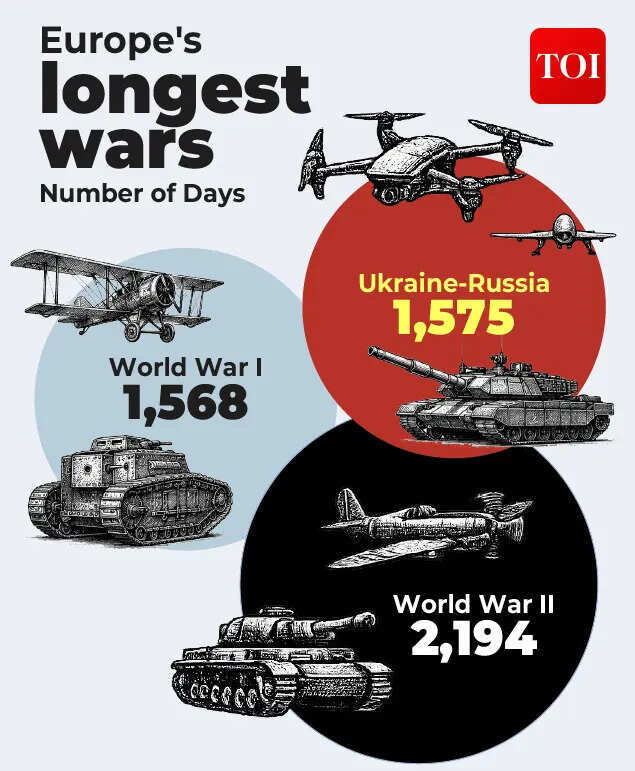
According to the Centre for Strategic and International Studies, Russian forces suffered nearly 1.2 million battlefield casualties — killed, wounded, and missing — between February 2022 and December 2025.
That is more losses than any major power in any war since World War II. Ukrainian military casualties over the same period are estimated at between 500,000 and 600,000. Civilian deaths verified by the United Nations reached more than 16,000 by May 2026, though the real figure is almost certainly much higher.
The UN Human Rights Monitoring Mission recorded 2,514 civilians killed in Ukraine in 2025 alone — the deadliest year for civilians since the invasion began, a 31 per cent increase on 2024.This is Europe's bloodiest conflict in 80 years.
The $588 billion question
Even if fighting stopped tomorrow, the task of rebuilding Ukraine would be generational in scale. A joint assessment released by the World Bank, the European Commission, the United Nations, and the Ukrainian government in February 2026 put the cost of reconstruction and recovery at nearly $588 billion over the next decade. That figure is approximately three times Ukraine's entire annual economic output.Fourteen per cent of Ukraine's housing stock has been damaged or destroyed, affecting more than three million households. The transport sector alone requires more than $96 billion in investment. Ninety per cent of thermal power generation has been destroyed. The damage continues to mount with every passing week of bombardment.
The return of economic blocs
The Russia-Ukraine war did not just redraw battle lines in Europe. It accelerated the fragmentation of the global economy.
For decades after the Cold War, the dominant assumption was that trade would gradually overcome geopolitics. Countries might disagree politically, but economic integration would continue. The war challenged that belief. Sanctions on Russia became some of the most extensive ever imposed on a major economy, cutting Moscow off from Western financial systems, technology imports, and energy markets.
In response, Russia redirected trade towards China, India, and other non-Western partners.
Russia's turn towards China
One of the least discussed but most consequential outcomes of the war has been Russia's growing dependence on China. Before the invasion, Moscow sought to balance relations between East and West, maintaining economic ties with Europe while expanding cooperation with Beijing. Western sanctions changed that equation dramatically. Cut off from many Western markets and technologies, Russia increasingly turned to China as a source of trade, investment, consumer goods, and diplomatic support.The relationship has brought benefits to both sides, but it is not one of equals. China's economy is roughly ten times larger than Russia's, giving Beijing considerable leverage. Russian energy exports that once flowed westward are increasingly destined for Chinese buyers, often on terms that favour Beijing. Chinese firms have filled some of the gaps left by departing Western companies, while Chinese financial institutions have become more important to Russia's economic survival.The uglyThe drone age has no off switchThe battlefield innovations that make Ukraine's defence remarkable also carry a deeply uncomfortable implication: these technologies will spread. The cheap drone tactics pioneered and refined on Ukrainian and Russian soil will appear in future conflicts in the Middle East, Africa, and Asia. The knowledge of how to organise a mass-drone assault, how to build a civilian-military innovation pipeline, how to use commercial satellite imagery for targeting — all of this is now part of the global military commons.
Conflict has been democratised in ways that will benefit not just democracies.Norms in the rubbleRussia violated Ukraine's territorial sovereignty in 2014 and then launched a full-scale war of conquest in 2022. The international response — sanctions, military aid, diplomatic isolation — was substantial. But it has not reversed Russian territorial gains. Four years on, Russian forces control roughly 20 per cent of Ukrainian territory.
If that situation persists into any eventual settlement, the lesson for other revisionist powers will be unmistakeable: a nuclear state with sufficient conventional military capacity and sufficient tolerance for casualties can absorb international pressure and still walk away with occupied territory.
The implications extend well beyond Europe. In the Taiwan Strait and the South China Sea, governments in Beijing are watching carefully.
The question of what Western commitments to the international rules-based order are actually worth — when tested by a determined nuclear power — is one that has been posed in Ukraine and has not yet received a fully satisfying answer.The lesson every nuclear power is studyingPerhaps the most troubling lesson of the war concerns nuclear weapons. Throughout the conflict, Western governments have carefully calibrated their support for Ukraine to avoid direct confrontation with Russia.
The reason is simple: Russia possesses the world's largest nuclear arsenal. While NATO countries supplied weapons, intelligence, and financial assistance, they consistently avoided actions that could trigger a direct military clash between nuclear powers.The lesson being observed in capitals around the world is uncomfortable. Russia has paid an enormous price for its invasion in blood, treasure, and international standing.
Yet despite unprecedented sanctions and diplomatic isolation, it continues to occupy Ukrainian territory and remains insulated from direct foreign military intervention. The existence of nuclear weapons has shaped every major decision made by outside powers since February 2022.This raises difficult questions for the future of international security. If nuclear deterrence can effectively shield a state from external military intervention while it pursues territorial objectives, what message does that send to other countries? Policymakers in North Korea, Iran, and elsewhere are undoubtedly drawing their own conclusions.
The danger is not simply that nuclear weapons remain relevant.
It is that the Ukraine war may reinforce the belief that they are the ultimate guarantor of regime survival and strategic freedom of action. That is a lesson with potentially profound consequences for global non-proliferation efforts.The return of the economic blocsThe Russia-Ukraine war did not just redraw battle lines in Europe. It accelerated the fragmentation of the global economy.
For decades after the Cold War, the dominant assumption was that trade would gradually overcome geopolitics. Countries might disagree politically, but economic integration would continue.
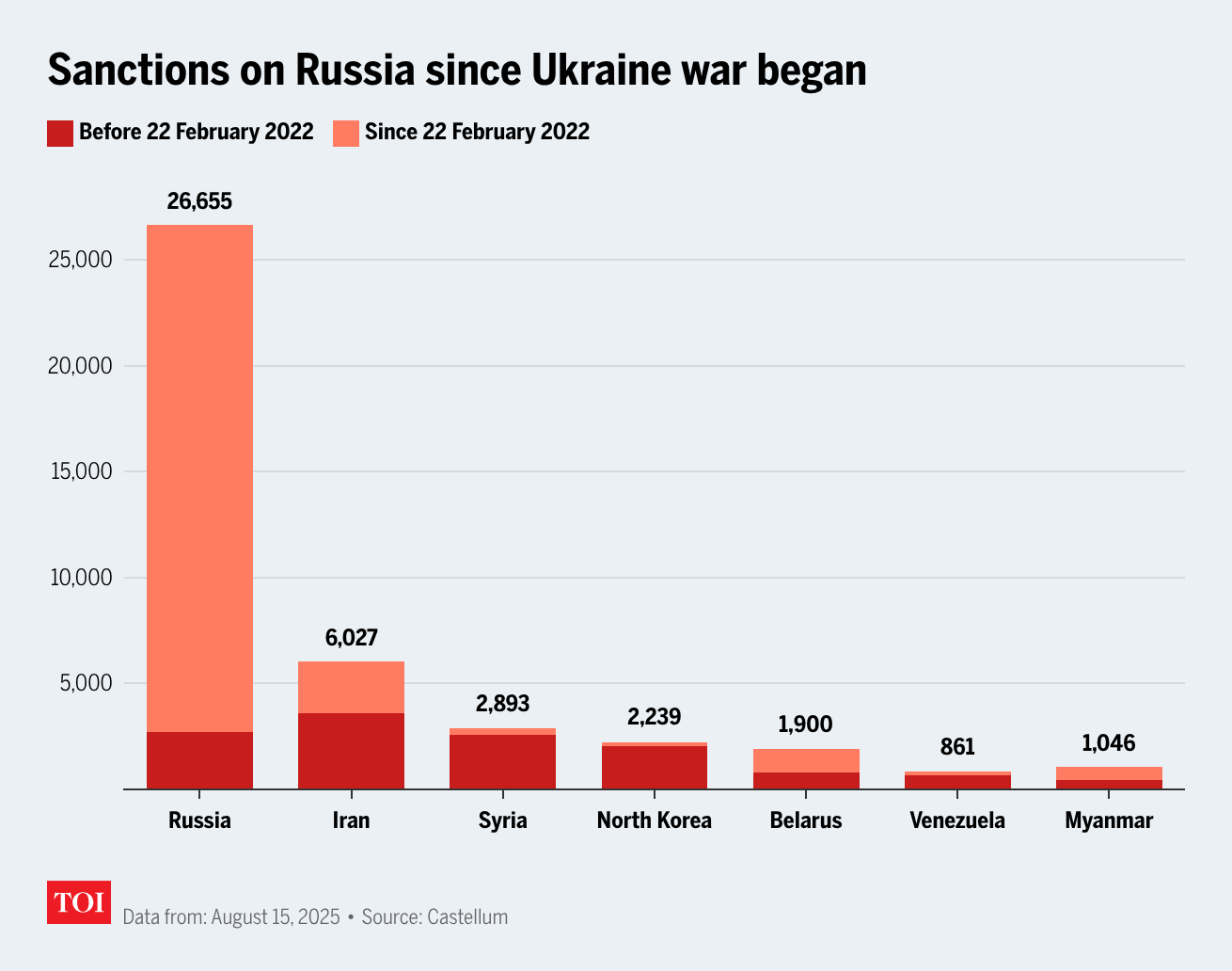
The war challenged that belief. Sanctions on Russia became some of the most extensive ever imposed on a major economy, cutting Moscow off from Western financial systems, technology imports, and energy markets. In response, Russia redirected trade towards China, India, and other non-Western partners made up its own knockoff rebrands of western products.The sanctions may have not brought a halt to Putin’s war machine, but it has impacted Russian economy in ways that will take decades to recover from.So what’s next?Wars are often remembered through simple narratives. There are victors and losers, triumphs and defeats, lessons neatly distilled into history books. The Russia-Ukraine war resists that simplicity. It strengthened Nato while devastating Ukraine. It showcased extraordinary resilience and innovation while producing immense human suffering.
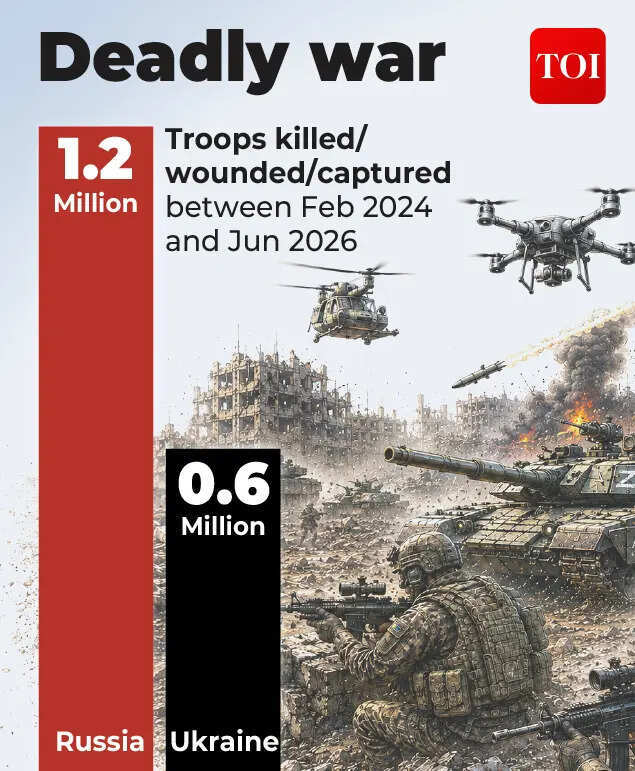
It exposed the limits of military power, yet also demonstrated how much influence can still be won through force.The conflict's most enduring legacy may lie beyond the territories contested on the battlefield. It has revived great-power rivalry, accelerated the spread of drone warfare, deepened geopolitical divisions and returned nuclear deterrence to the centre of international politics. Most troubling of all, it has normalised the idea that a major war in Europe can continue year after year without resolution.Ukraine will eventually rebuild. Cities will be repaired and borders may one day be settled. The harder question is whether the international order that existed before February 2022 can be restored.




 English (US) ·