

 1 hour ago
3
1 hour ago
3
ARTICLE AD BOX
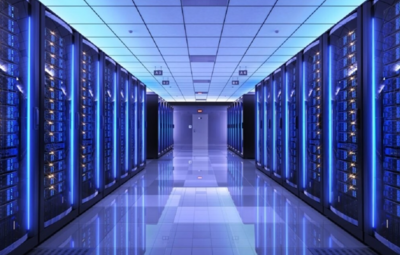
A Google executive has shared the primary obstacle to the company’s massive artificial intelligence (AI) expansion: this isn’t hardware or software but the physical wires of the American power grid.
A top energy executive at the search giant revealed that wait times to connect new data centres to the electrical transmission system have skyrocketed, reaching over a decade in certain regions. Power consumption is one of the biggest bottlenecks that tech companies are facing even as their energy draw strains the grid.“Transmission barriers are the number one challenge we're seeing on the grid,” said Marsden Hanna, Global Head of Sustainability and Climate Policy at Google, during an event hosted by the American Enterprise Institute, news agency Reuters reported.Hanna also disclosed that the delays have reached extreme levels. She cited a specific example where a utility quoted a 12-year timeline just to complete the necessary interconnection studies. “We had one utility who told us 12 years to study the interconnection timeline, which is sort of wild, but that's what we're seeing,” Hanna said. It is to be noted that these studies are mandatory before a data centre can legally draw power from the public grid.
How Google is tackling its ‘energy’ problems
To address these delays, Hanna urged policymakers to accelerate the approval process for new high-voltage transmission lines. Meanwhile, she also listed out Google’s strategy to power its data centres. Google calls it 'co-location' strategy wherein it plans to build data centres adjacent to existing power plants. By plugging directly into the source, Google can theoretically avoid the decade-long wait for a grid connection, bypassing the congested transmission system.“That's the strategy we're pursuing with colocation and our hope is that these can eventually be grid-connected resources,” Hanna said.Meanwhile, Microsoft unveiled an initiative to curb water usage at its US data centres and limit the impact on the general population from any potential surge in power prices due to its rapid expansion of data-centre capacity.









 English (US) ·