

 5 days ago
8
5 days ago
8
ARTICLE AD BOX
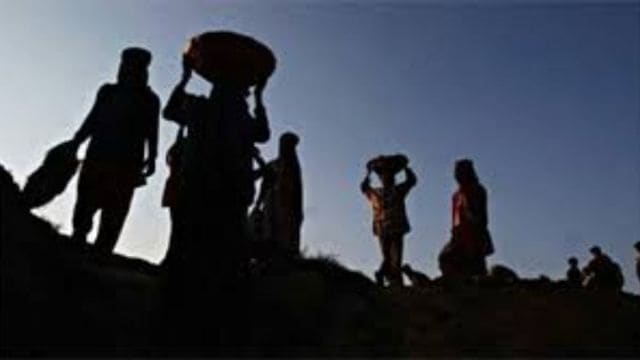 States asked to fund 40% of scheme.
IN A major overhaul of the two-decade-old rural job guarantee scheme, the BJP-led NDA government, in its third term, has prepared a Bill that proposes to increase the number of days for which work can be demanded by rural households in a year to 125 from 100 now, and for the first time shifts 40 per cent of the financial burden of the scheme to states.
For the last 20 years, since the rural employment guarantee law was enacted by the Congress-led UPA government in 2005, the Centre has been footing 100 per cent of the wage costs. Wages account for three-fourth of the entire expenditure under the scheme. Materials used in the works account for the balance one-fourth, and this cost is shared by the Centre and states in the ratio of 75:25.
The proposed Bill has projected the annual spending on the new scheme to be Rs 1,51,282 crore in the first full year post implementation. It estimates the Centre’s share to be Rs 95,692.31 crore, suggesting that states would have to fund the balance i.e., Rs 55,590 crore.
At present, the Mahatma Gandhi National Rural Employment Guarantee Act, as it is called now, covers 8.61 crore families; 12.16 crore workers hold job cards.
The proposed legislation is called the Viksit Bharat—Guarantee for Rozgar and Ajeevika Mission (Gramin) (VB—G RAM G) Bill, 2025. Listed for introduction by Union Rural Development Minister Shivraj Singh Chouhan, this will repeal MNREGA, 2005.
In another significant change, the Bill also proposes a new provision of ‘normative’ allocation to states. Earlier, states used to provide a Labour Budget prepared on the basis of anticipated demand for unskilled manual work and send it to the Centre. However, the proposed Bill says the Centre will prescribe objective parameters and determine the state-wise normative allocation for each financial year.
“Over the past 20 years, Mahatma Gandhi NREGA has provided a guaranteed wage-employment to rural households ensuring wage income; however, further strengthening has become necessary in view of the significant socio-economic transformation witnessed in the rural landscape driven by widespread coverage of the social security interventions and saturation-oriented implementation of major Government schemes,” Minister Chouhan said in the Bill elaborating on the statement of objects and reasons.
Story continues below this ad
To ensure availability of labour for agriculture, the new Bill proposes that guaranteed employment would not be available to rural households during peak agricultural seasons. While there have been demands in the past from states about non-availability of labour during peak farm seasons, the Centre had not made any changes to the law.
“The State Governments shall notify in advance, a period aggregating to sixty days in a financial year, covering the peak agricultural seasons of sowing and harvesting, during which works under this Act, shall not be undertaken,” the Bill said.
According to the Bill, 11 north eastern and hill states will have to foot only 10 per cent of the scheme’s expenditure, and the scheme will be fully funded by the Centre in the remaining four Union Territories. Thus, as many as 19 big states will have to share 40 per cent of the scheme’s financial burden.
In 2024-25, the total expenditure under the scheme was Rs 1.04 lakh crore. Wages (entirely paid for by the Centre) accounted for Rs 73,337 crore, and material (shared by the Centre and states) cost was Rs 25,987 crore.
Story continues below this ad
While there is no official estimate about the expected fiscal burden on states due to the new scheme, a calculation based on 2024-25 spending shows that the additional fiscal impact on states (excluding West Bengal) may be about Rs 30,000 crore annually.

Harikishan Sharma, Senior Assistant Editor at The Indian Express' National Bureau, specializes in reporting on governance, policy, and data. He covers the Prime Minister’s Office and pivotal central ministries, such as the Ministry of Agriculture & Farmers’ Welfare, Ministry of Cooperation, Ministry of Consumer Affairs, Food and Public Distribution, Ministry of Rural Development, and Ministry of Jal Shakti. His work primarily revolves around reporting and policy analysis. In addition to this, he authors a weekly column titled "STATE-ISTICALLY SPEAKING," which is prominently featured on The Indian Express website. In this column, he immerses readers in narratives deeply rooted in socio-economic, political, and electoral data, providing insightful perspectives on these critical aspects of governance and society. ... Read More
Stay updated with the latest - Click here to follow us on Instagram
© The Indian Express Pvt Ltd






 English (US) ·