

 1 hour ago
3
1 hour ago
3
ARTICLE AD BOX
It’s been a turbulent year on the throne for the youngest world champion in chess history. Tournaments were plentiful, but success elusive as Gukesh Dommaraju broadened his focus from classical chess to playing in rapid and blitz events, freestyle chess and exhibition events as well in 2025.
Each defeat for the world champion at events like the FIDE World Cup and the FIDED Grand Swiss would set tongues wagging with unprecedented scrutiny on his form. For Gukesh, 2026 will mean a chance to narrow his focus once more to classical chess since he will have to defend his world championship title at the end of the year.
As the youngest world champion in history gears up to start his 2026 at the Tata Steel Chess tournament in Wijk aan Zee, The Indian Express caught up with his coach from the past three years, Grzegorz Gajewski, to talk about the 19-year-old’s 2025 and what awaits in 2026. Excerpts from an interview:
Question: After the year that Gukesh has had in 2025, what will he focus on in 2026, considering there’s a world championship at the end of the year? He played a lot of rapid-blitz tournaments and exhibition events too last year. Will he scale back on that?
Grzegorz Gajewski: For sure, we won’t be playing too many events. We will play in the most important ones, simply because he is very young and playing is kind of the best thing for him to grow. I actually don’t know what he has confirmed officially, so I don’t know what I can reveal, but we are planning to stay active. We will have to scale back for sure. Some of the exhibition matches, online events, we will have to skip, that’s certain.
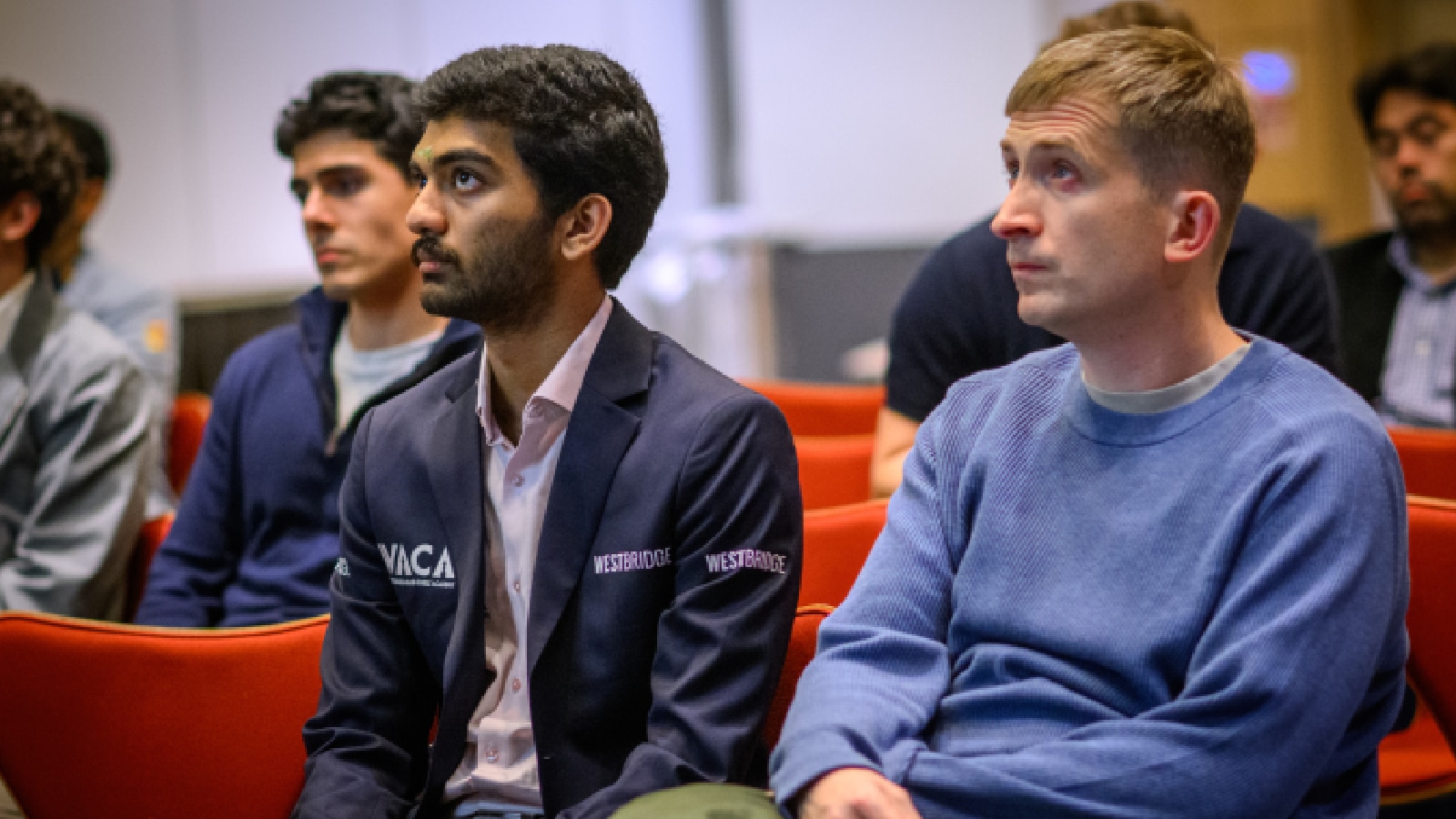 Coach Grzegorz Gajewski with Gukesh.
(Credit: Norway Chess)
Question: Gukesh and you believe that playing is the best way to grow. Even if there are plenty of losses, doesn’t really matter. But there’s also a lot of criticism that comes from outside, where people don’t maybe understand why he’s playing so much. Does Gukesh pay any attention to that? Does he hear it, or think about it?
Grzegorz Gajewski: I don’t think he is even aware of that. He is just focused on his chess, not on the comments from the outside world.
Story continues below this ad
Question: In the three years you have worked with him, how has he evolved?
Grzegorz Gajewski: He is certainly maturing as a person. He is not a kid anymore. He is a grown-up. He is, of course, very young, but he is not a kid anymore, which means he is aware of many, many things that previously were not so obvious. In a way, this makes it a bit trickier for him, because when you are a kid, you don’t care. The mindset is different. In a way, it’s easier. Now, it’s a grown-up’s pressure, and also his situation is kind of unique. He is the youngest world champion ever, so he is the first one in history to experience this kind of pressure that early in life. I’m talking about chess, of course. This is, of course, challenging, but I think there is no other way. We just have to adjust. We just have to get used to it. That’s exactly what’s happening. The mindset right now is completely different than it was a couple of months before. He just understands the situation and accepts it. He knows that there are many, many strong opponents, and the differences are very small. Of course, every time, we do our best to prove that he is the best, but so do the others. So, it’s a constant competition.
Question: When you says that he is now aware of many things that maybe he was not aware back then, what are those things?
Grzegorz Gajewski: For instance, expectations that he is putting on himself, that what he wants to achieve, when he achieves it, or when he fails to achieve something, these things are kind of heavier now. Because when you’re a child, you cry a little, and then you move on. Here, I think the pressure is just more difficult. For sure, it was not so easy last year. But, once you find the way to manage those things, it’s like another step forward. I’m actually happy that he gets this kind of experience, because none of his opponents have this opportunity. They all experience pressure, but not as high as Gukesh.
Story continues below this ad
Question: Is he more adept now at handling that pressure, or maybe some of these losses? And are some of the losses because of the pressure he puts on himself?
Grzegorz Gajewski: For sure, some of the losses were a direct result of just trying too hard. And many mistakes happened in this way, and it’s something we’re completely aware of, and something we try to manage every single time. But I think already, even in Qatar(at World Rapid and Blitz), it was clear that he was able to cope with some of the losses in a much better way, especially during the event. And during both rapid and blitz, there were moments in the event where he was actually hoping to fight for the top spots. It didn’t end up this way, but it didn’t actually anger him. He was able to find this balance where he was okay. Obviously he was disappointed with the result, but not to the point that would make him play worse. He understands the sport, and especially those faster time controls, it’s not easy to end up in the best places.
Question: Have you seen his growth in rapid and blitz? Do you think he’s becoming a better, or much more complete, player?
Grzegorz Gajewski: There is for sure some progress. It’s obviously also reflected in the rating list, where slowly his rating is improving. We were hoping for more, but that’s not a priority. At the moment, especially since 2026 is the world championship match year, our minds are completely elsewhere.
Story continues below this ad
Question: For Gukesh and you, what will be the priority in terms of chess this year?
Grzegorz Gajewski: Chess-wise, we’re looking for patience and confidence. That’s what we are hoping to see. Because both of them combined, I’m sure they are going to give him great results. When you’re confident, you’re patient, right? Because you know results are going to come.





 English (US) ·