

 1 hour ago
2
1 hour ago
2
ARTICLE AD BOX
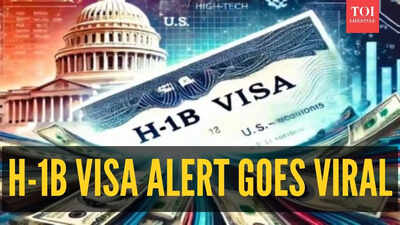
H-1B and H-4 Visas at the Centre of Online Uproar After US Embassy’s Viral Post
A recent tweet from the official US Embassy in India’s X account, @USAndIndia, ignited a wave of reactions across social media, from fiery criticism to satire and sharp political debate.
The tweet was framed as a procedural visa update where the H-1B and H-4 visa programme turned it into a flashpoint far beyond routine diplomacy. While the exact content of the viral post has been widely shared and commented on online, the broader context and ensuing reactions reflect a larger moment of online cross-cultural tension and political scrutiny.
What the viral H-1B tweet actually said
The tweet read, "WORLDWIDE ALERT FOR H-1B AND H-4 VISA APPLICANTS Beginning December 15, the Department of State expanded online presence reviews to ALL H-1B and H-4 applicants as part of standard visa screening.
This vetting is being conducted globally for ALL applicants of ALL nationalities for H1-B and H-4 visas. It is an effort to address abuse of the H-1B program while still permitting companies to hire the best of the best temporary foreign workers.
U.S. embassies and consulates continue to accept and process H-1B and H-4 nonimmigrant visa applications. We encourage applicants to apply as early as they can and anticipate additional processing time for these visa classifications (sic)."
The tweet, which came in the midst of the ongoing US federal government shutdown, was part of a series of updates explaining that the Embassy’s official account would not be updated regularly until US federal operations fully resumed, though urgent safety or security messages would still be shared.
Netizens push back harder than a political debate
Unlike a routine embassy announcement, this tweet quickly drew a broad mix of reactions online. Many Indian users interpreted the tweet not as a neutral service update but as symbolic of larger political frictions between New Delhi and Washington.
Some netizens suggested that the email-style official wording came off as dismissive during a time when US–India relations were already under intense scrutiny, particularly amid tariff disputes and broader geopolitical tensions. Critics reposted the embassy message with sarcastic captions about “common sense diplomacy going offline.”
It didn’t take long for humour and sarcasm to flood reply threads. Users wryly suggested that even the US Embassy needed a “break from hot takes about India”, while others turned the shutdown update into memes about how everything on X now feels like a political rant rather than useful information.
This reaction followed a pattern seen across other trending posts, where netizens quickly divert serious content into satire and parody.
A segment of the responses came from users defending India’s achievements and international stature, echoing a wave of reactions seen when foreign influencers make broad generalisations about Indians and India’s role on the global stage, similar to prior global backlash against sweeping negative claims about India’s contributions.
Some reactions also centred on criticism of X itself, not just the Embassy’s message. A number of netizens argued that the platform’s algorithms often elevate content deemed controversial or derogatory toward India, sparking discussion about whether social media companies inadvertently amplify division. This complaint echoed in existing debates about perceived bias and engagement-driven amplification online.
Why H-1B visas matter so deeply to Indians
To understand the reaction, one must understand the outsized importance of the
H-1B visa
for Indians. Indians are the single largest beneficiaries of the H-1B programme, accounting for roughly 70–75% of all approvals in recent years. The visa is a lifeline for Indian professionals in technology, healthcare, finance, research and academia and a cornerstone of US–India people-to-people ties.The H-4 visa, issued to dependents of H-1B holders (often spouses and children), is equally sensitive. For many families, delays or denials affect employment eligibility for spouses, children’s education and continuity of life, long-term residency and
green card
pathways.When an official US government account publicly flagged expanded online vetting, “abuse” of the programme and longer processing times, many Indians read it not as neutral administration but as increased scrutiny of a community already navigating years-long immigration backlogs.







 English (US) ·